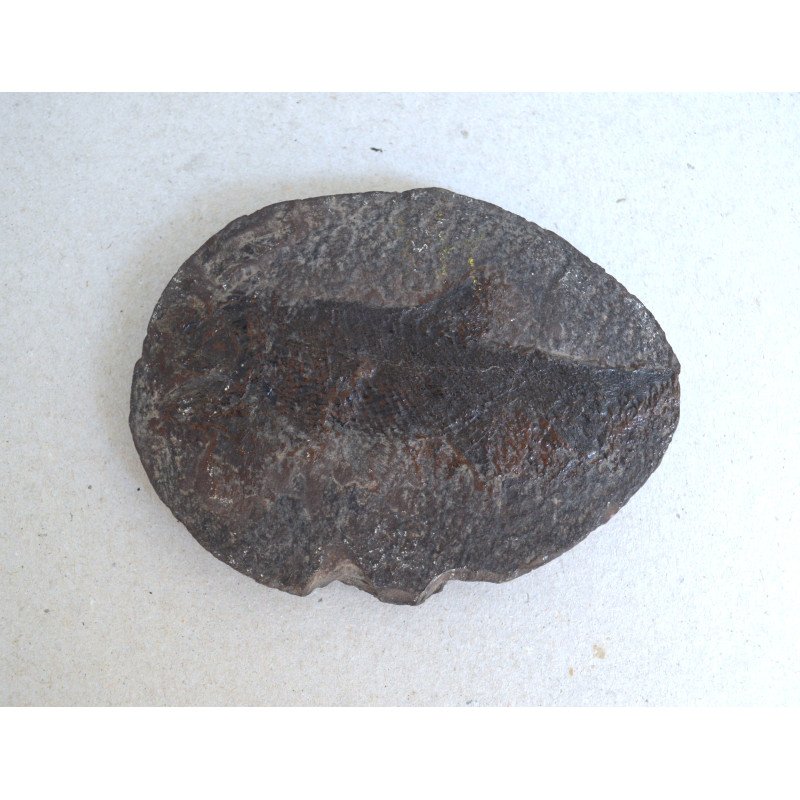
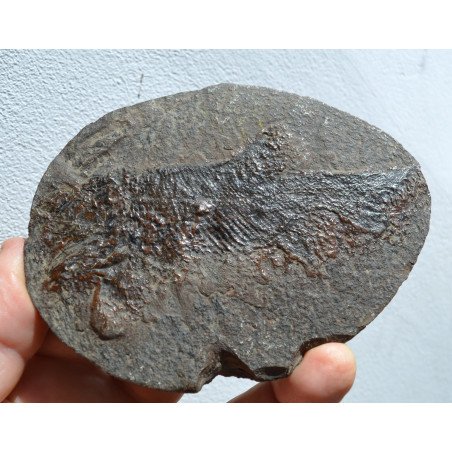
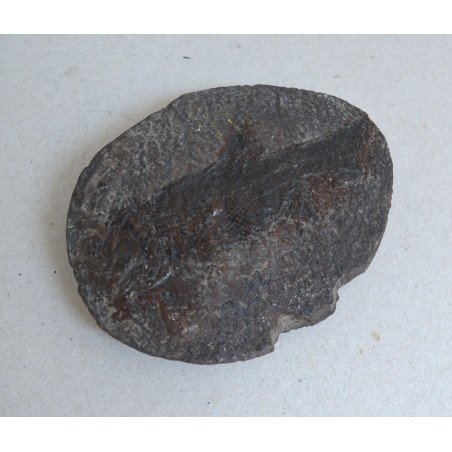
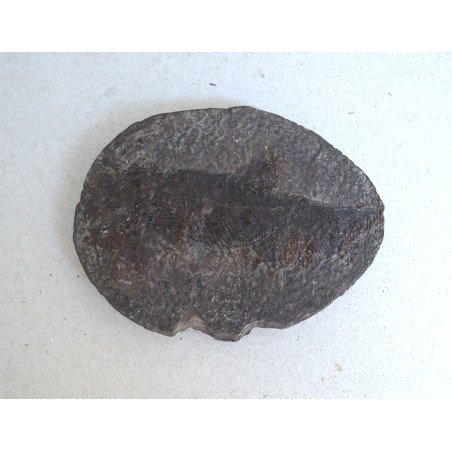
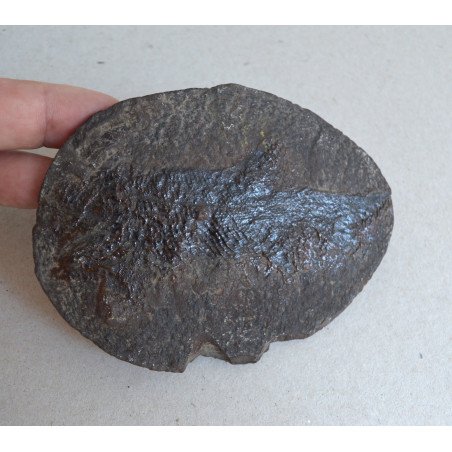
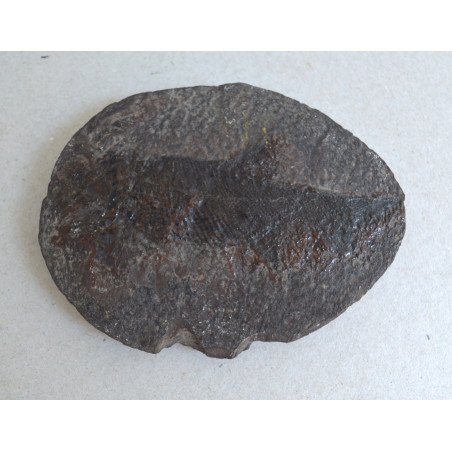
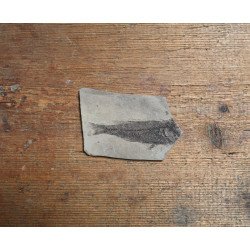
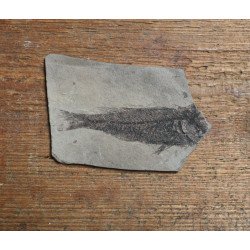
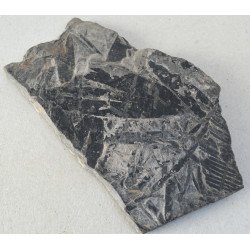
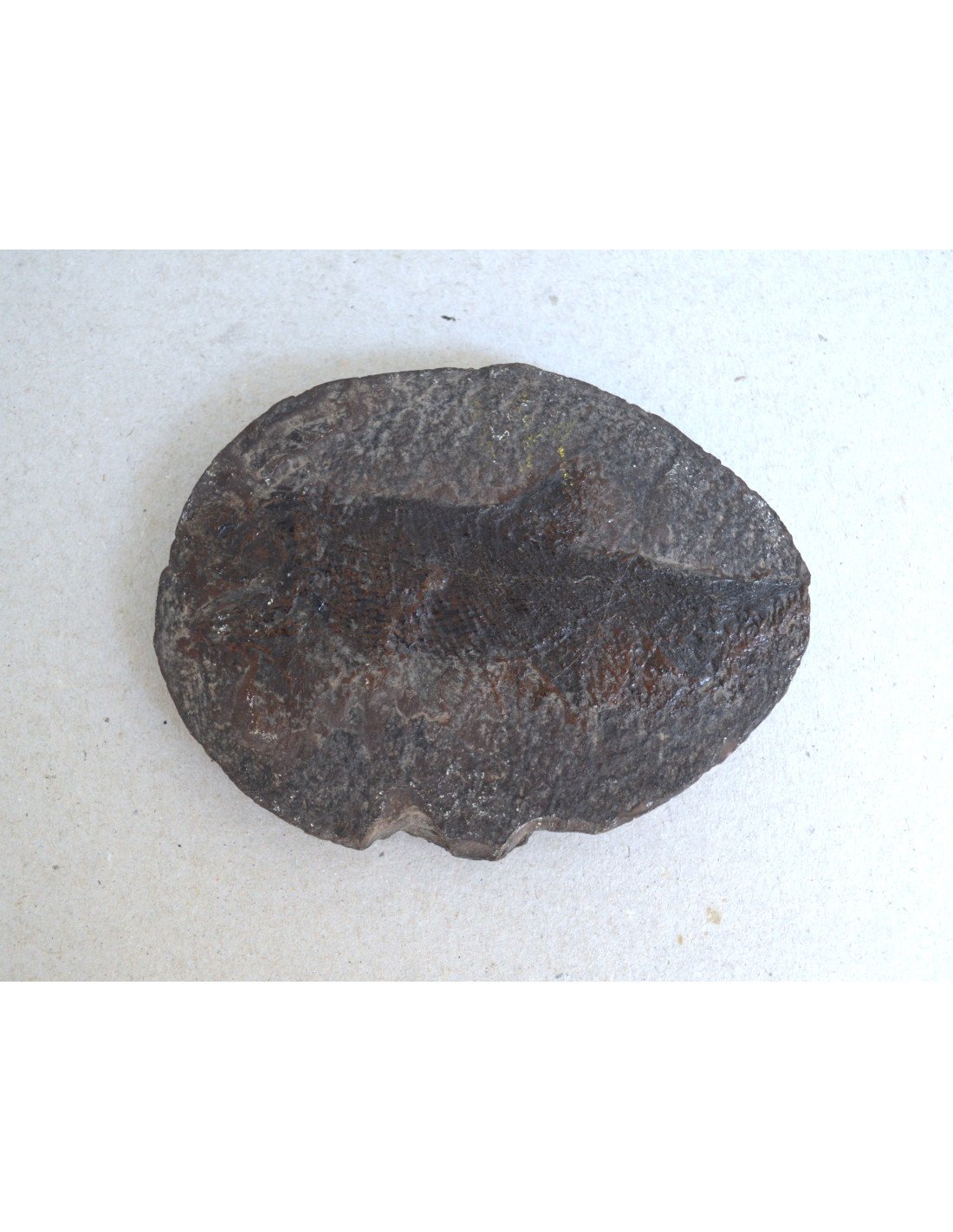
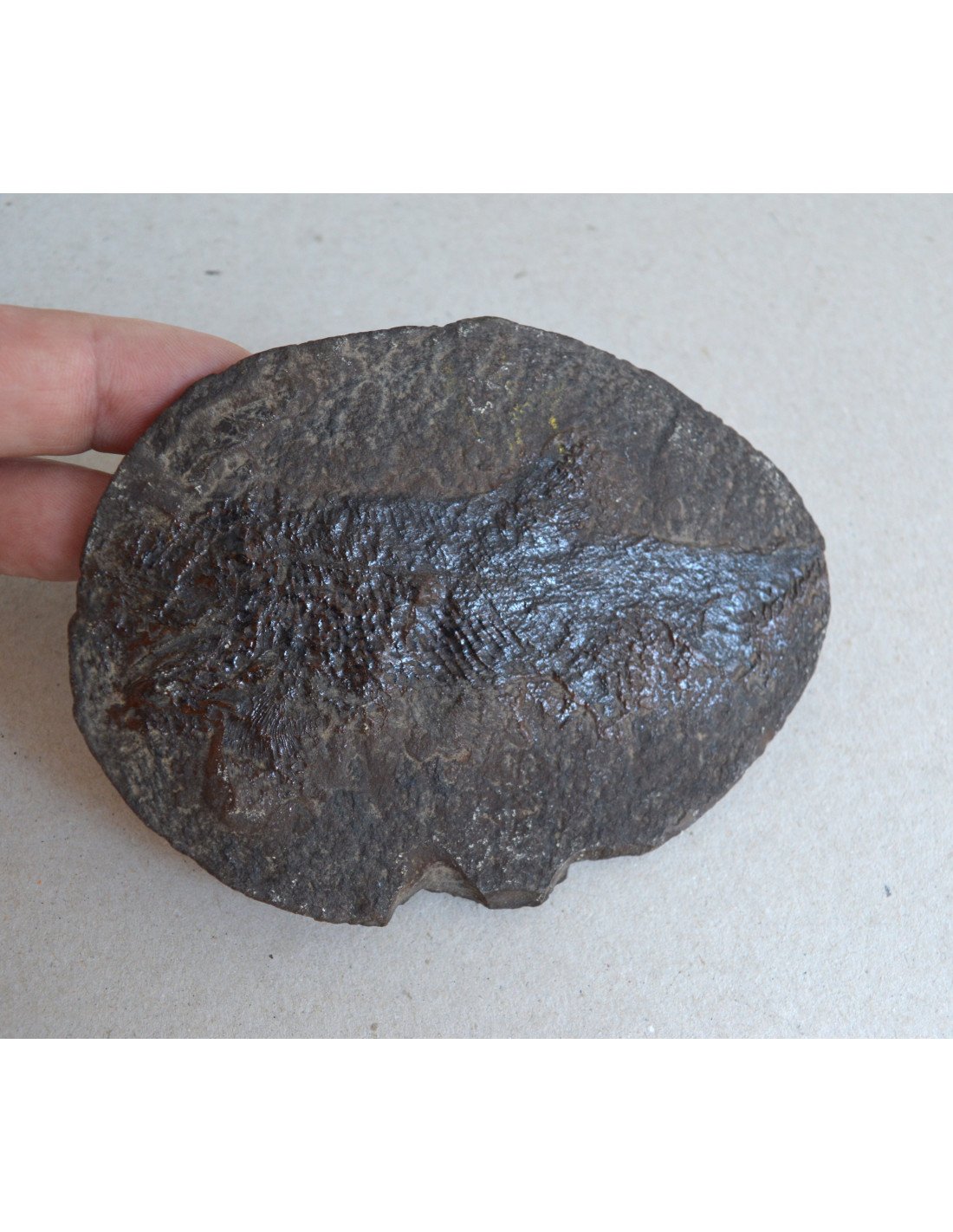
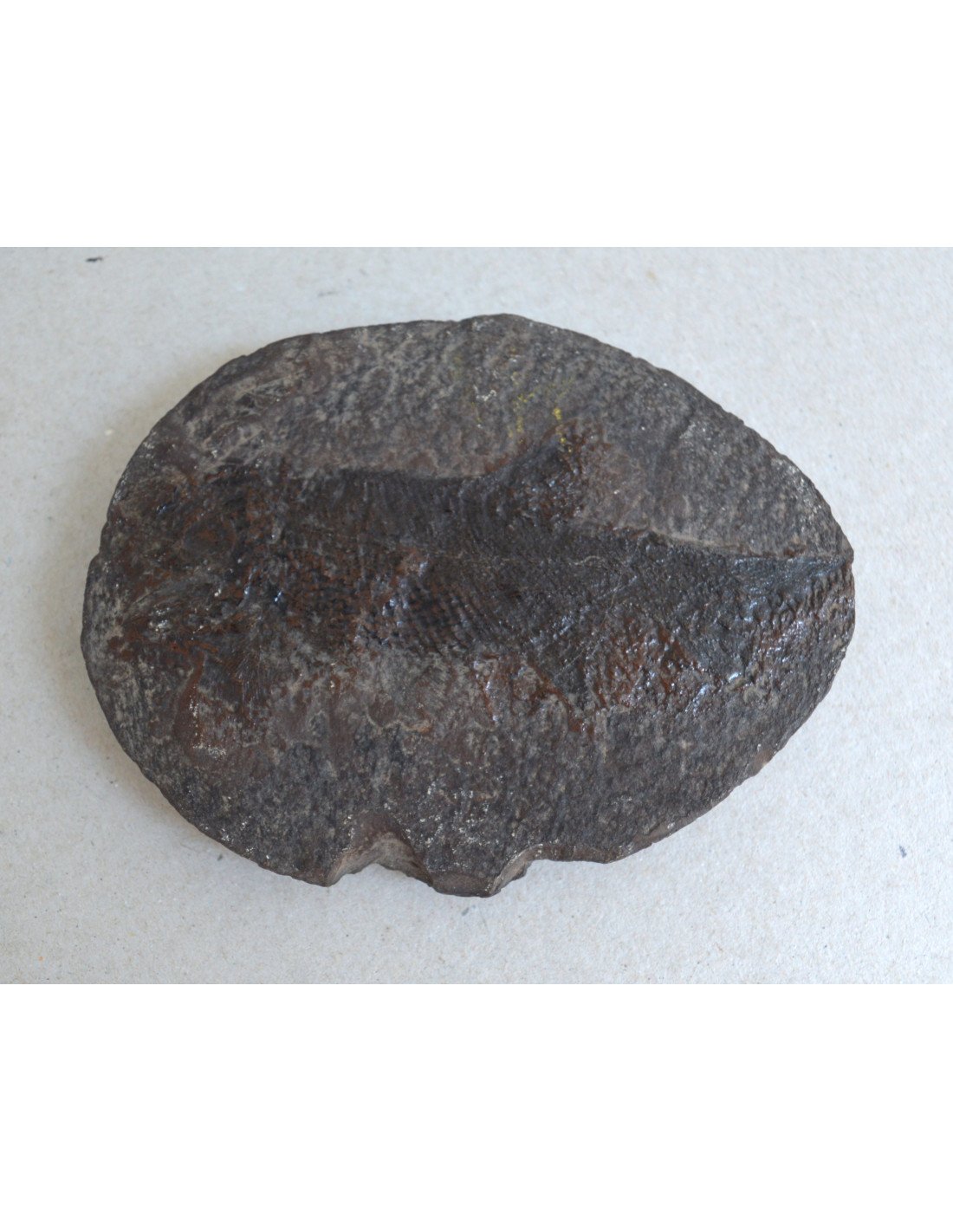
Fossil fish in a shale matrix
- Hârtibaciu (Romania) – Upper Cretaceous, with fossil-bearing shales.
Species: Indeterminate (probably the order Clupeiformes or Tselfatiiformes - see below for details)
Period: Cretaceous (145-66 million years)
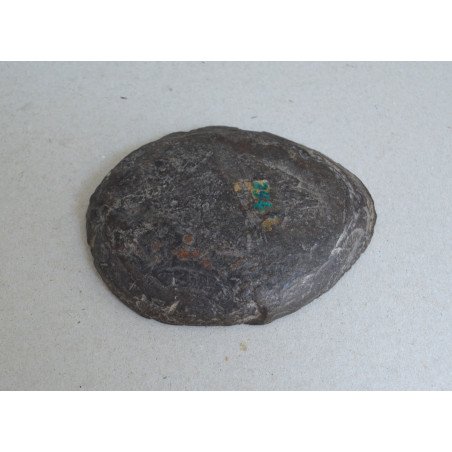
Lithology: Fine-grained shale, possibly marl or compacted mudstone, indicating deposition in a low-energy marine environment (lagoon or continental shelf).
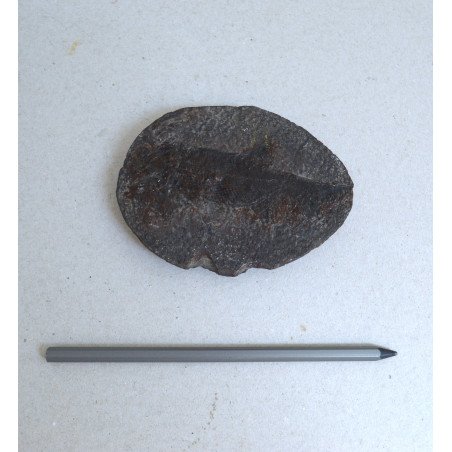
Dimensions: 12 x 9.5 x 1.5 cm (matrix); fossil: 11.5x4.5 cm.
Morphological description:
- Fossil fish preserved laterally, with a fusiform body.
- The outline of the head and the trunk is fairly well defined, with indications of the vertebral column and possible costal rays (probably ribs or bony rays).
- Fine impressions of the soft tissue or the scales are visible on the median part.
- The caudal region (the tail) is only partly preserved.
- The preservation is typical of small fish from Cretaceous marine faunas.
Possible identifications (speculative):
- Clupeiformes (e.g. sardines, herrings) - because of the elongated body, the fine scales and the simple structure.
- Tselfatiiformes – a group of exclusively Cretaceous fishes, sometimes similar in appearance but rarer in fine shales.
- Possibly also a member of the family Enchodontidae, but clear features are lacking (dentition, rostral bone).