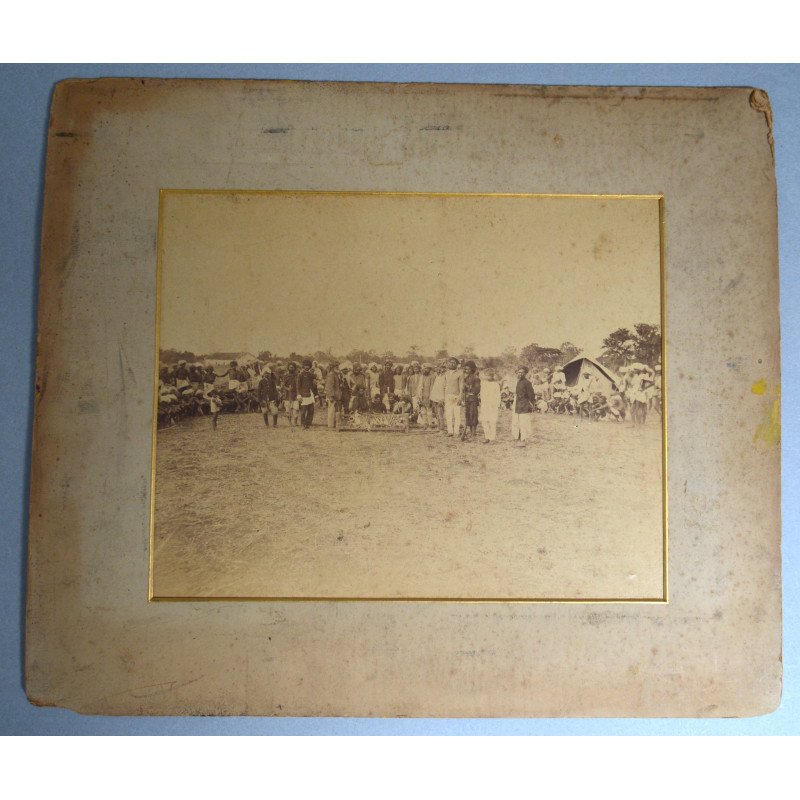
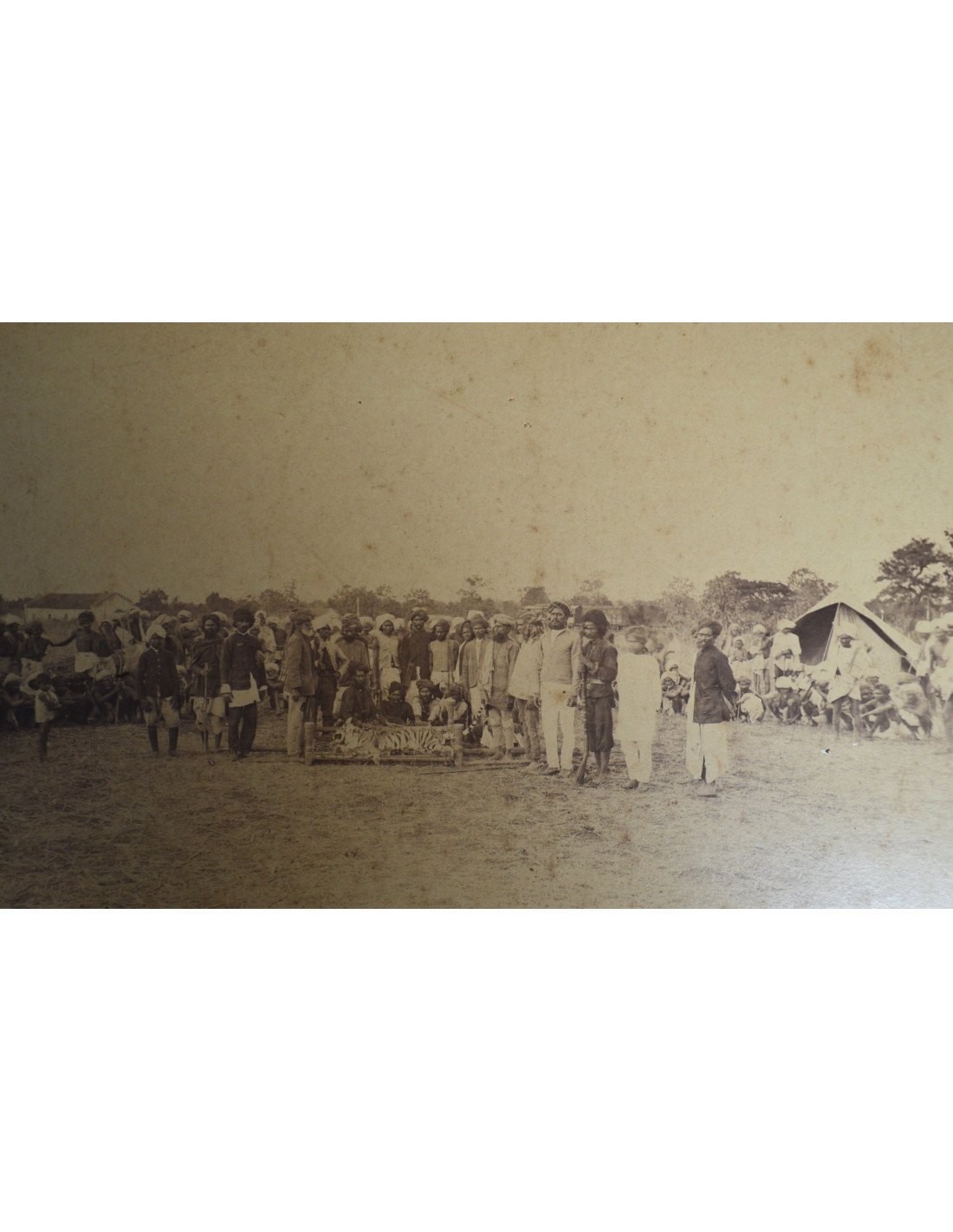
Antique photograph, India, circa 1880-1900 - Tiger Hunt - large format
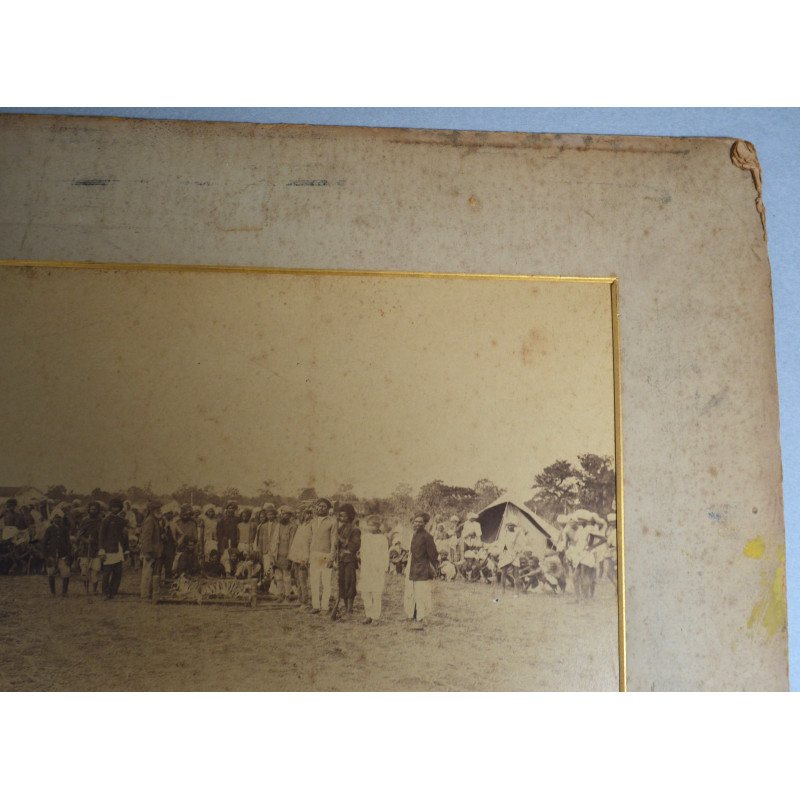
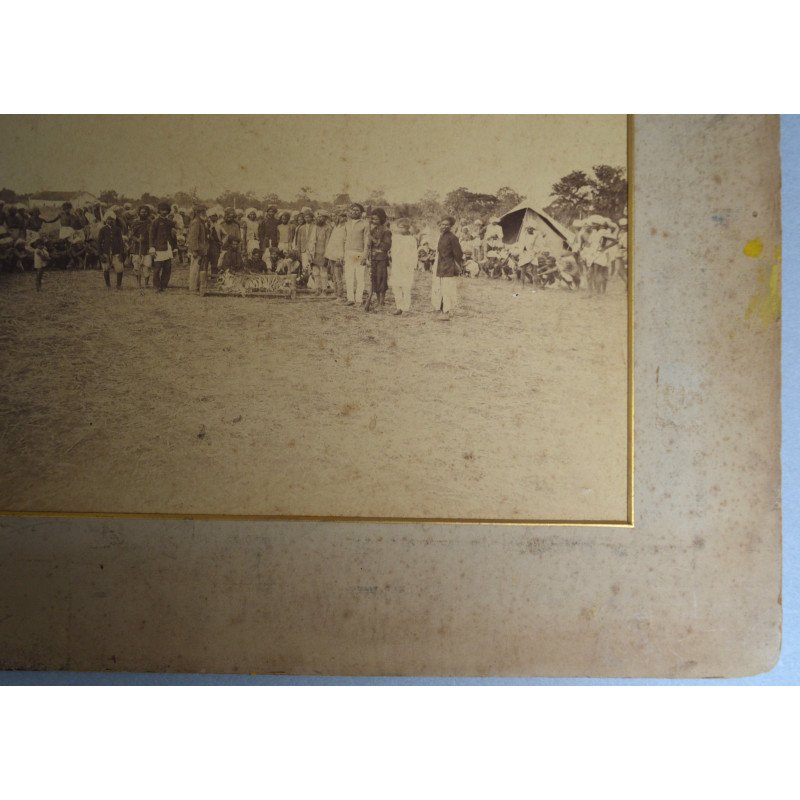
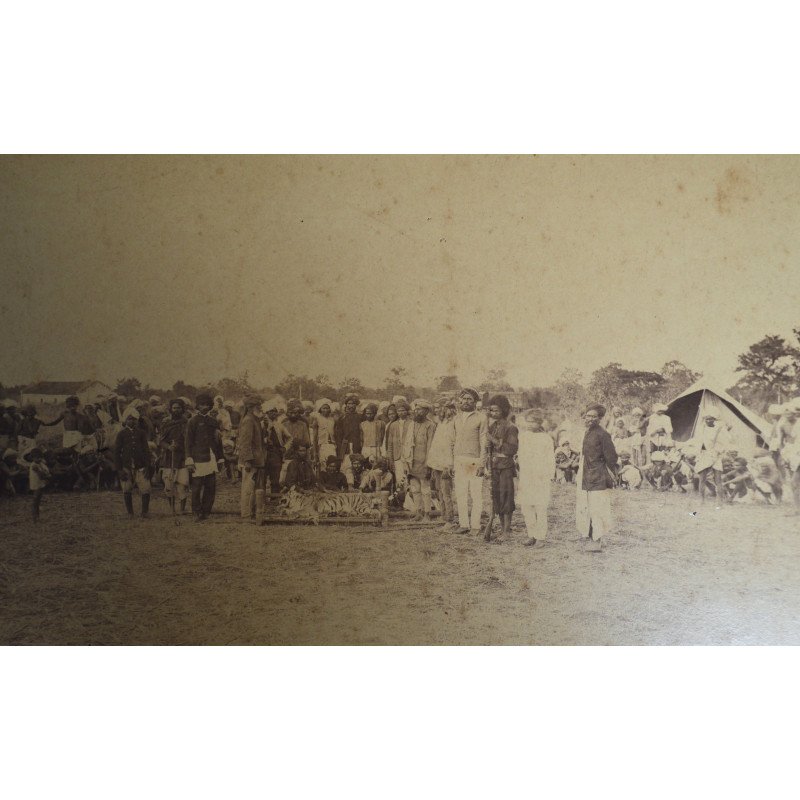
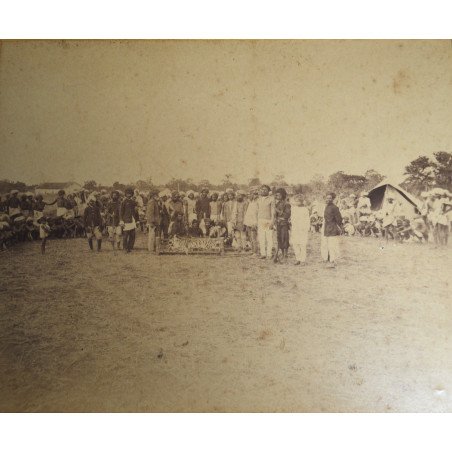
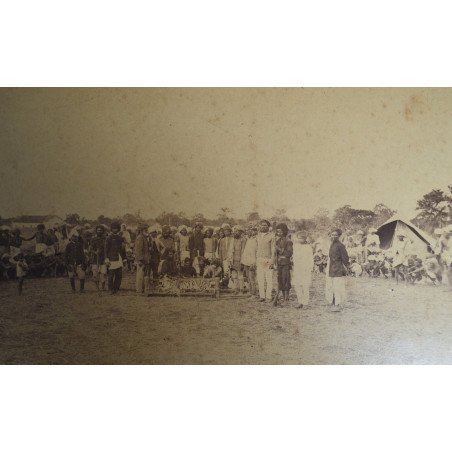
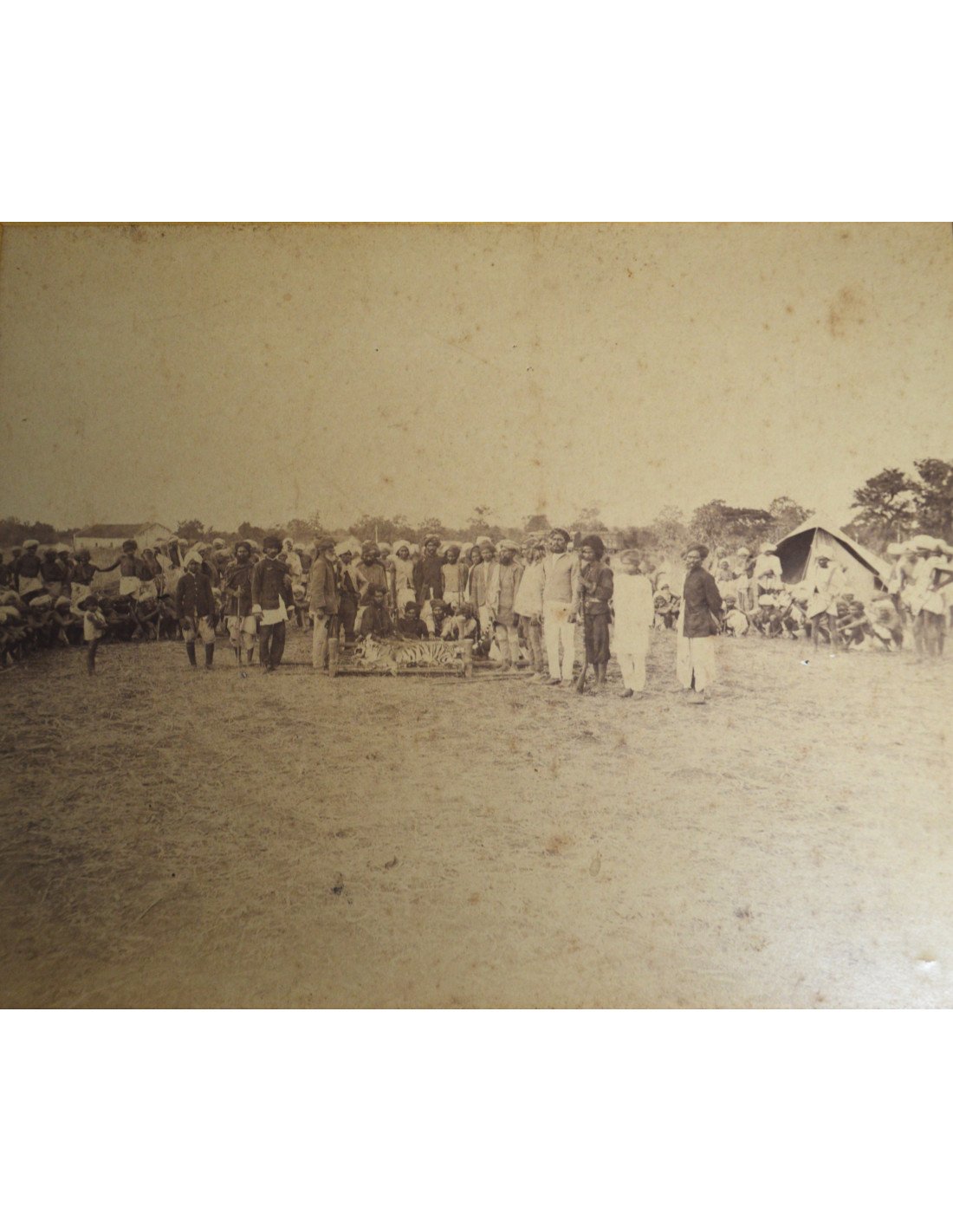
The photograph presented here is an interesting example of British colonial documentary photography from India, made most probably between about 1880 and 1900. Although known in the antiques trade as a "Tiger Hunt", the image captures the ceremonial moment after the hunt rather than the action itself. At the centre of the composition is the body of the tiger laid out on an improvised support, surrounded by a large group of participants: Europeans in colonial dress, probably British officers or administrators, alongside numerous locals, guides and beaters, indispensable to the organisation of such expeditions. In the background a military or field tent can be seen, and a crowd gathered for the commemorative photograph.
Historically, images of this kind are visual testimony to the culture of big-game hunting during the British Raj. Tiger hunting was one of the most prestigious recreational activities of the colonial administration and of the Indian princes, serving both a symbolic role - demonstrating courage and authority - and a propagandistic one. Photographs taken after a successful expedition became souvenirs for family albums or for exchange between participants.
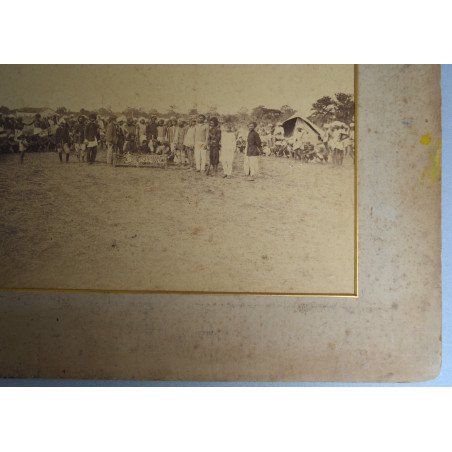
Technically the photograph appears to be a print on late albumen paper or on gelatin silver developing-out paper, mounted on heavy presentation card, a practice commonly found at the end of the nineteenth century. The generous format and the original mount suggest that the piece was intended for display or for keeping in a prestige album. Although the image is markedly faded, as is characteristic of old photographs exposed to light, the principal details remain legible.
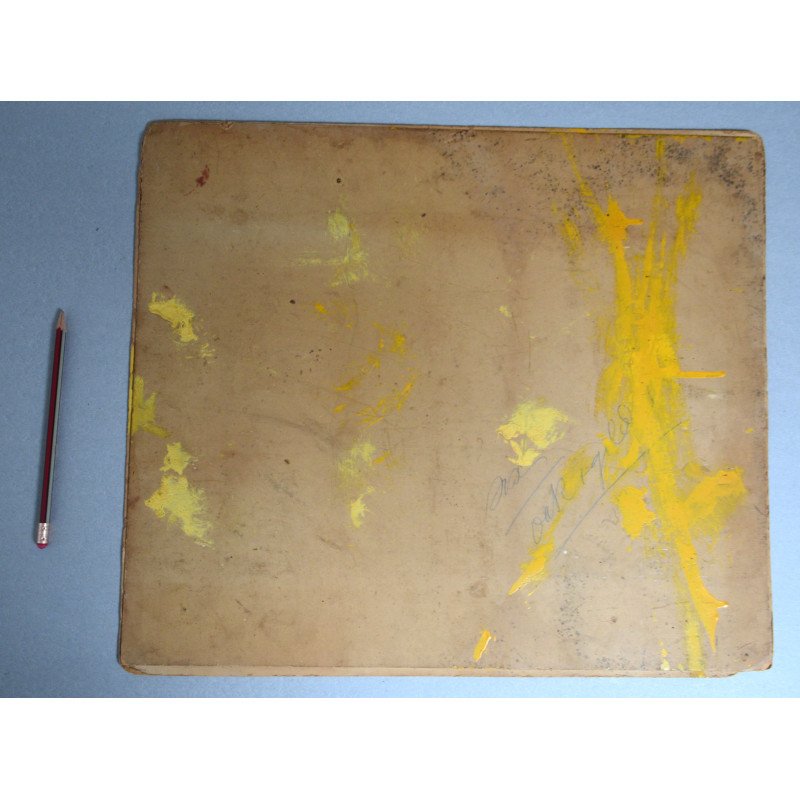
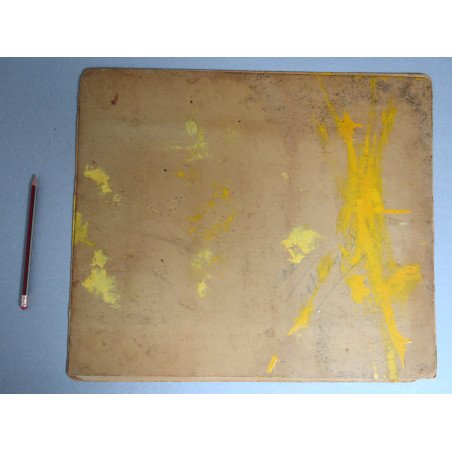
The state of preservation is typical for a historical object of this kind: the photograph shows general yellowing and fading, and the backing card has handling marks, surface dirt, worn corners and slight distortion.