Shopping Cart
There are no more items in your cart

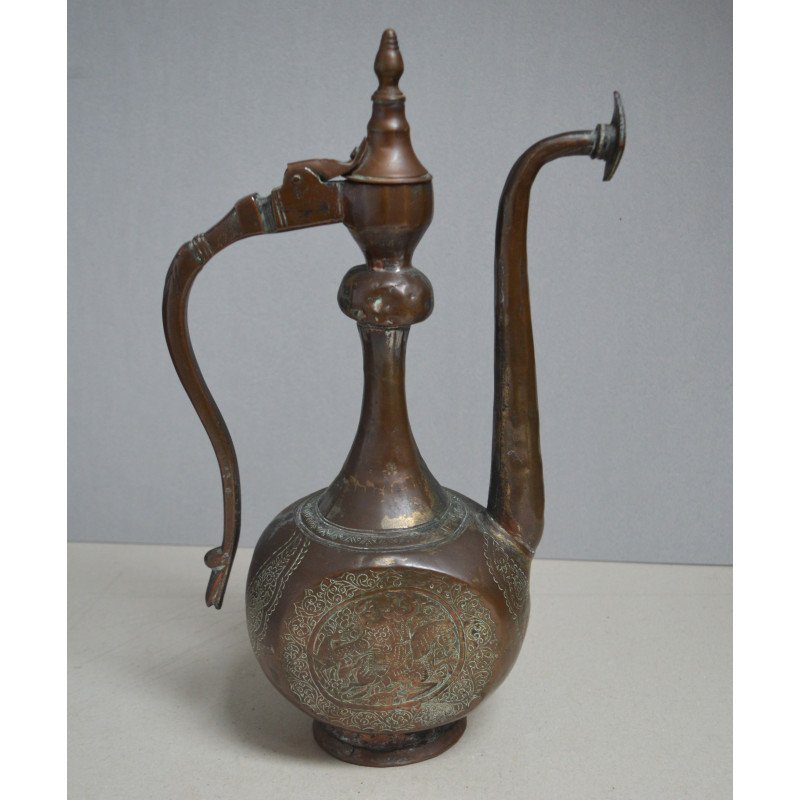


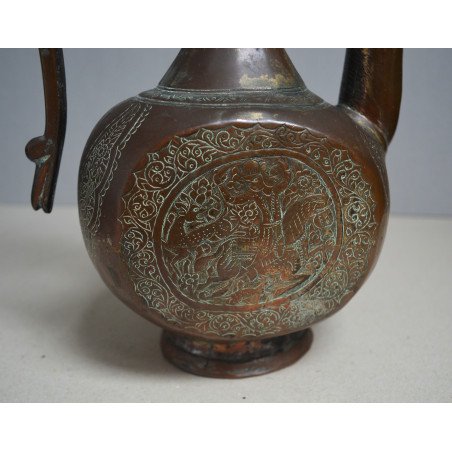

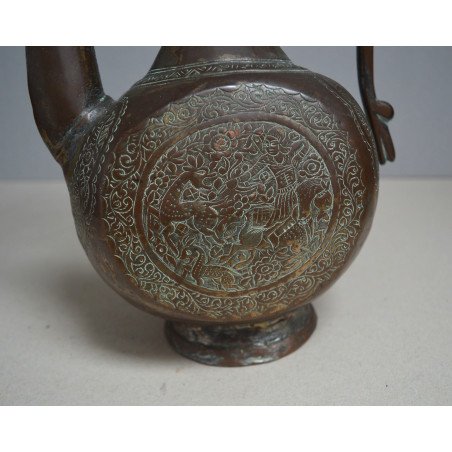
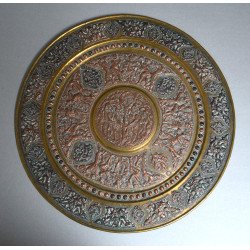

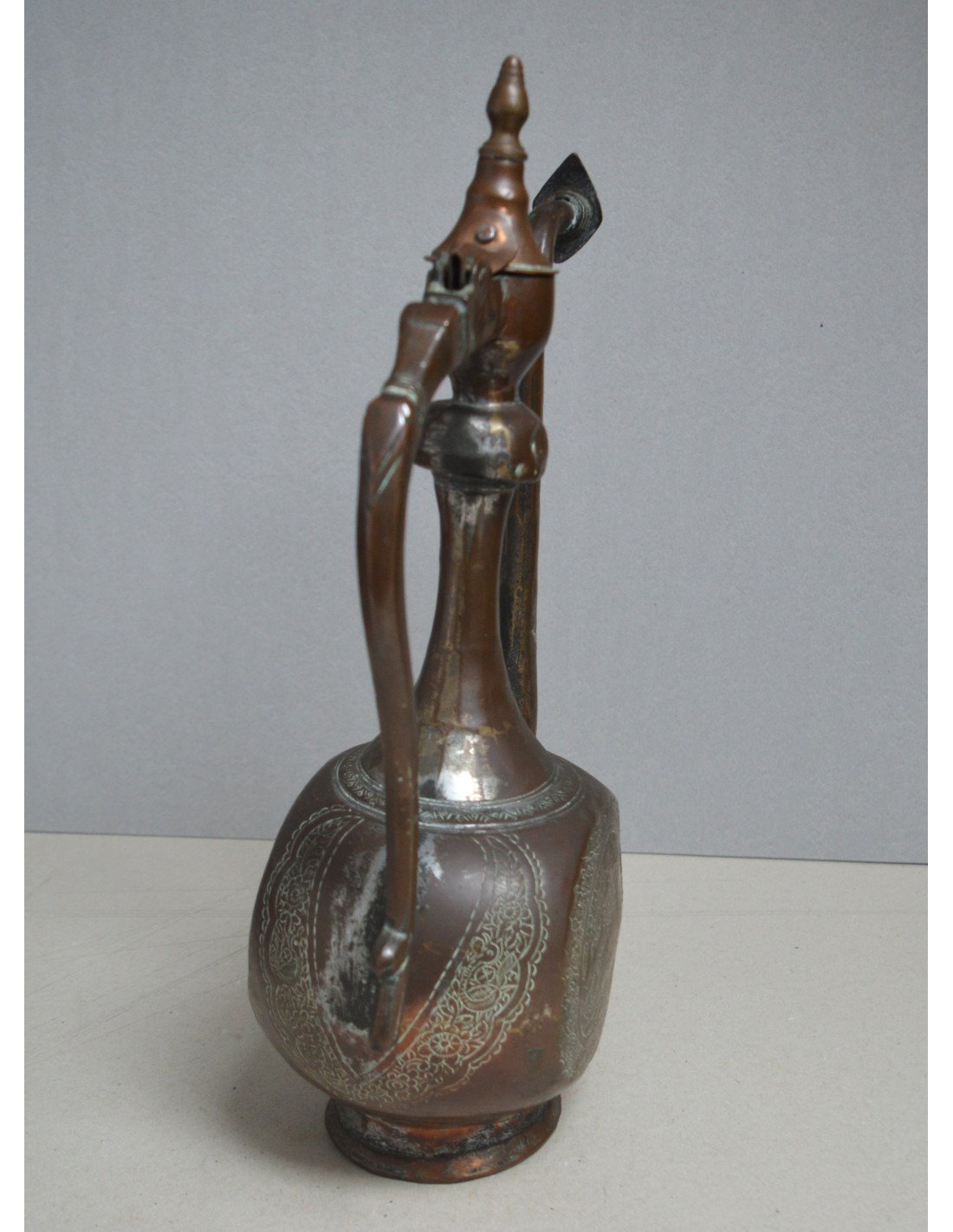
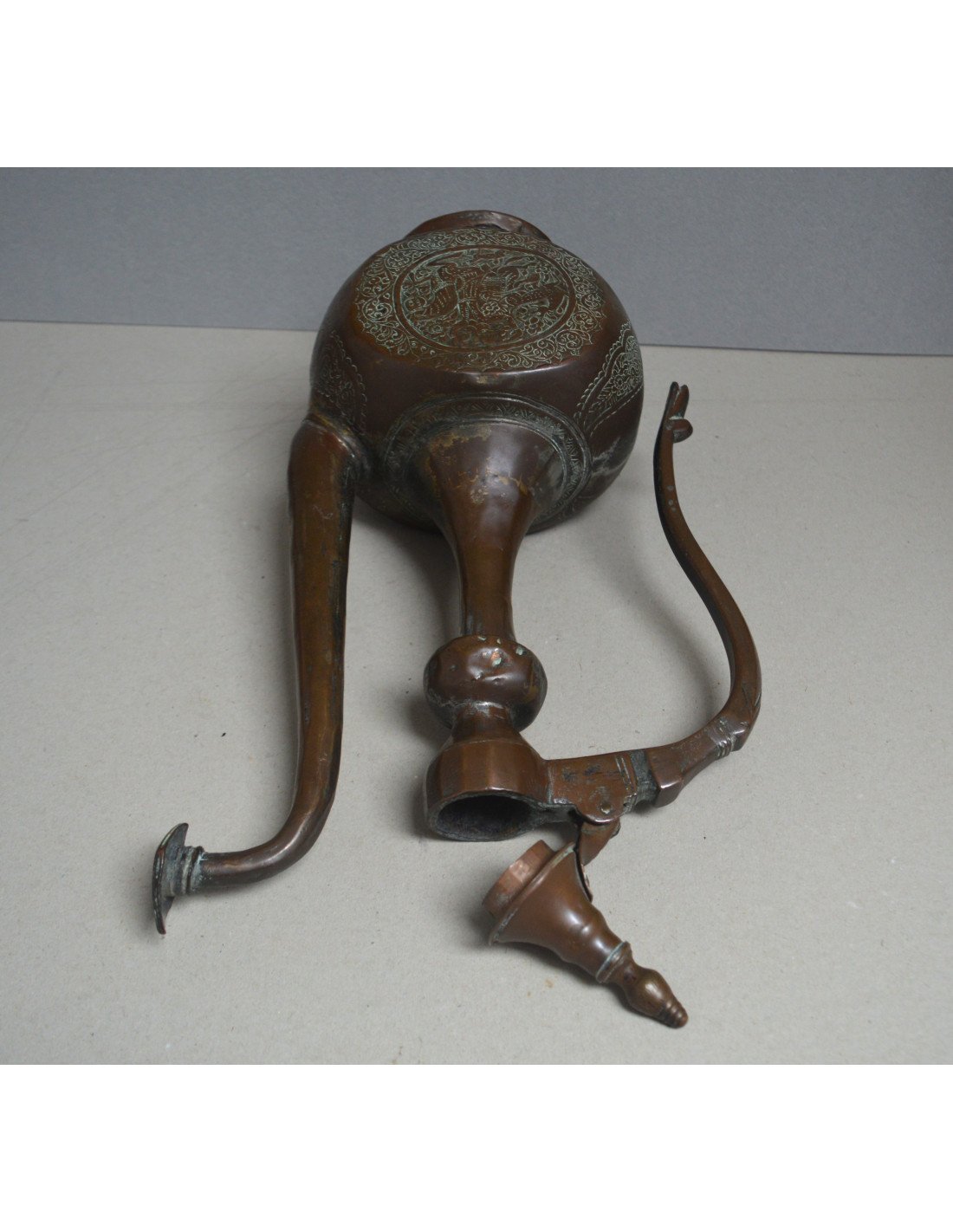
Persian engraved copper ewer, 18th-19th century.
Persian engraved copper ewer, Iran, 18th–19th century, traditionally used for pouring water or beverages in domestic and ceremonial settings.
It has an elegant silhouette, with a tall neck, globular body and long curved spout, typical of late Islamic metalwork. The incised decoration - figurative scenes and foliate motifs set in circular medallions - is characteristic of the silversmithing schools of Tabriz or Isfahan, where craftsmen combined Sasanian motifs (hunting scenes, fantastic animals) with floral arabesques.
Material: red copper, partly oxidised, with traces of greenish patina.
Technique: casting, followed by hand engraving and possibly silver inlay (now lost).
height 39 cm; diameter body approximately 16–11 cm.
Decoration: a central medallion with mounted figures surrounded by stylised vines; a foliate frieze outlining the neck and base; a hunting scene
State of preservation: as shown in the photographs, with small cracks and oxidation; the spout and the lid show minor distortion.
Vessels of this kind circulated widely in the Persian and Ottoman spheres and were often exported to Mughal India and the Ottoman Empire. They reflect the cultural synthesis of late Islamic metalwork, in which the functional becomes a pretext for ornament. Hunting scenes, though unusual in an Islamic context (where figurative imagery was often restricted), are an inheritance from Sasanian art, reinterpreted in decorative terms.