Stirrup, Colombia, 19th century
Material: patinated bronze (an alloy with traces of green oxidation, characteristic of antiqued bronze)
Technique: cast whole in a mould, with engraved and relief decoration
Dimensions: 26 × 11 × 13 cm
Provenance: Colombia (probably the Andean region, mestizo-Hispanic tradition)
Date: 19th century
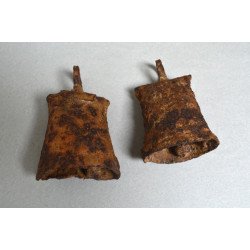
Condition as shown in the photographs: natural patina, minor wear and traces of green oxidation; no tears or structural distortion.
A heavy colonial-type stirrup, cast in bronze. The side surfaces are decorated with engraved and relief motifs, including a stylised shell and ornamental borders of late baroque inspiration. The suspension eye at the top is rounded, shaped to take the leather.
These stirrups belong to the Hispano-colonial equestrian tradition and were used by criollo horsemen, for whom equestrian culture carried a strong social significance. The massive, decorated models denote the owner's membership of an upper or military class.
Objects of this type reflect the cultural synthesis of Iberian metalworking technique with local pre-Columbian aesthetics. The decorative motifs - the shell, the spirals and the geometric friezes - were used in colonial decoration to mark rank and belonging. Bronze, rarer than iron, indicates a prestige piece, often intended for parade or ceremonial use.