Shopping Cart
There are no more items in your cart

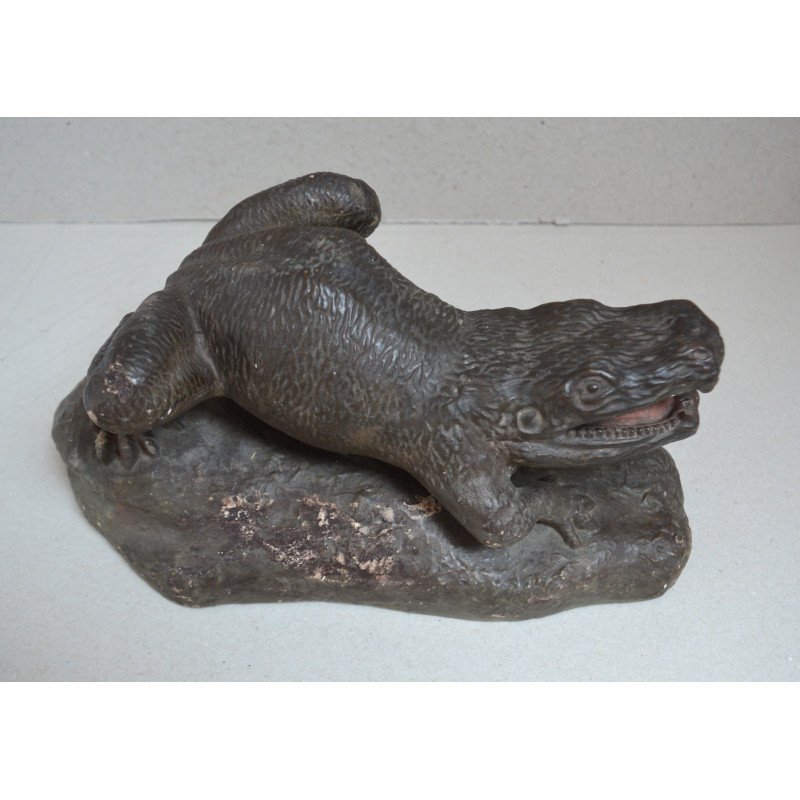

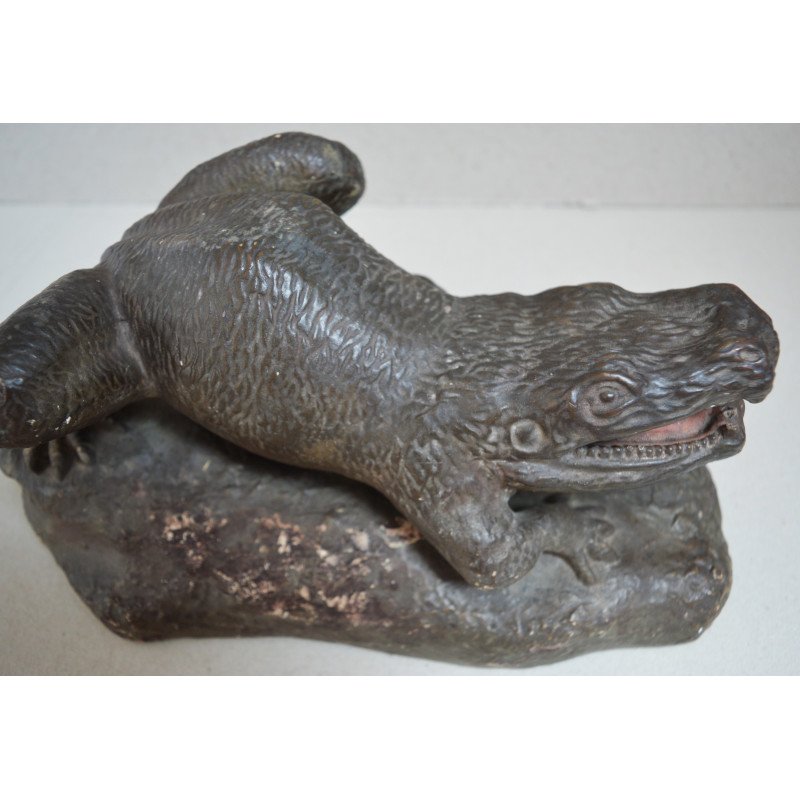
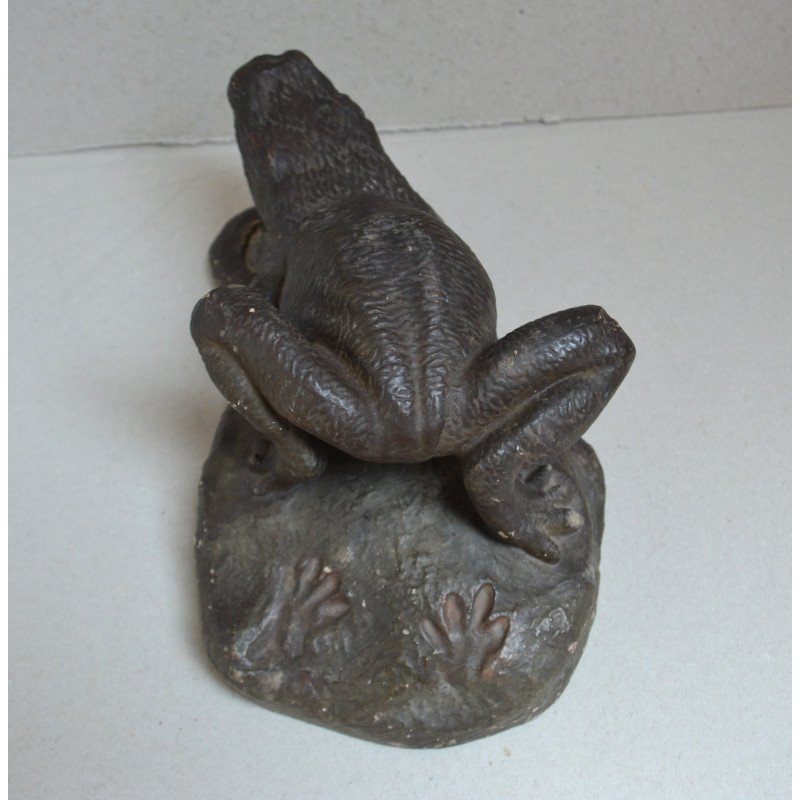


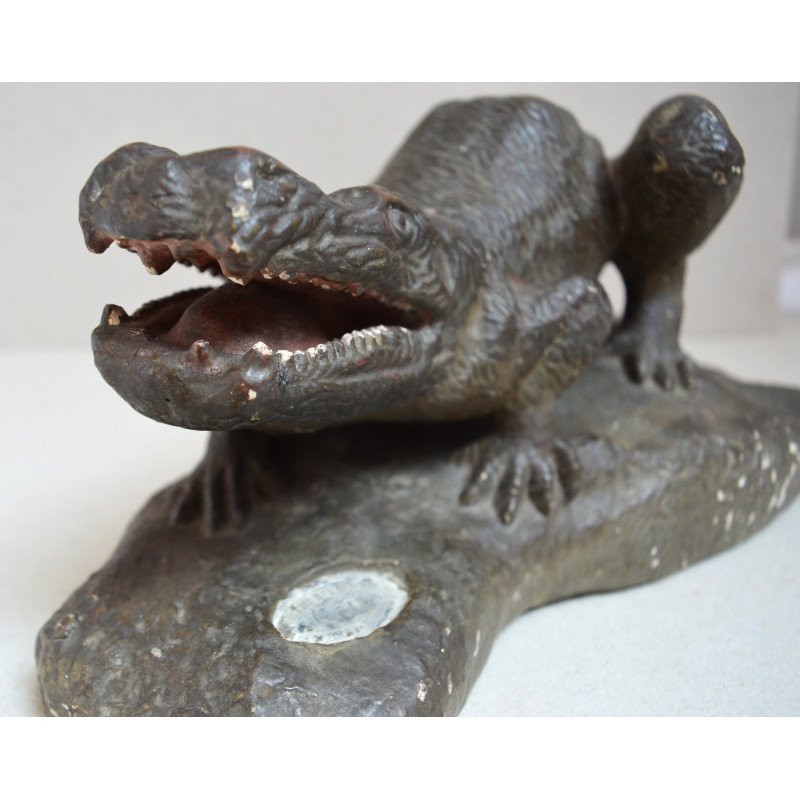
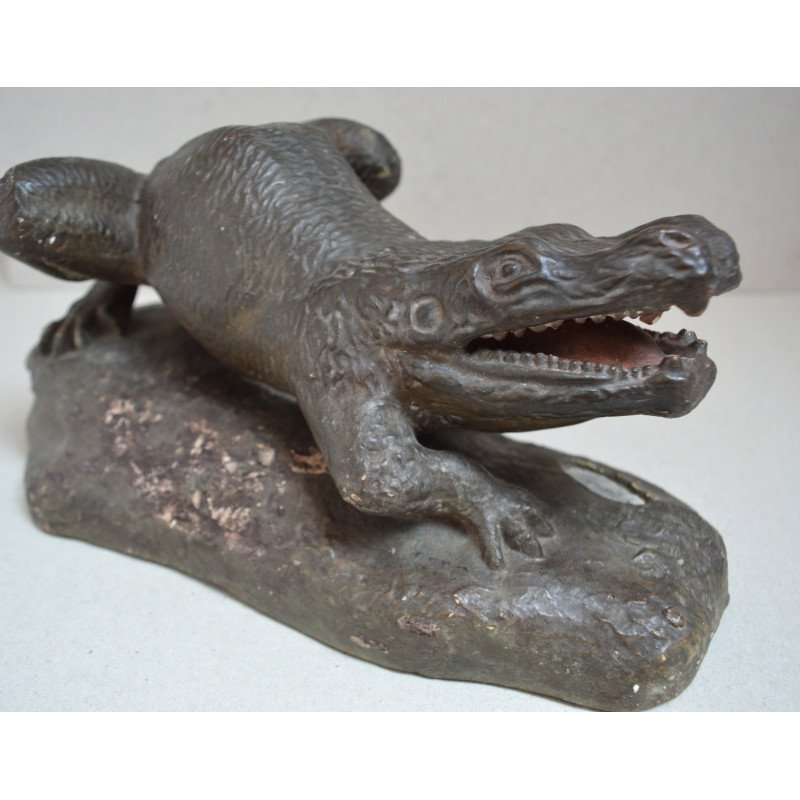

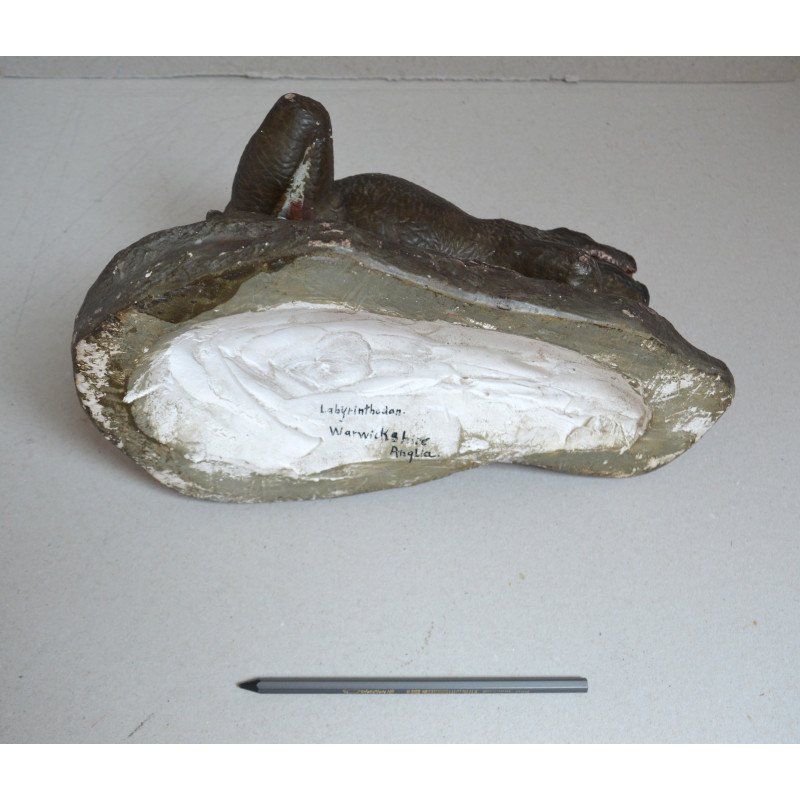
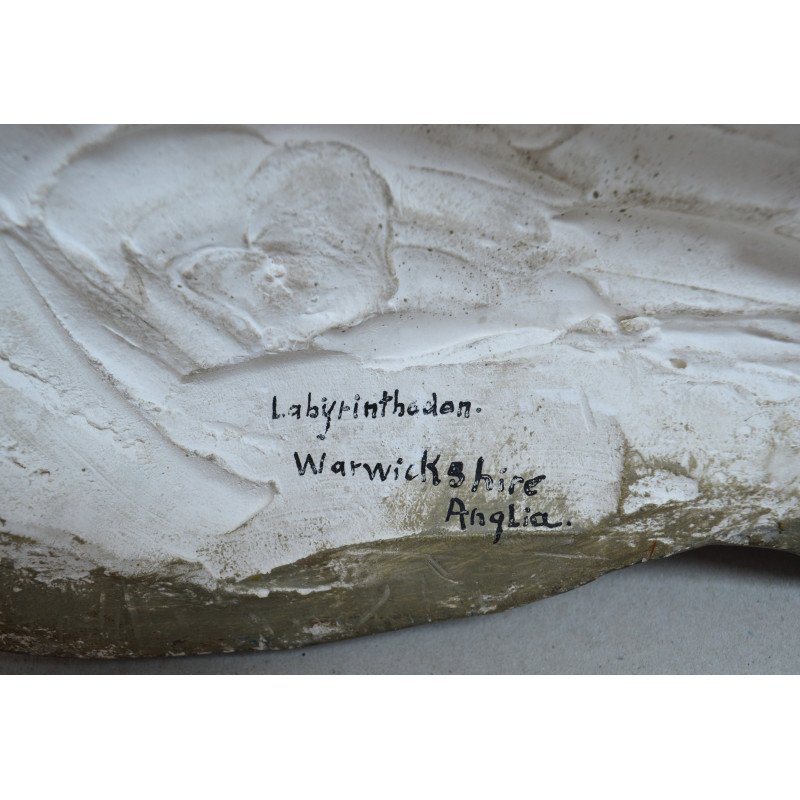
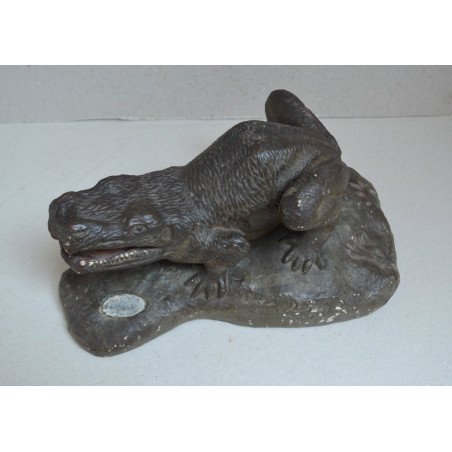
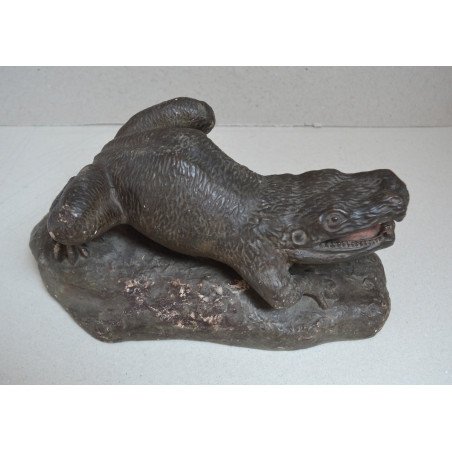
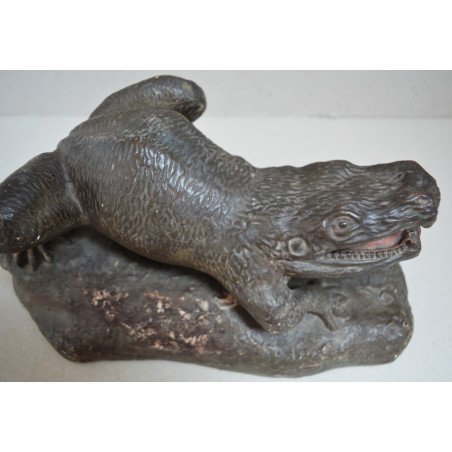


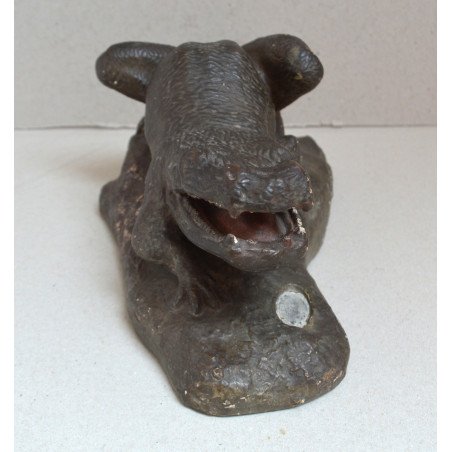
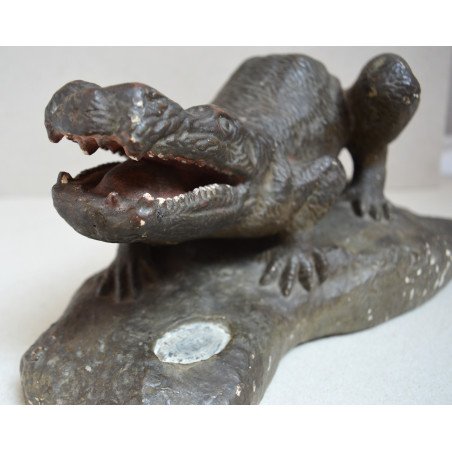
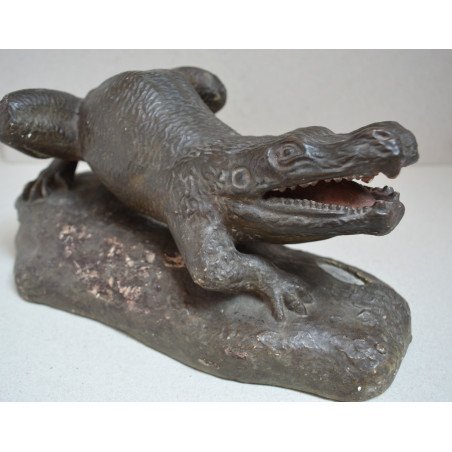
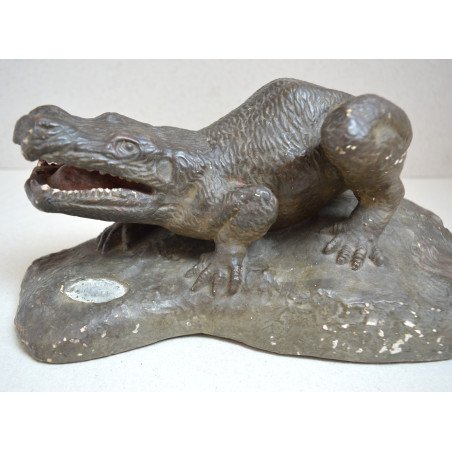

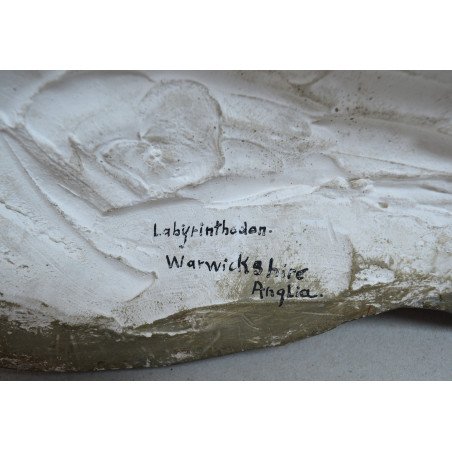


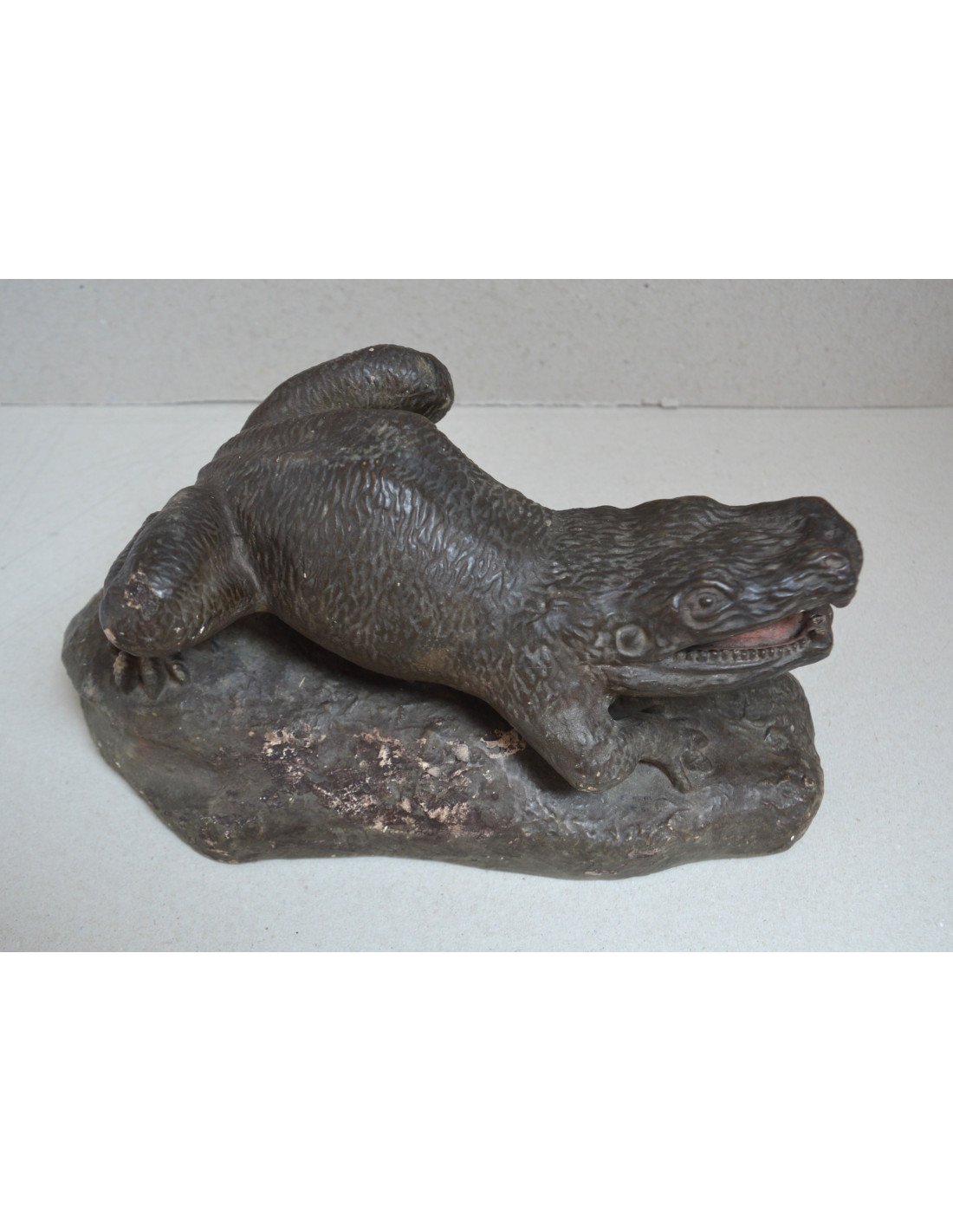
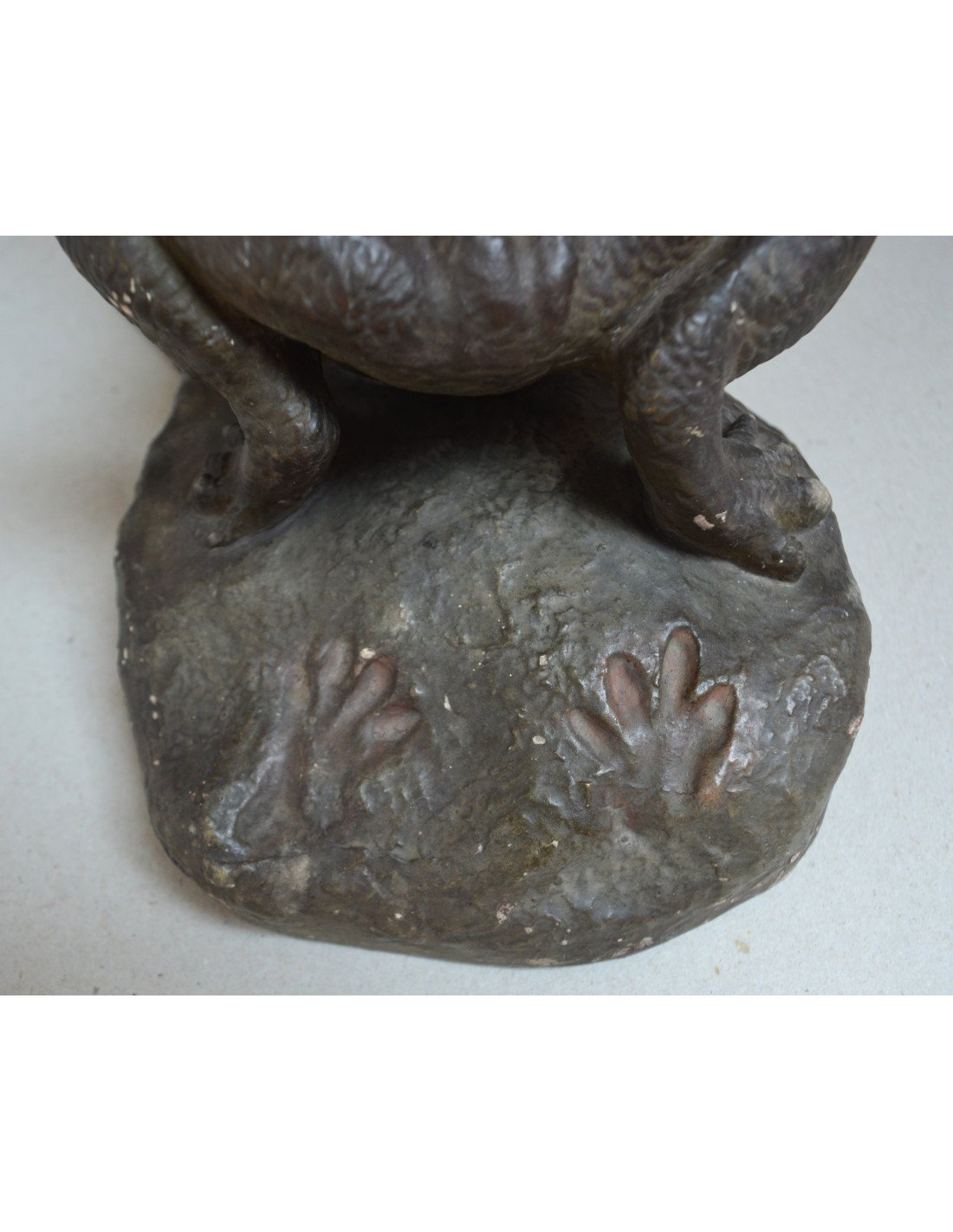
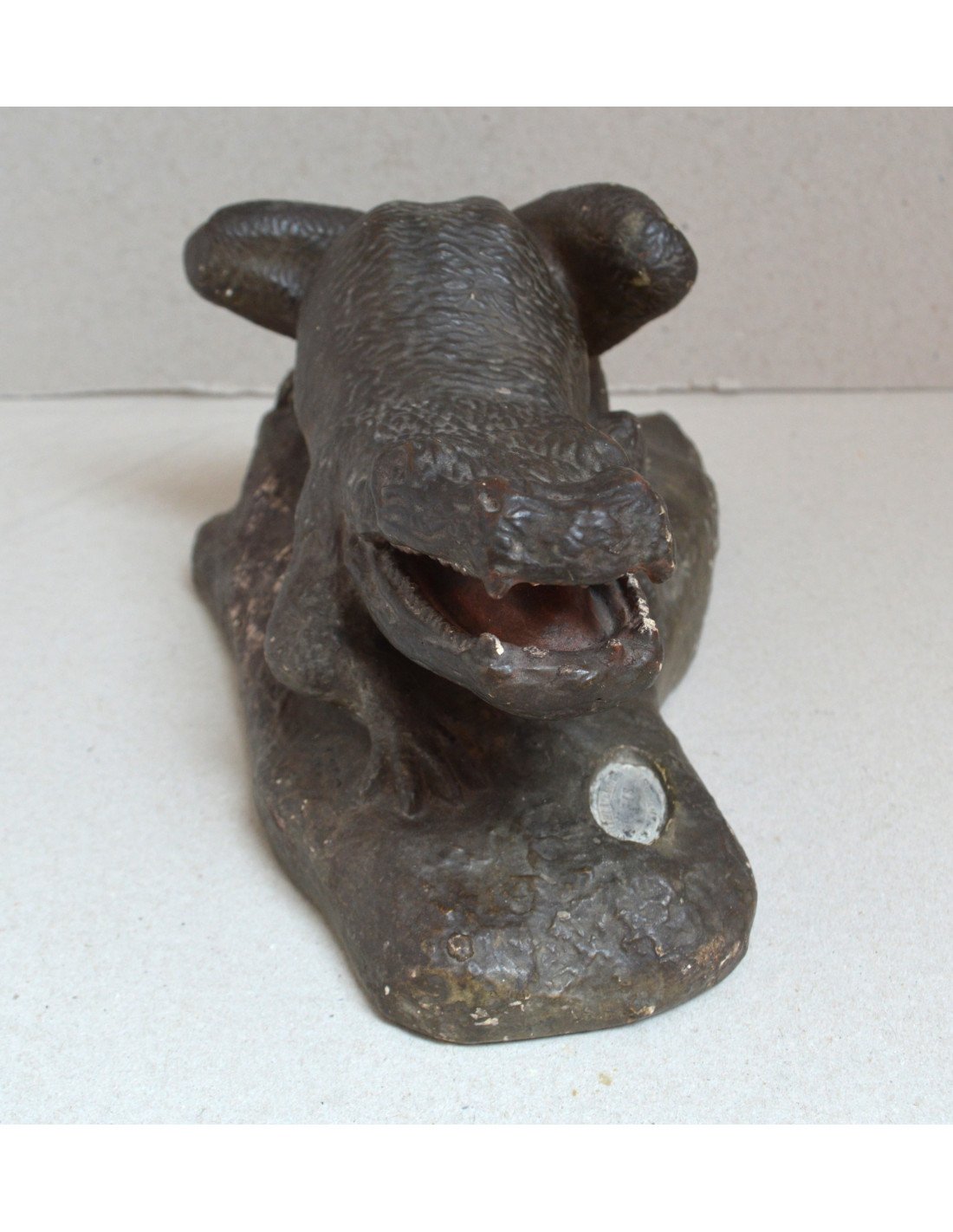
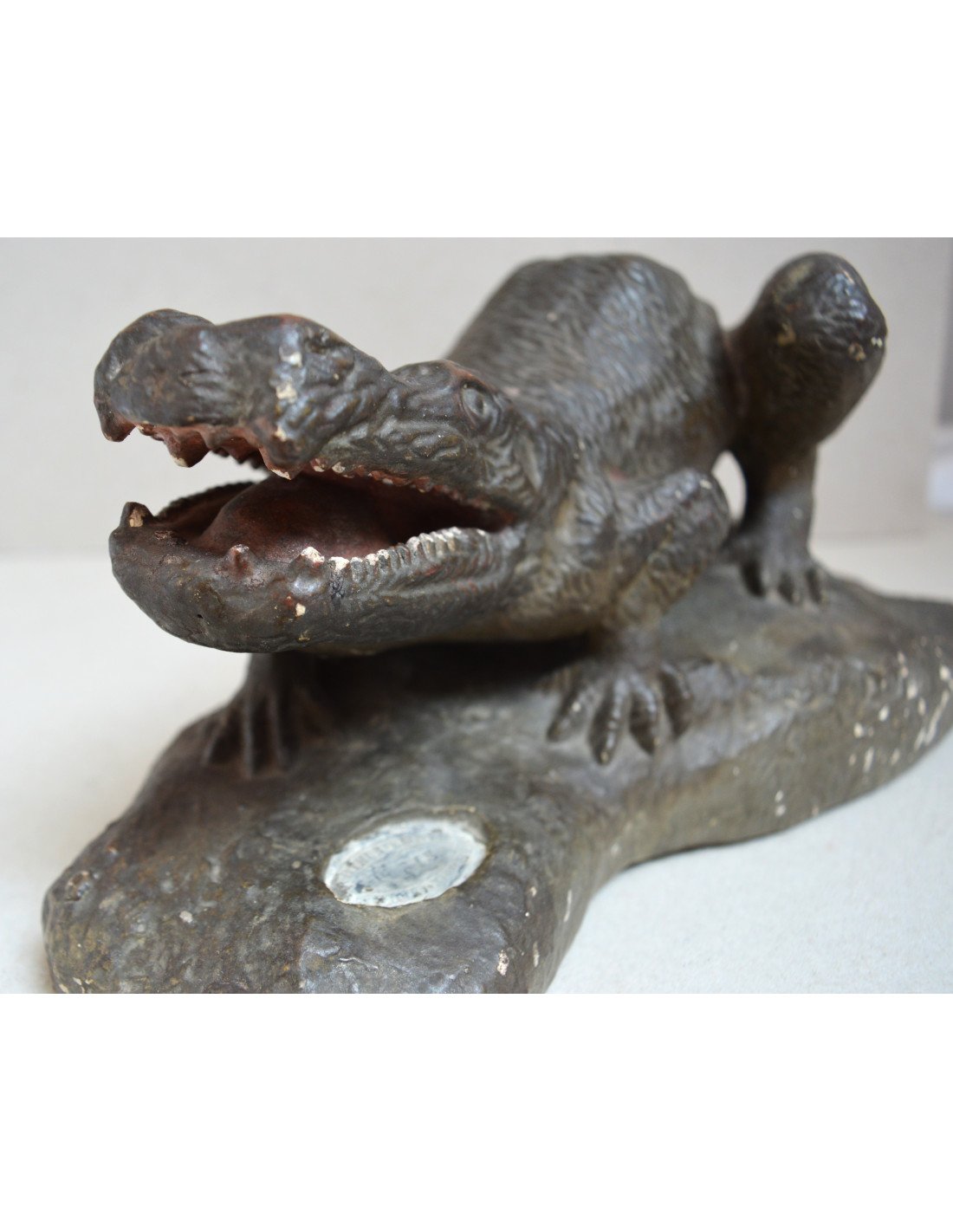
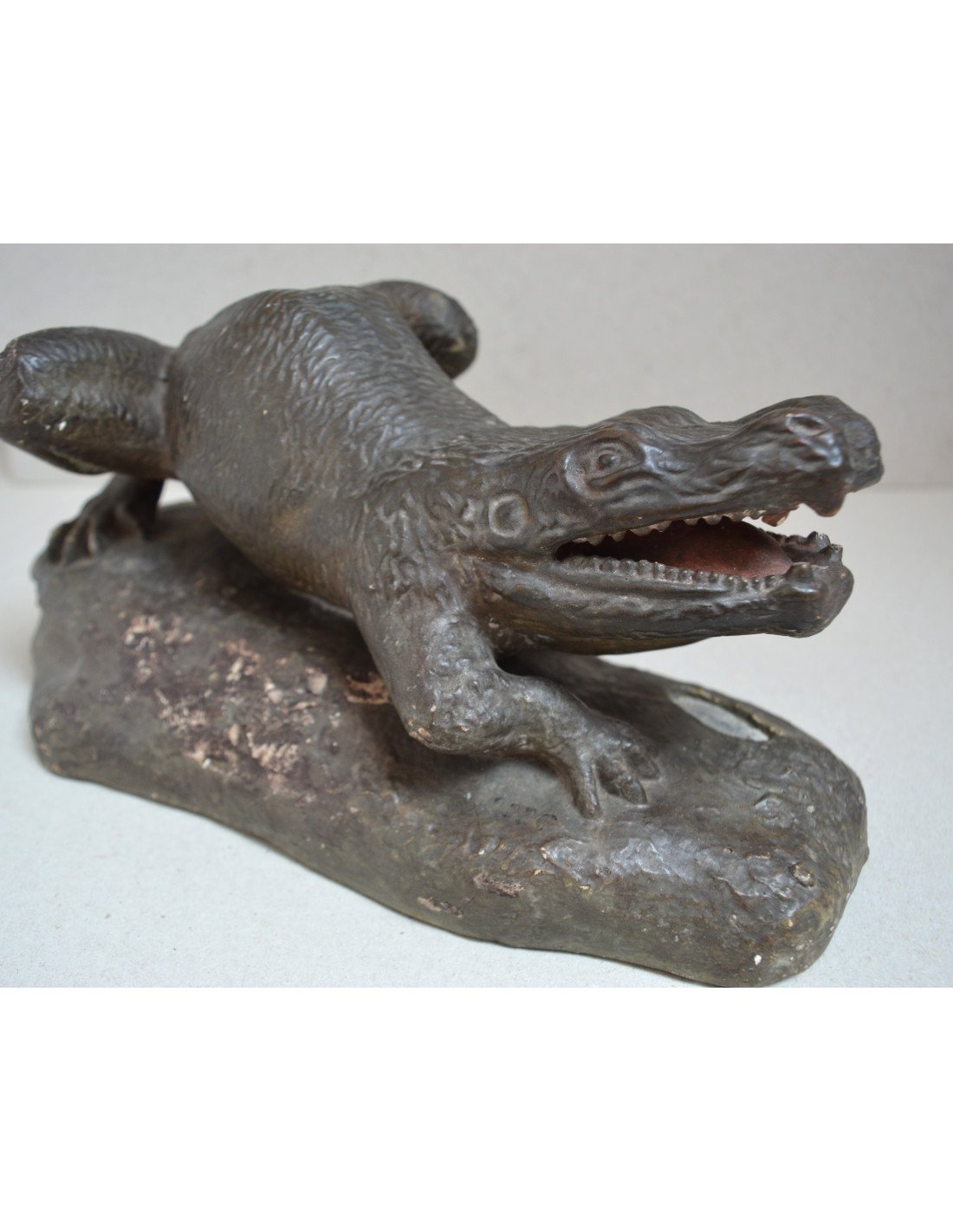
Teaching model of Labyrinthodon, cast in plaster and coloured, the workshop of Arthur Eloffe, Paris, second half of the 19th century
Material: cast plaster, polychromed (painted in realistic colours)
Dimensions: approximately 13 × 33 × 19 cm
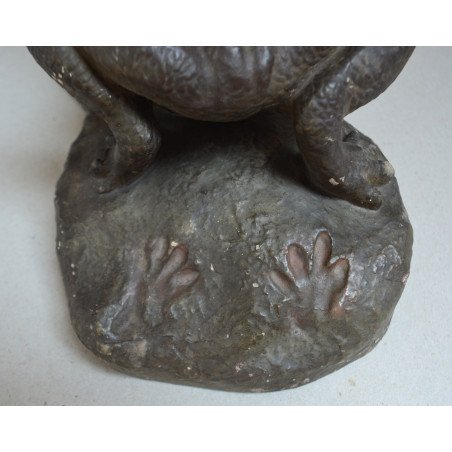
State of preservation: as shown in the photographs, general wear, with the polychrome surface lifting in places.
The piece is a three-dimensional model of a temnospondyl amphibian assigned at the time to the genus Labyrinthodon, as it was interpreted in the second half of the 19th century. The model is made of cast plaster, later polychromed, and preserves anatomical details characteristic of Victorian palaeontological interpretation (short tail, robust limbs, massive head with stylised labyrinthodont dentition). It was created (alongside other models) by Benjamin Waterhouse Hawkins (modeller), in collaboration with the palaeontologist Richard Owen (scientific consultant), in 1854. Initially produced on a small scale for documentation and education, they later formed the basis for the monumental sculptures in Crystal Palace Park, London, considered the first life-size "dinosaurs" put on public display.
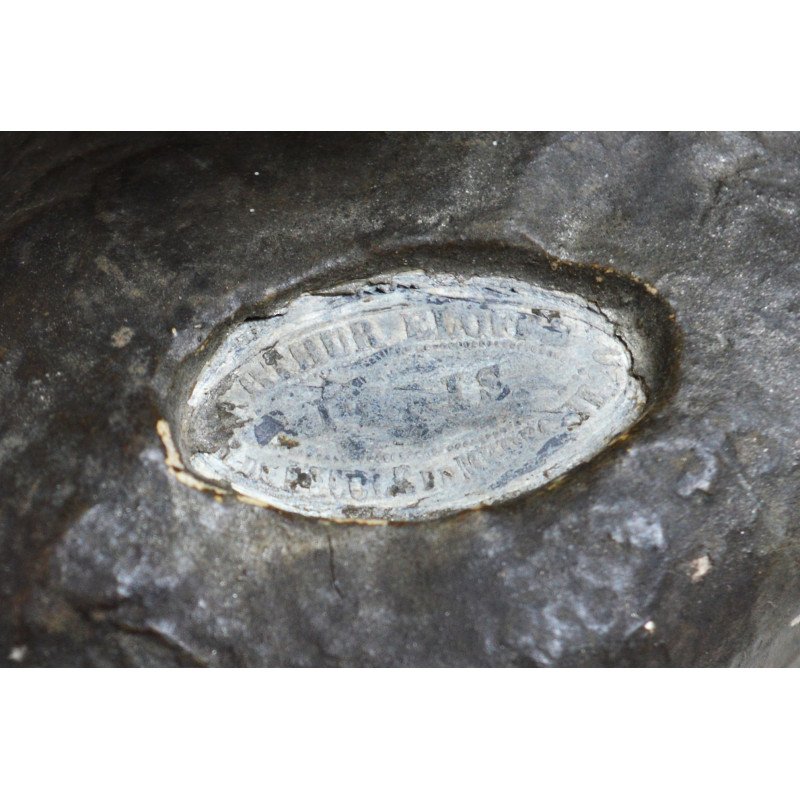
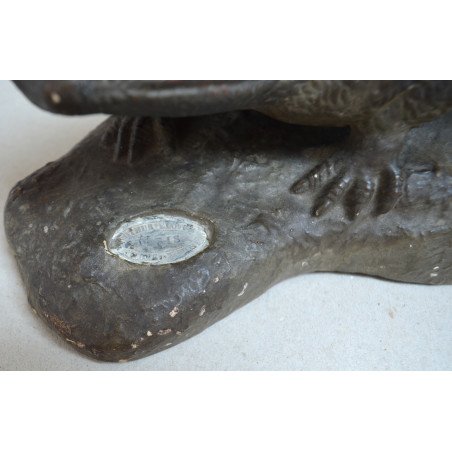
The base carries the relief stamp of the workshop of Arthur Joseph Eloffe (1826–1896), a teacher of taxidermy and a noted natural history preparator, known for supplying educational materials and teaching models to lycées, colleges and museums in France and abroad (Arthur Eloffe – Paris – Rue de l'Ecole-de-médecine 20).
Historically, they are remarkable not only as applied art but also as testimony to the Victorian scientific conception of prehistoric fauna.
Scientific context
The term Labyrinthodon is today taxonomically obsolete. Specimens considered "Labyrinthodon" proved to be temnospondyls, a group of large primitive amphibians with no direct relation to the dinosaurs. Hawkins and Owen combined disparate fossils, producing a partly imaginary reconstruction. The model illustrates mid-nineteenth-century palaeontological thinking, a period in which species such as Labyrinthodon were reconstructed by combining disparate fossils (temnospondyls, primitive reptiles) - which later proved to be a kind of palaeontological "chimera". Indeed, many of the names and interpretations of the time were subsequently revised (for example Megalosaurus bucklandii or Plesiosaurus hawkinsii, now Thalassiodracon hawkinsii).
Provenance
The Arthur Eloffe workshop, Paris, active in the second half of the 19th century.
Significance
Arthur Joseph Eloffe
(biography)
Also known as Kroenishfranck. Born 21.10.1826 in Vesoul (Haute-Saone); died 1 January 1896 in Paris. Arthur Eloffe was a naturalist-preparator and a teacher of taxidermy, with a shop at 20 rue de l'Ecole-de-medecine in Paris. He prepared birds, mammals, reptiles, fish and crustaceans, human and comparative osteology, rocks, minerals, fossils, plants and shells, mounted stag antlers, and dealt in the finishing and trimming of fur rugs. He was a supplier to several museums, colleges and lycees in France and abroad, to which he provided basic collections of various species to support teaching, study and the progress of the natural sciences in accordance with the university curriculum. His collections were all classified and attributed by the professors of each speciality. A member of several scientific societies, he won eleven silver and bronze medals at various exhibitions.