Shopping Cart
There are no more items in your cart
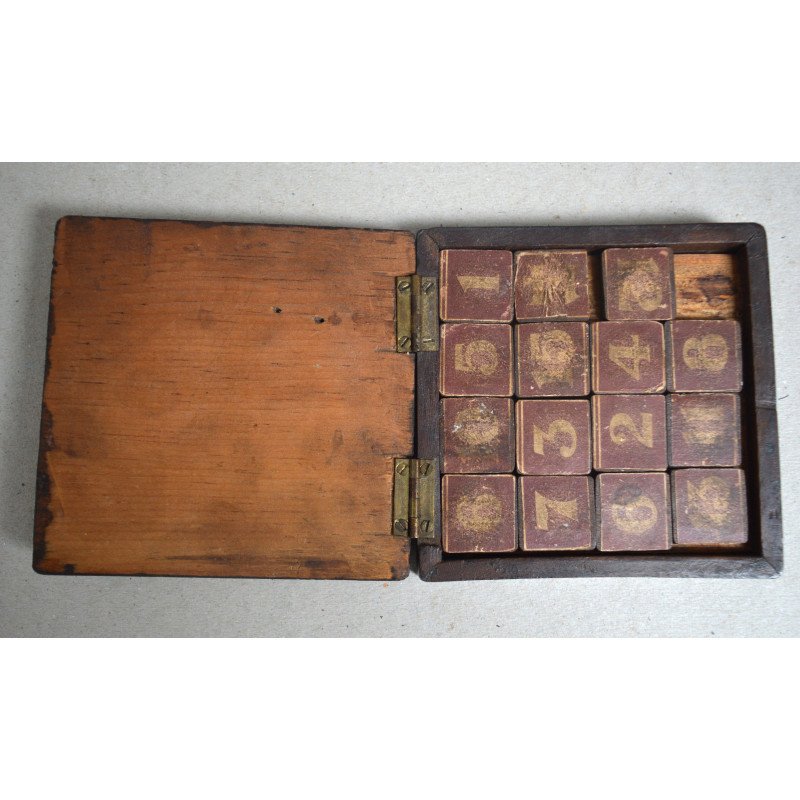


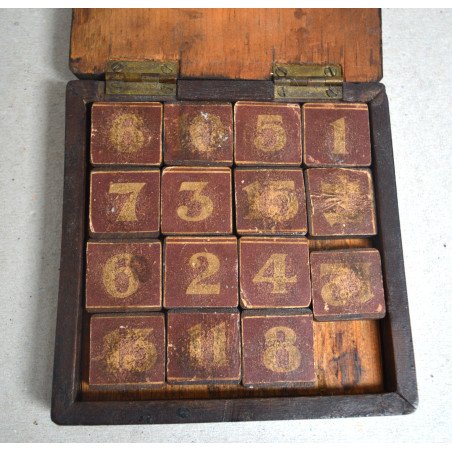
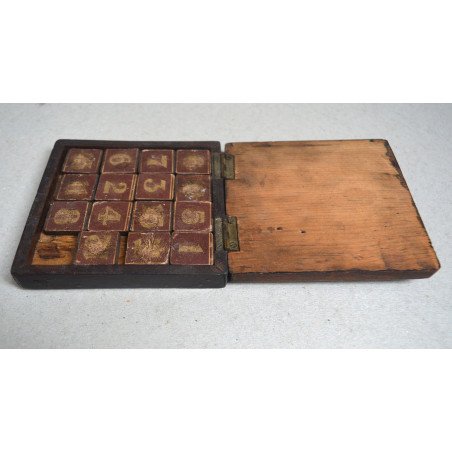


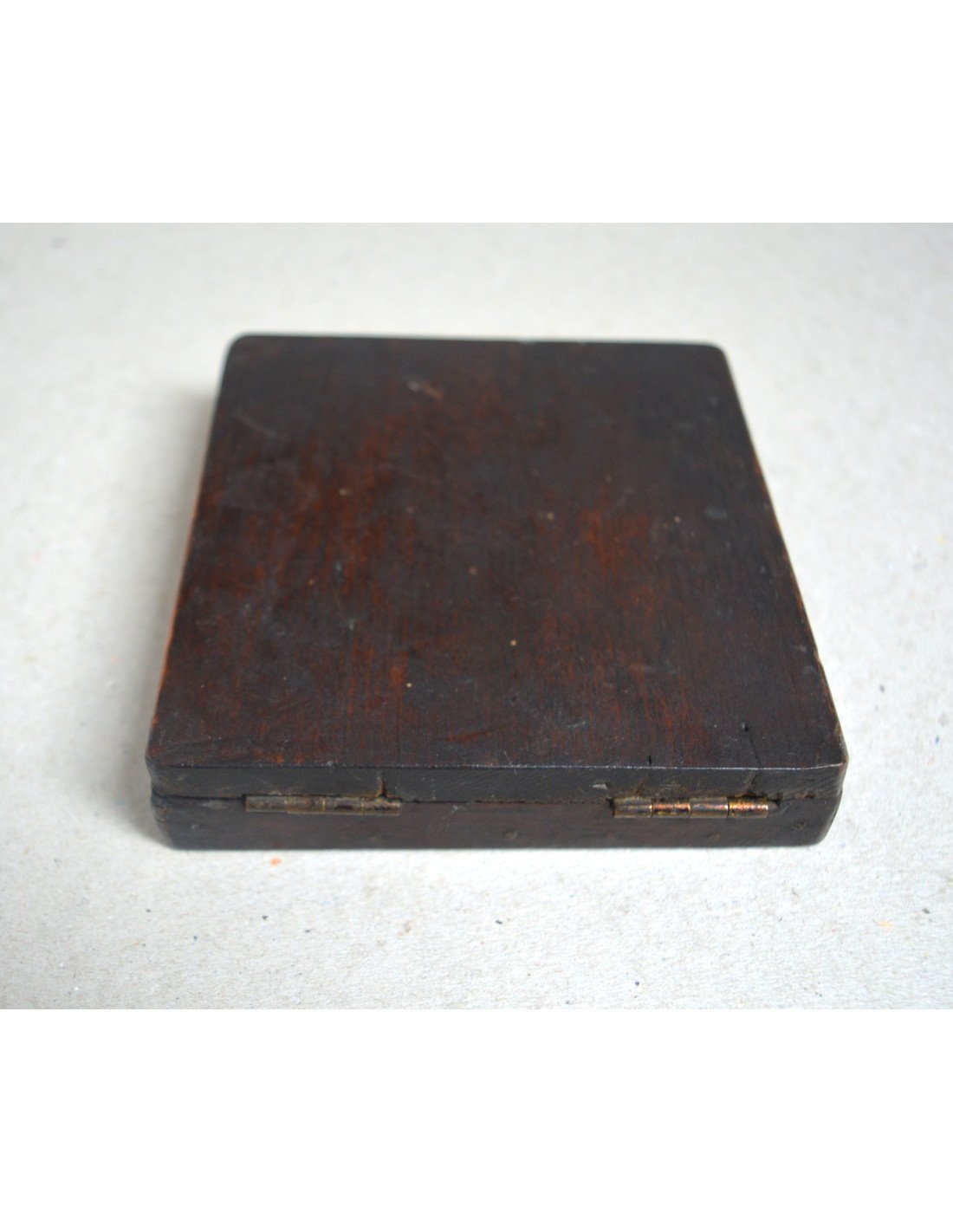
"Fifteen" (or "15") antique number puzzle game, circa 1900.
The best-known sliding-block puzzle is the "Fifteen" (or "15") puzzle. More than a century before the Rubik's Cube, in 1880, the Fifteen puzzle began one of the first crazes to grip America and Europe. The Fifteen puzzle was first marketed in Boston by Matthias J. Rice, who called it "The Gem Puzzle". It was a tray containing fifteen numbered wooden blocks. The top of the box gave simple instructions: "Place the blocks in the box irregularly, then move until in regular order." The ambiguity of these instructions contributed to the puzzle's popularity. It was eventually proved that half of all random arrangements can be solved, while the other half are impossible. We now distinguish solvable from unsolvable arrangements by checking their "parity" - which amounts to the number of pairs that must be exchanged to restore normal order. If the parity turns out to be even, the position is solvable; if odd, unsolvable. This did not stop people from claiming to have solved impossible arrangements. Most often their "solution" involved a way of redefining the goal state - for example placing the empty space somewhere other than the lower right, ordering the numbers other than left to right in rows across the tray, or using a rotation of the tray itself (thus leaving the figures not right side up, or using round tiles thereafter). Jerry Slocum and Dic Sonneveld published a book on the history of the 15 puzzle. In it they reveal that although Sam Loyd claimed, and was often given, undeserved credit for the invention, the real inventor was Noyes Chapman, a postmaster from Canastota, New York, who applied for a patent in 1880. The patent was refused, probably because the 15 Puzzle was too similar to 207124-Kinsey 1878, which specified the tongue-and-groove arrangement commonly used to hold the tiles in the tray.
Condition as shown in the photographs.
Box dimensions 11.5x11.5x3 cm.