Shopping Cart
There are no more items in your cart


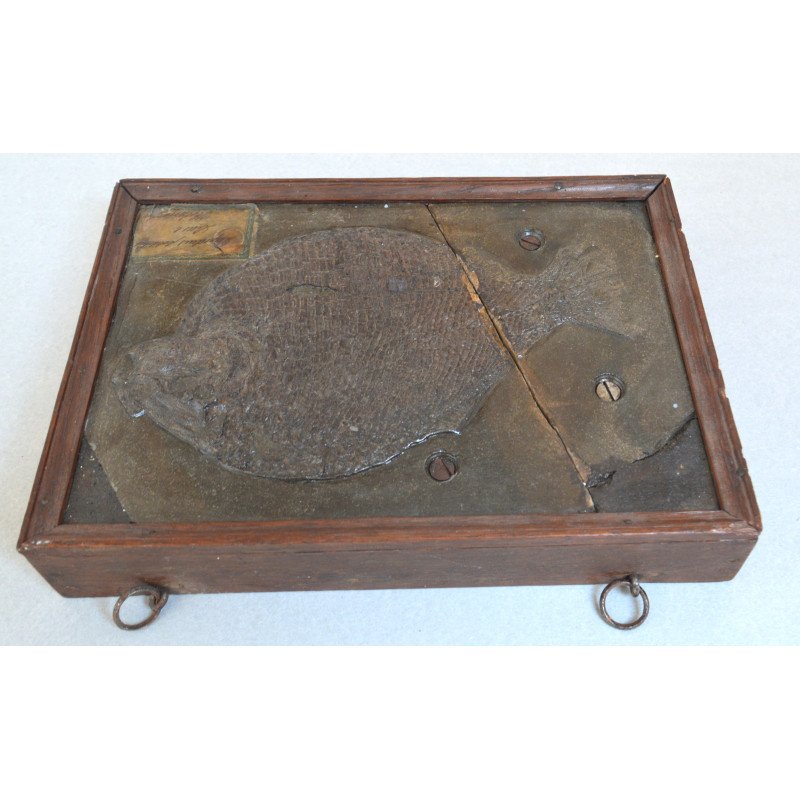

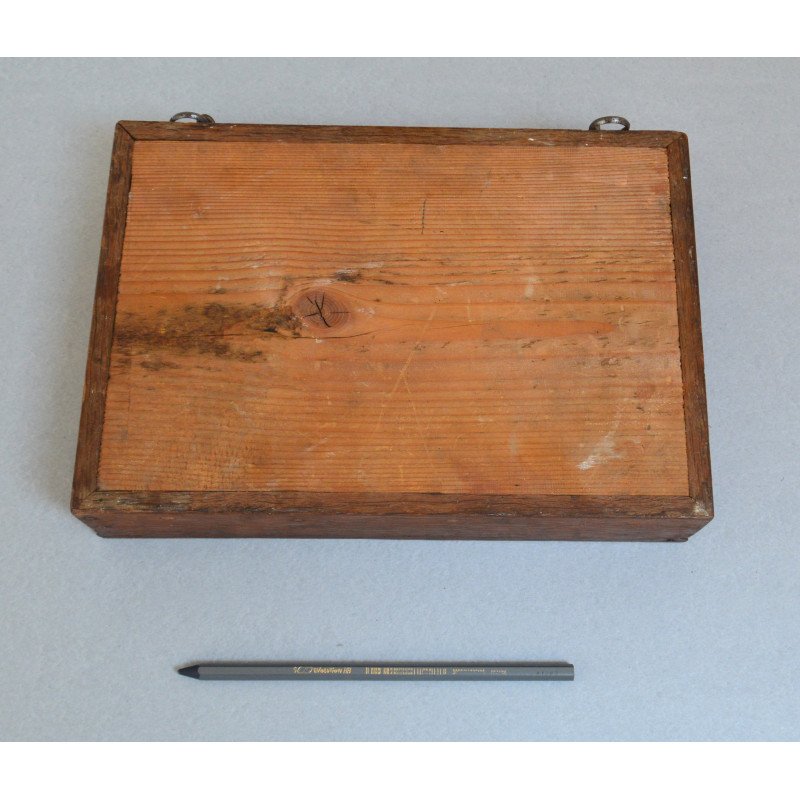
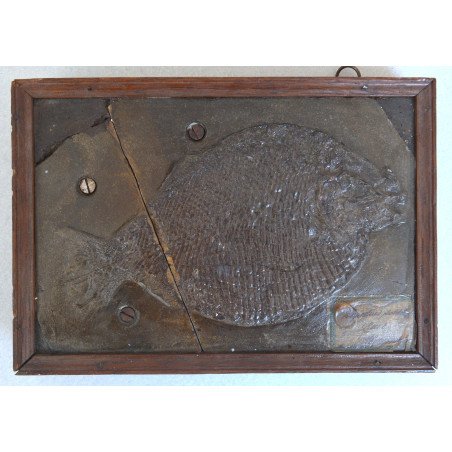

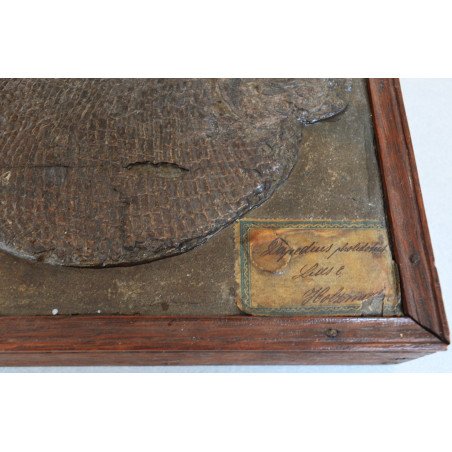

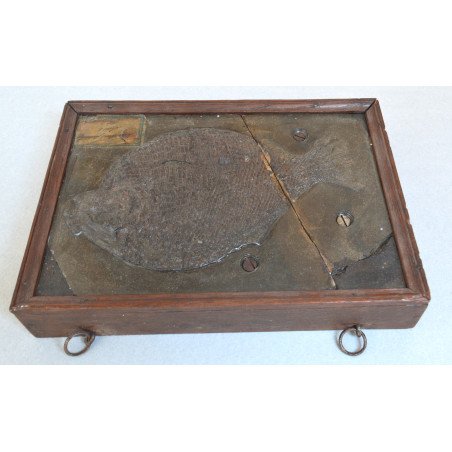
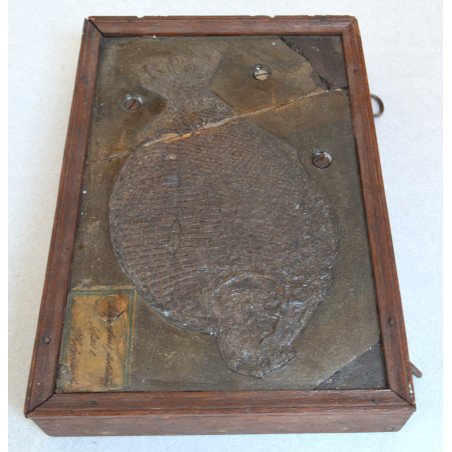
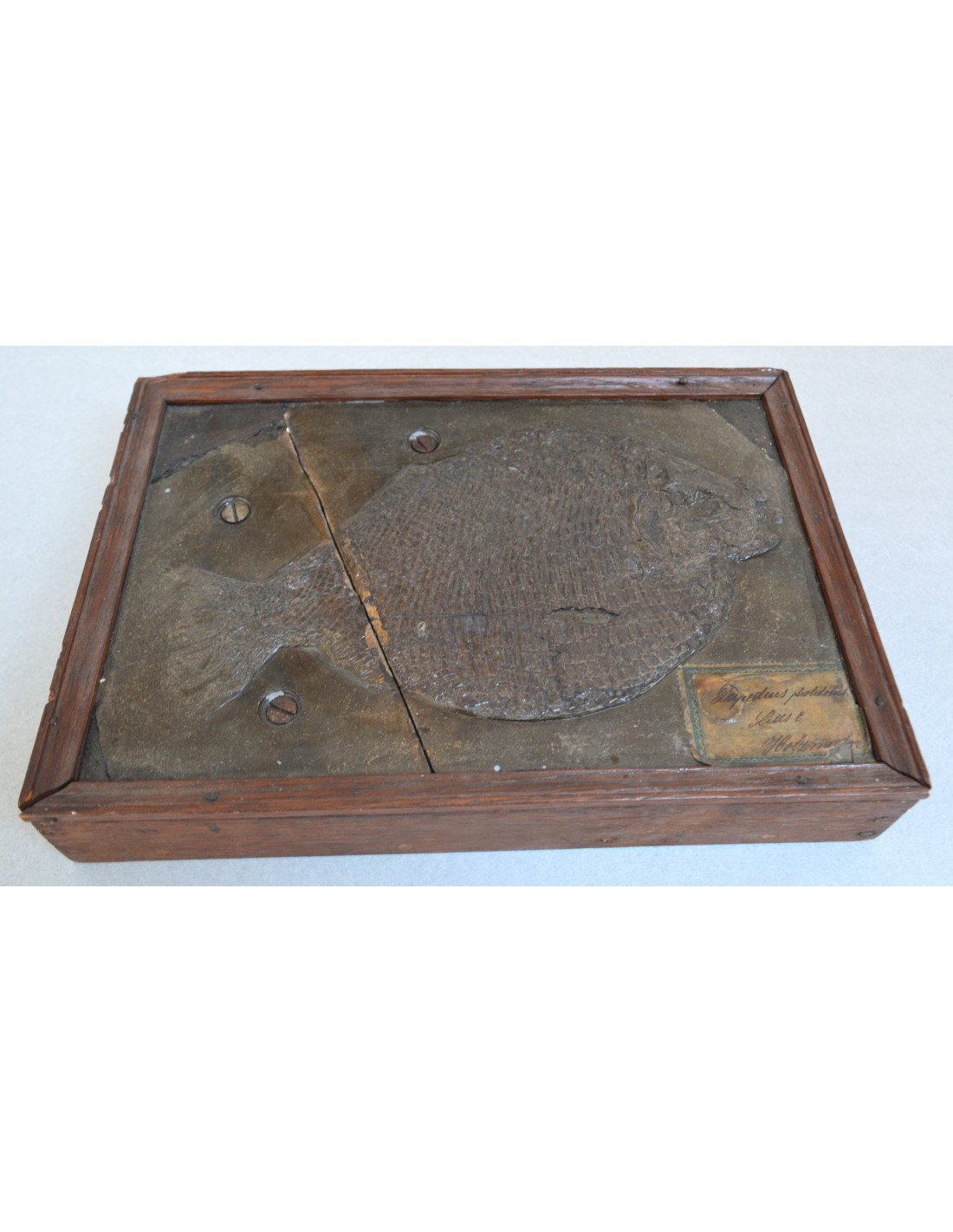
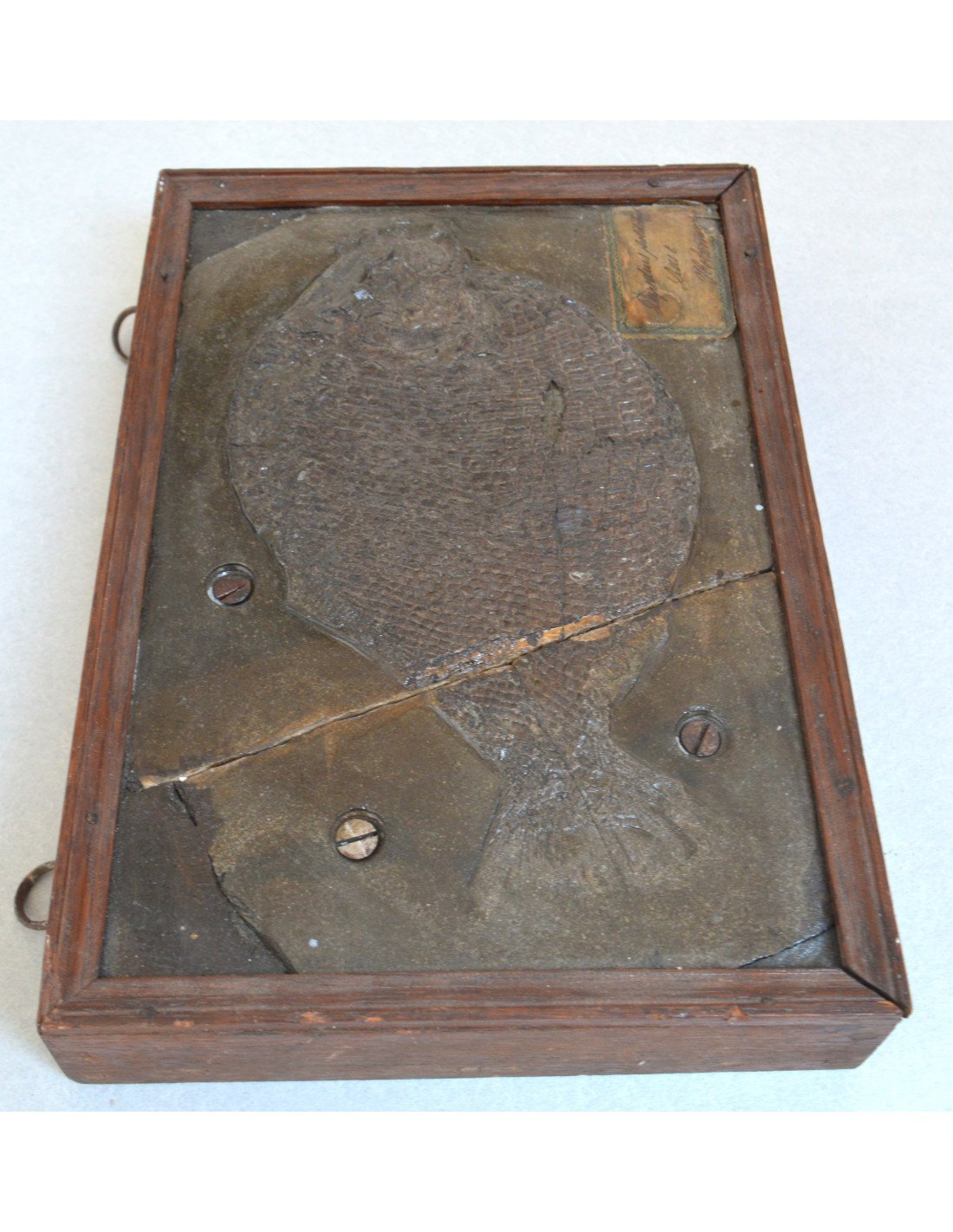
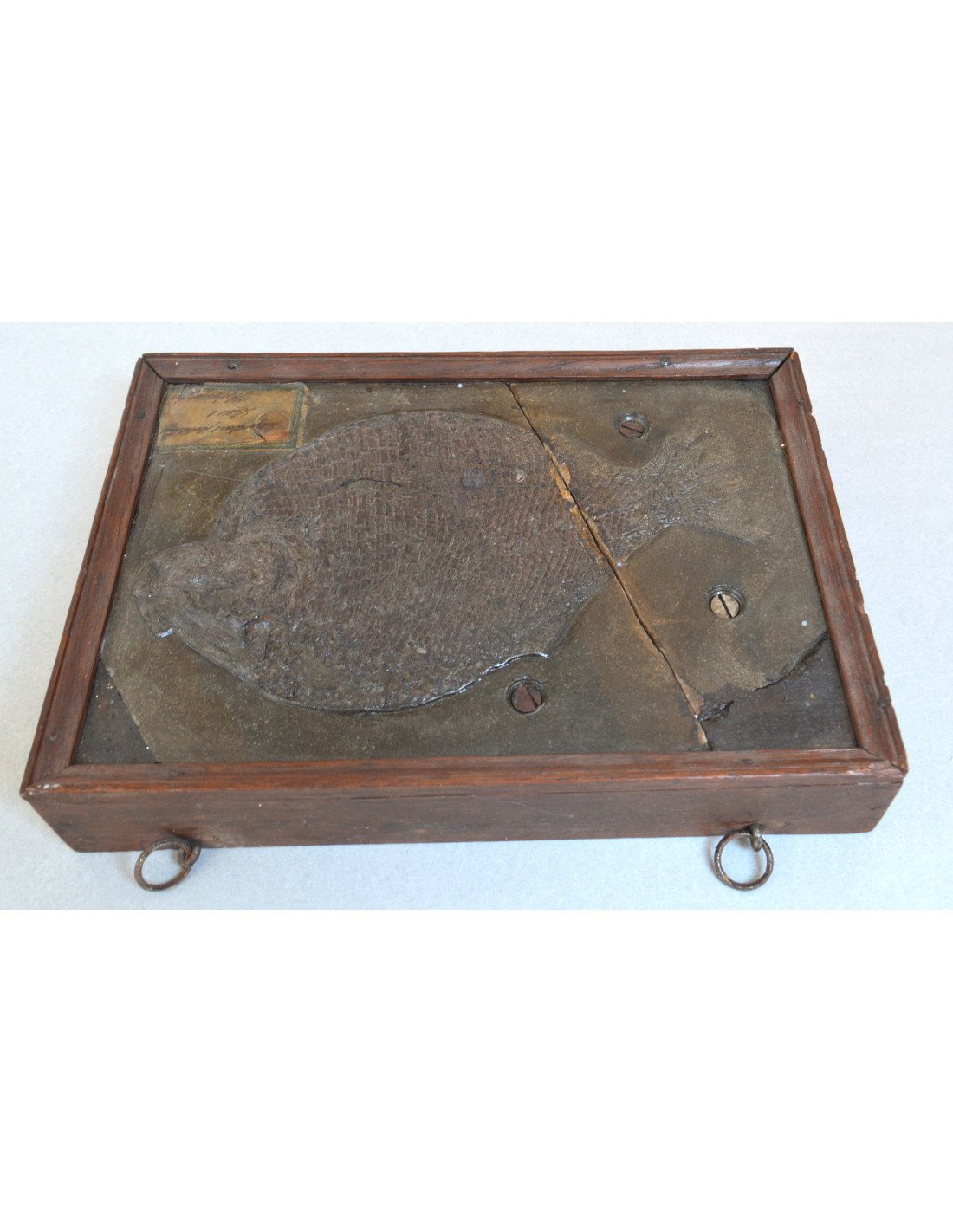
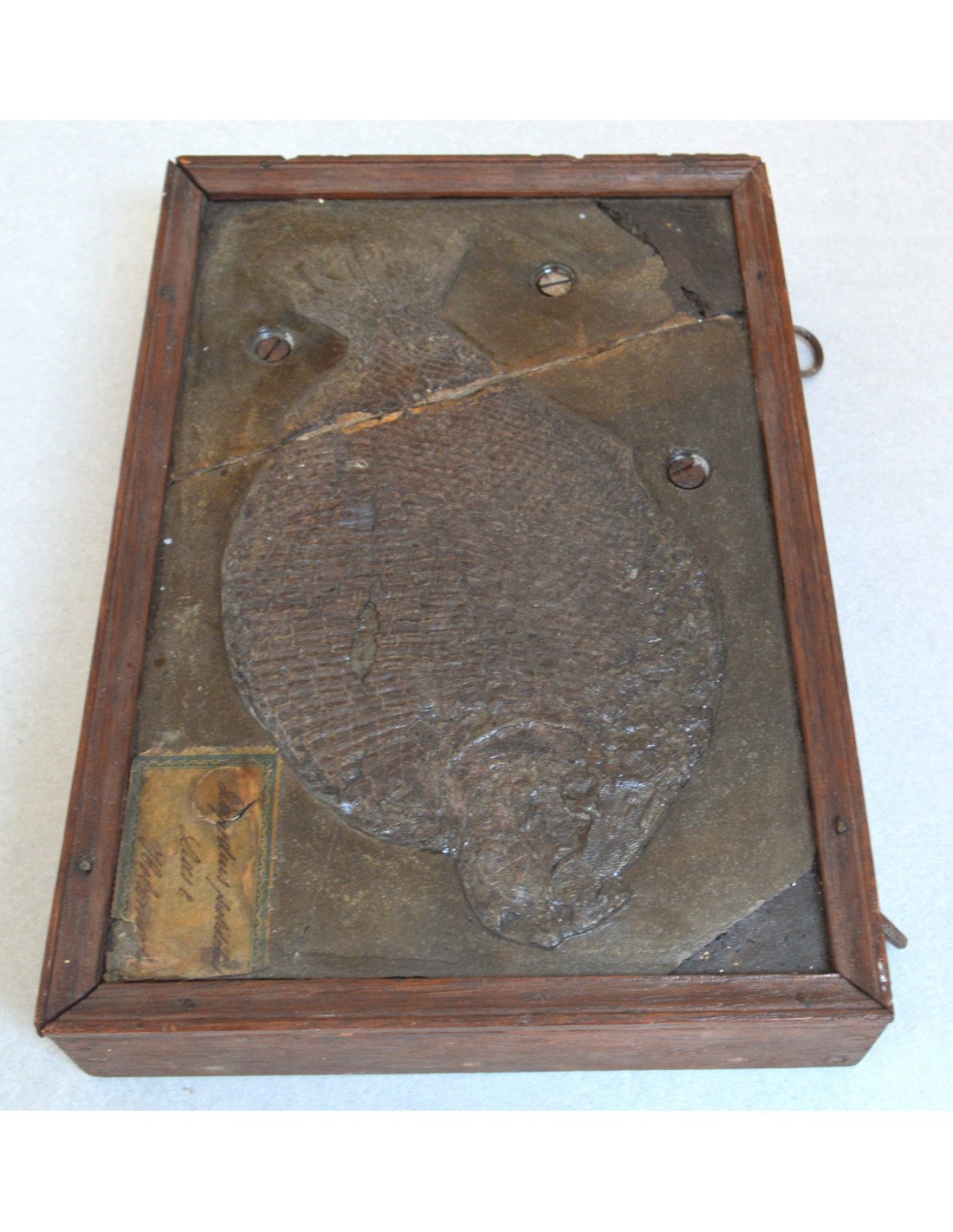
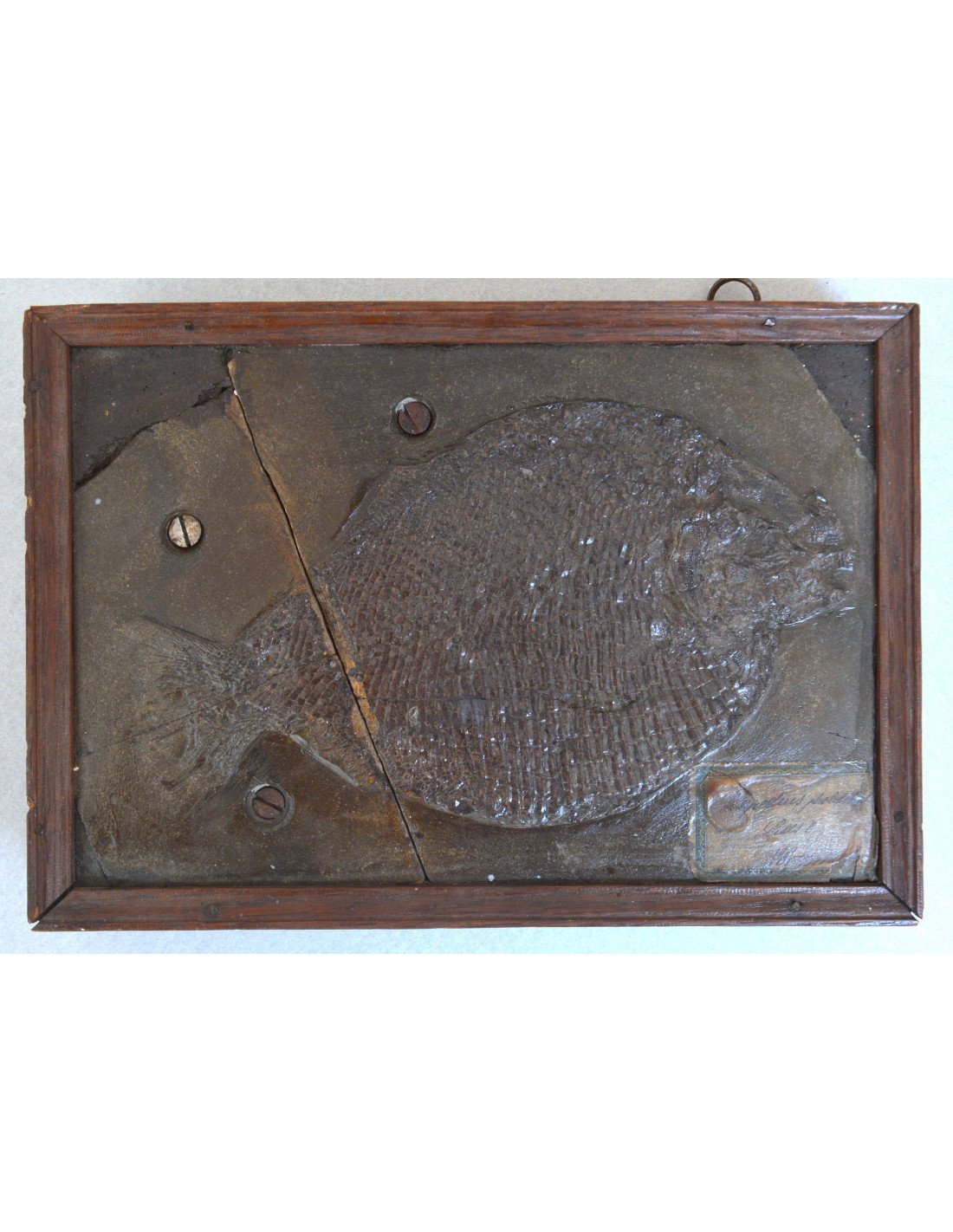
Fossil fish from the Lower Jurassic (Lias), historically identified as Dapedius pholidotus, from Holzmaden (Germany)
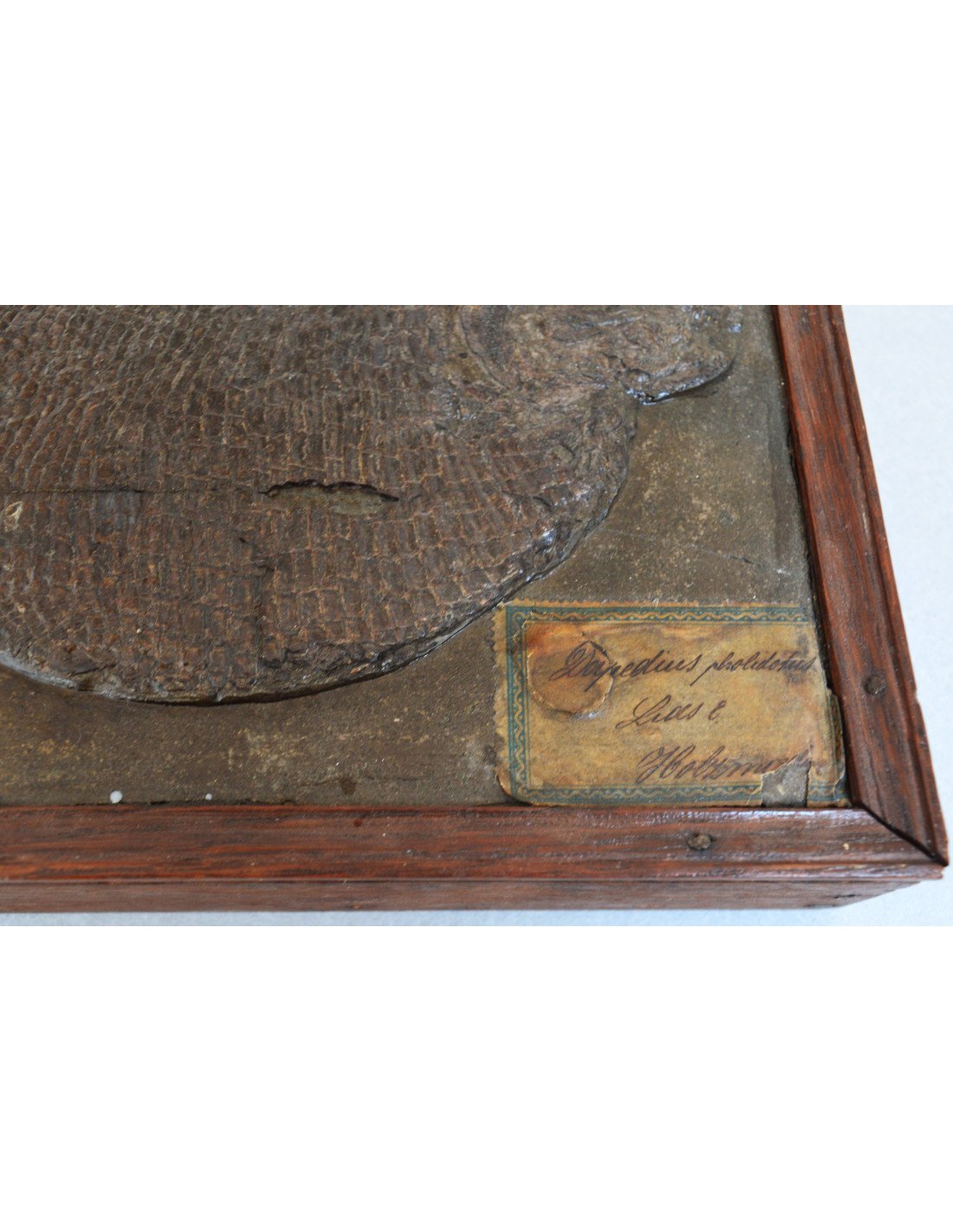
The specimen is an actinopterygian of the dapediid group, characterised by a tall, almost discoidal body and by strongly mineralised ganoid scales arranged in a regular pattern. The original manuscript label gives the name "Dapedius pholidotus", the stratigraphic attribution to the "Lias" and the origin at Holzmaden, the celebrated German palaeontological site in Baden-Wurttemberg.
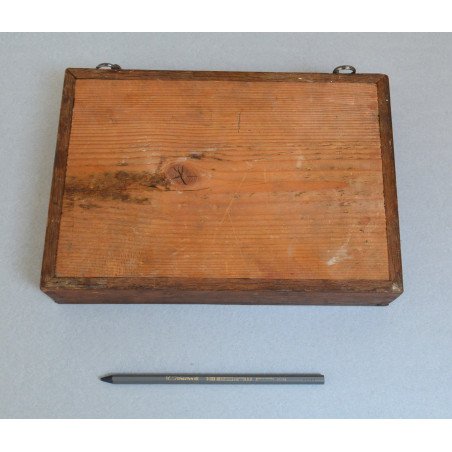
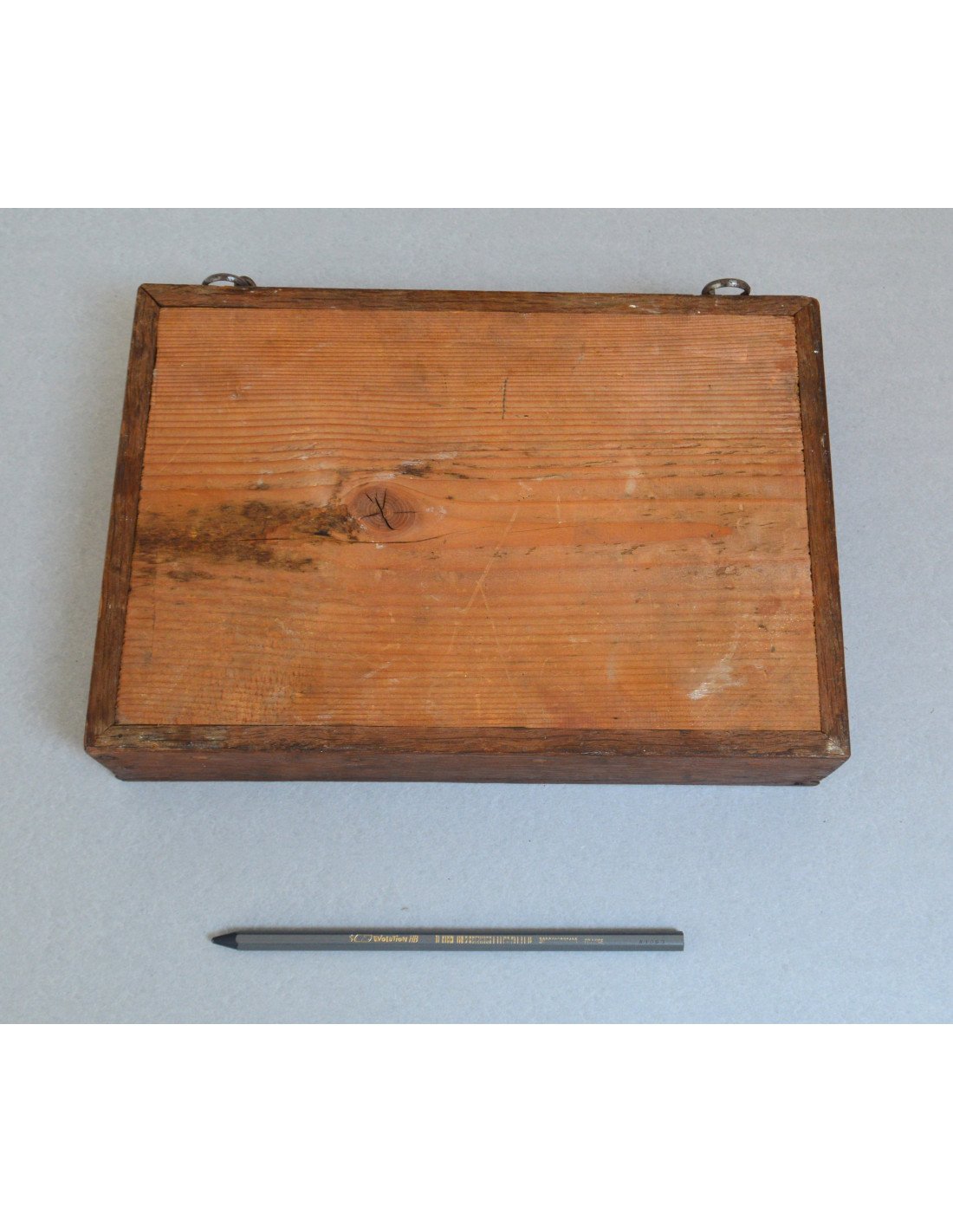
Fossils from Holzmaden played an essential role in the development of modern palaeontology. From the end of the 19th century they were prepared in specialist workshops and distributed to European academic institutions as teaching and research material. The original mounting of the piece - the wooden frame, the fir backing, the screw fixings and the manuscript label - is valuable testimony to the museological and pedagogical practices of the period.
Beyond its palaeontological interest proper, the object documents the history of the circulation of scientific knowledge and of the trade in natural specimens in Central Europe.
Holzmaden is renowned for the bituminous shale deposits of the Posidonia Formation (Posidonienschiefer), dated to the Toarcian (Lower Jurassic, approximately 183–180 million years ago). From the second half of the nineteenth century onwards, fossils from this site were systematically excavated and sold to:
Many examples were mounted in frames similar to the one shown here, with manuscript labels and fixing screws, exactly in the manner found in German teaching materials of the period.
There is, however, an interesting nuance. The species Dapedius pholidotus is classically described from the English Lias, while Holzmaden is known above all for other dapediid species and for its extraordinary fauna (ichthyosaurs, plesiosaurs, crinoids, ammonites, etc.).
This apparent contradiction may have several explanations:
For this reason, from a scientific point of view, the cautious formulation would be:
Dapedius cf. pholidotus, a period historical identification, according to the original label.
Dapedius pholidotus Agassiz - an actinopterygian fish from the Lower Jurassic (Liassic)
This specimen belongs to the genus Dapedius, one of the most representative bony fishes of the European seas of the Lower Jurassic. The genus was described by Louis Agassiz in the monumental work Recherches sur les poissons fossiles (1833-1843) and is placed in the order †Dapediiformes, a group of actinopterygians characterised by a tall, almost discoidal body covered with thick ganoid scales.
Species Dapedius pholidotus is known particularly from the Liassic deposits of England and Germany, and is found in marine formations dated approximately between 201 and 174 million years. Its morphology suggests a benthopelagic way of life in lagoons and shallow seas. The robust jaws, fitted with teeth adapted for crushing, indicate a diet of molluscs and other hard-shelled invertebrates.
The present specimen preserves the characteristic silhouette of the genus very well: the strongly laterally compressed body, the almost circular outline and the ornament of rhomboidal ganoid scales. Although the slab has an old crack and some minor surface losses, the anatomical details remain legible, including the head region and the arrangement of the scales.
A particularly interesting element is the original historic mount. The fossil is fixed in a wooden case with a fir backing, fitted with mounting screws and a manuscript label reading Dapedius pholidotus, followed by the stratigraphic indication "Lias" and the place of origin, Holzmaden. Such presentations were common in the 19th-century trade in palaeontological specimens, when specialist workshops supplied material to universities, school museums and geological cabinets.
Condition as shown in the photographs.
Dimensions: 18,5 × 27 × 4,5 cm.