Shopping Cart
There are no more items in your cart


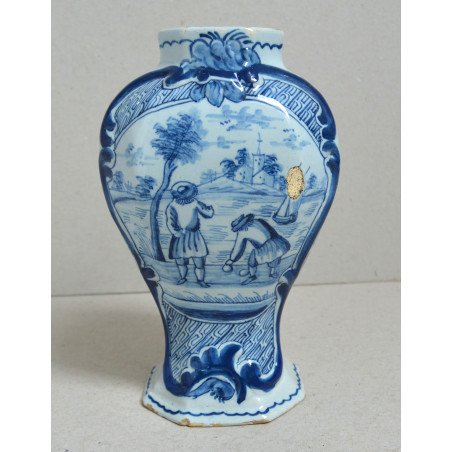
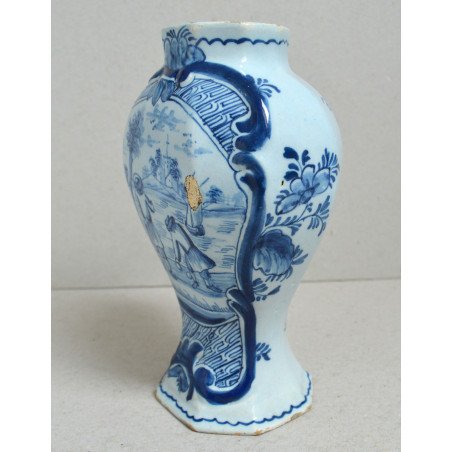
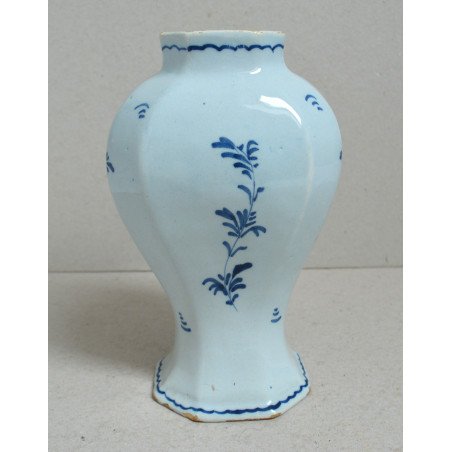
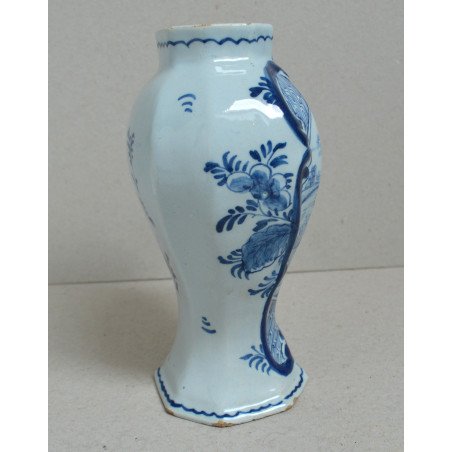

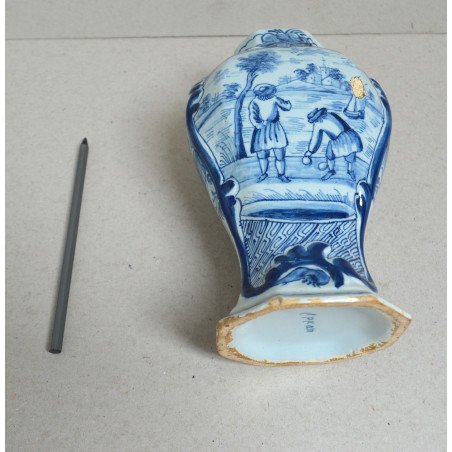


Delft vessel, 18th century – a lampetkan, marked „LPKan”, circa 1750-1780.
General description:
The object is a white tin-glazed earthenware vessel decorated in cobalt blue, made in the tradition of eighteenth-century Delft pottery. It belongs to the „lampetkan” type - an ewer commonly used together with a basin, characteristic of pre-modern European culture. Its bulbous form, with a polygonal base and short neck, suggests a practical function as well as a decorative role.
Decoration and iconography:
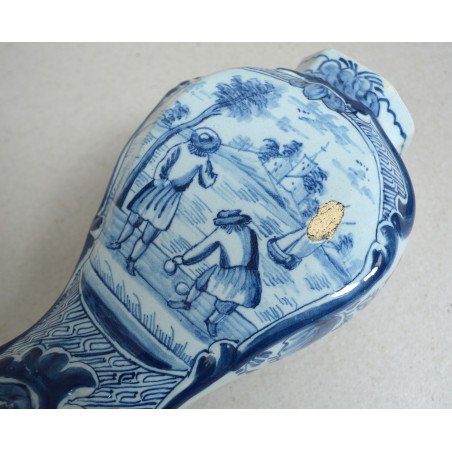
The painted scene shows two figures in a rural landscape playing a game, with elements such as a tree, a church and a sailing boat set into a balanced composition framed by baroque cartouches and stylised floral motifs. Scenes of this kind are typical of Delft production intended for the Dutch home market and for export, particularly in the second half of the eighteenth century. The figurative style is naive and evokes an idealised pastoral atmosphere, in keeping with the taste of the period.
The „LPKan” mark:
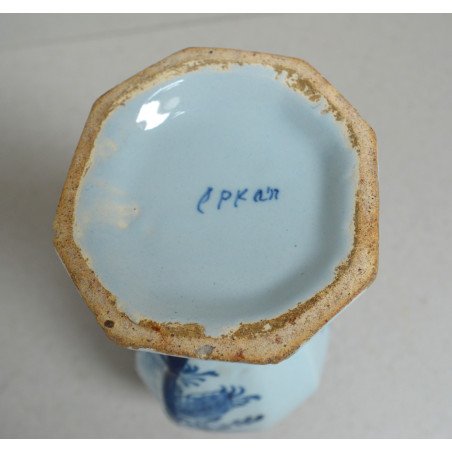
The inscription on the base („LPKan”) indicates the De Lampetkan workshop („The Ewer”), active in Delft between 1670 and 1811. This factory was founded by Pieter Gerritsz Kam and later passed to his descendants. The letters LPKan stand for the owner's initials and the name of the factory. The mark is drawn in cobalt pigment under the glaze, an authentic characteristic of pieces from this manufactory. It is regarded as one of the most respected Delftware factories of its day.
Technique and state of preservation:
The vessel is made of tin-glazed earthenware with a porous body. The decoration is applied by hand in cobalt oxide under the glaze. There is wear to the rim of the base and some losses of glaze on the body of the piece, consistent with an eighteenth-century domestic object.
Dimensions: 21.5 cm high; 13 cm wide
Dating: circa 1750–1780
Origin: Delft, the Netherlands
Workshop: De Lampetkan
Condition: Good, with minor faults (chipped glaze, wear to the base)