
Shopping Cart
There are no more items in your cart


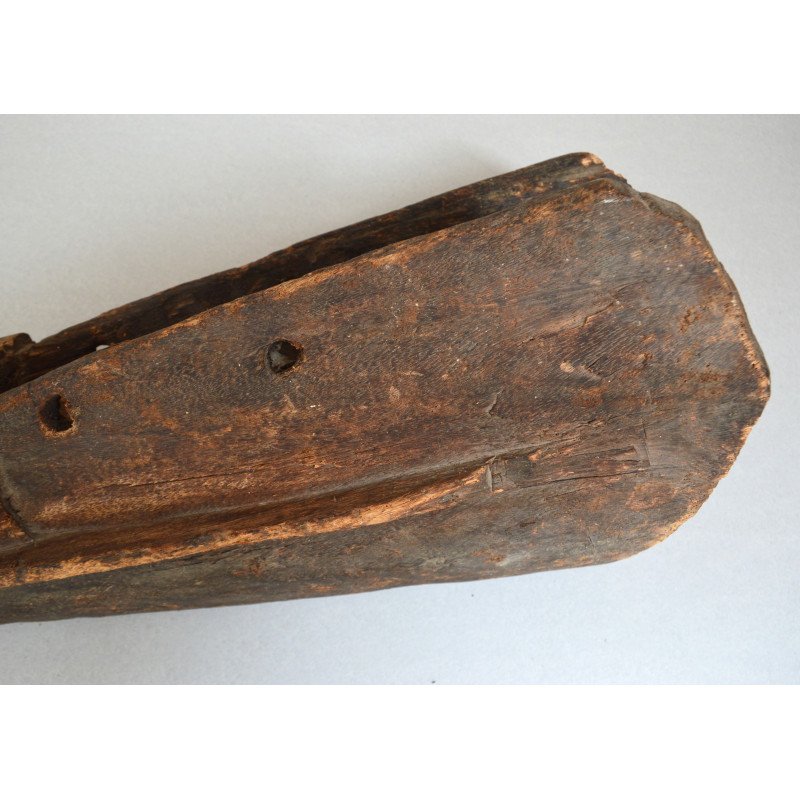

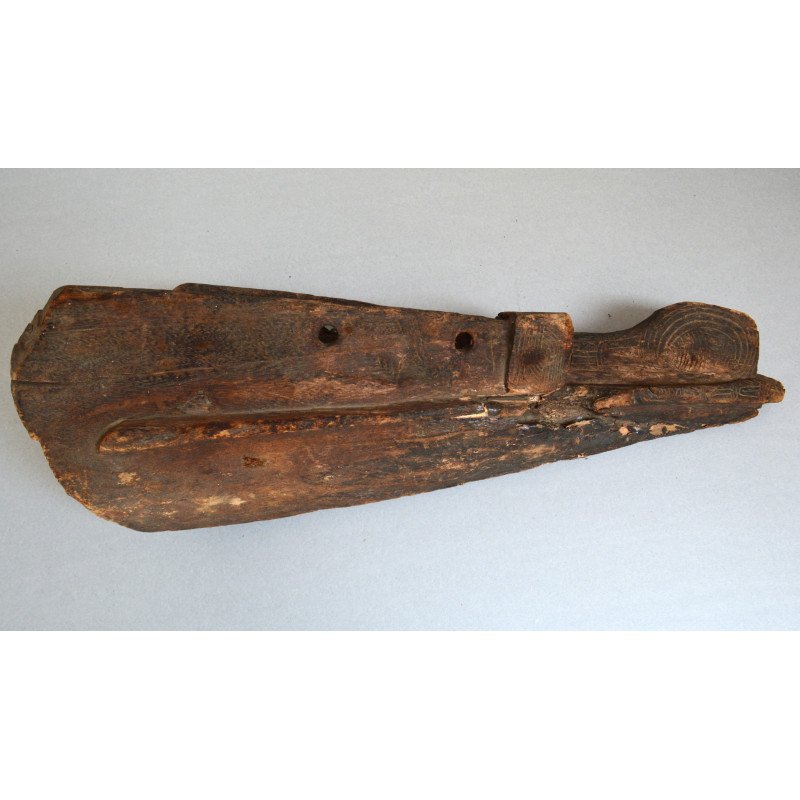

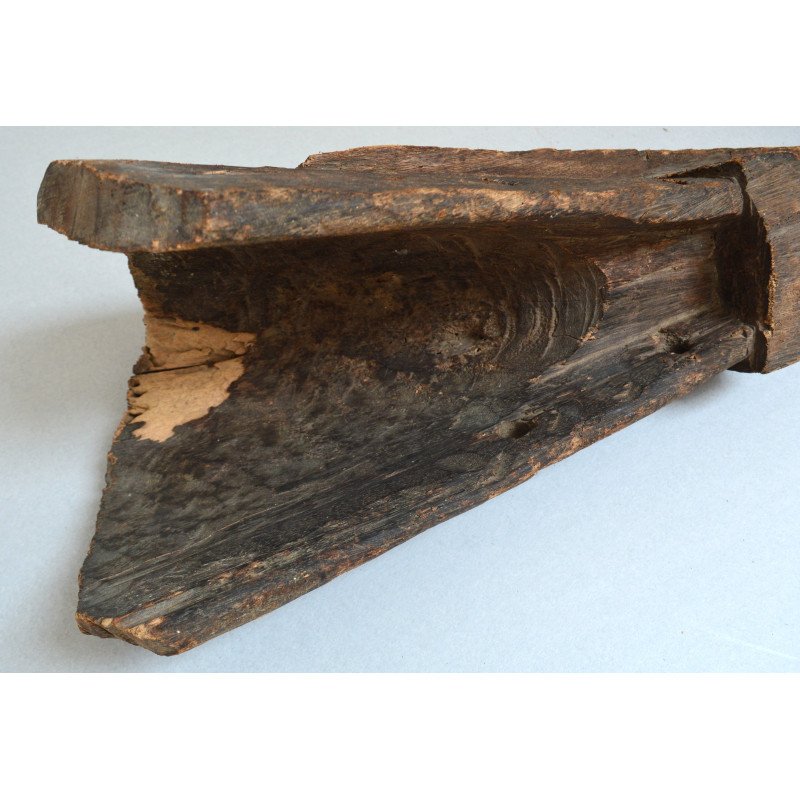
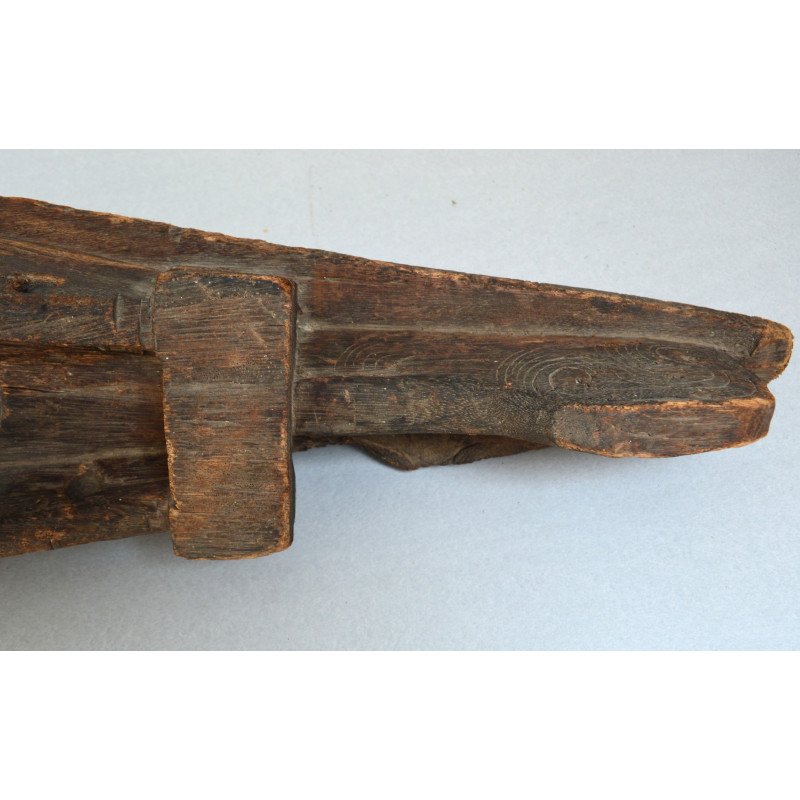

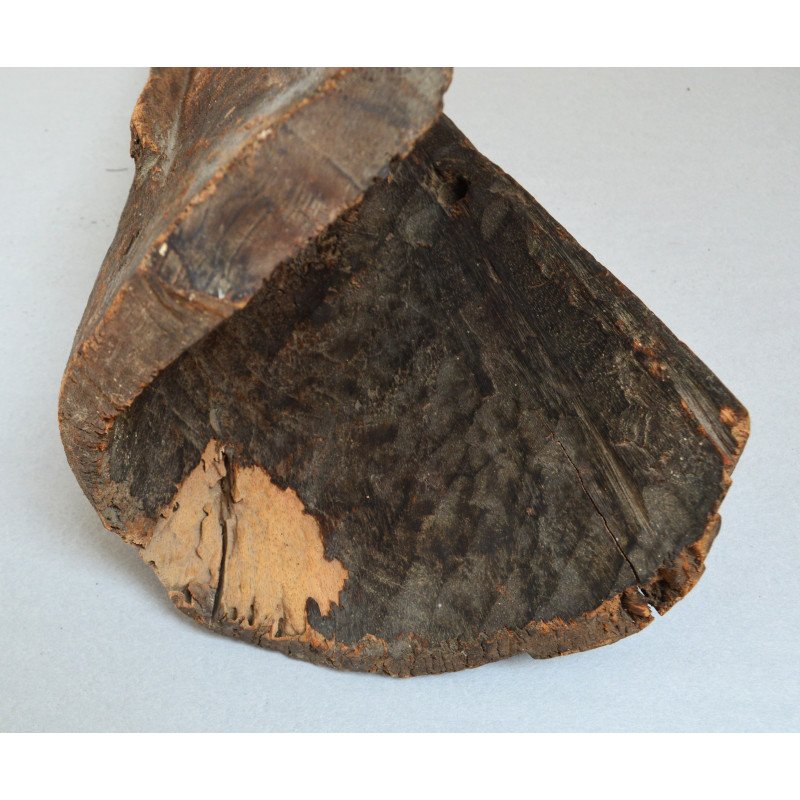
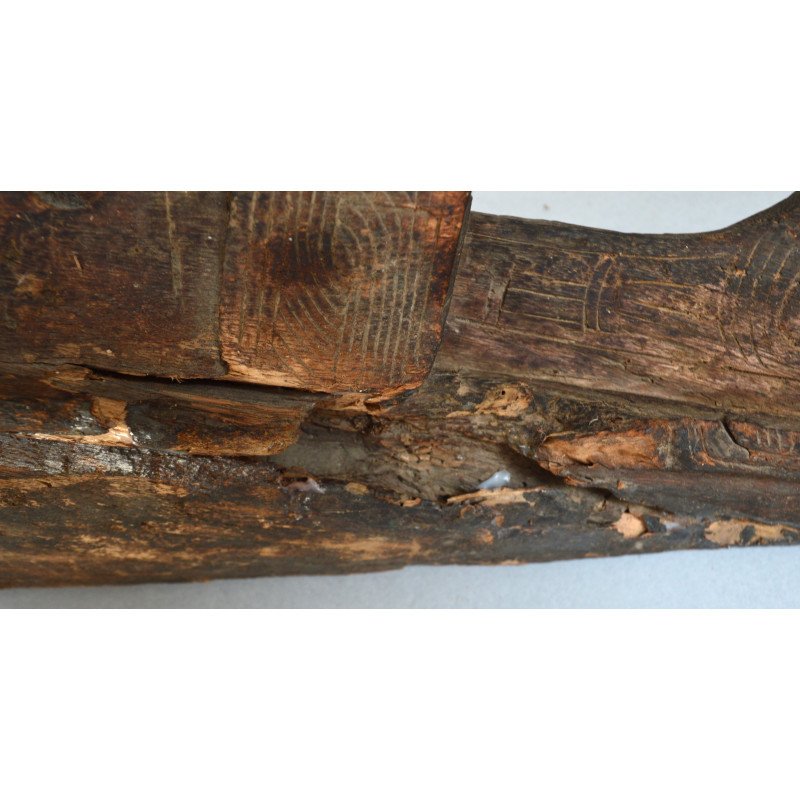


Ceremonial canoe prow, Papua New Guinea
Carved and incised wood, with a patina of use.
20th century, probably before the 1970s.
Dimensions: 65 × 21 × 21 cm.
This carved element from a traditional boat comes from the cultural sphere of Papua New Guinea, one of the regions of the world with the greatest diversity of artistic and ritual expression. The canoe was a central object of community life, used for fishing, trade, ceremonies and inter-island journeys. The ends of the vessels were often decorated with carved elements serving a protective role as well as an identifying and symbolic function.
The piece is made of a hardwood, with traces of long use, and is decorated with geometric and curvilinear incisions characteristic of Melanesian art. The dark patina, the cracks and the losses of material are evidence of its age and of its actual use, and contribute to the authenticity of the object.
Although the absence of a documented provenance and of a precise ethnographic attribution prevents an exact identification, the piece shows characteristics consistent with authentic tribal production of the second half of the 20th century. The ornamental incisions, executed by hand, point to the decorative vocabulary of many Melanesian communities, where abstract motifs evoke protective spirits, natural elements or marks of identity. The dark patina of the wood, the natural wear and the structural degradation are consistent with a piece actually used before entering the commercial circuit of tribal art.
According to the provenance information, the object was acquired in 1997-1998 from a dealer specialising in tribal art in Camden Town, London, who stated that the piece came from Papua New Guinea and dated at least from the 1970s, a period during which he had been resident in the region. Even though this information remains oral, it adds an element of biographical and contextual interest, frequently encountered in the case of ethnographic art circulating on the Western market in the last decades of the 20th century.


