Shopping Cart
There are no more items in your cart


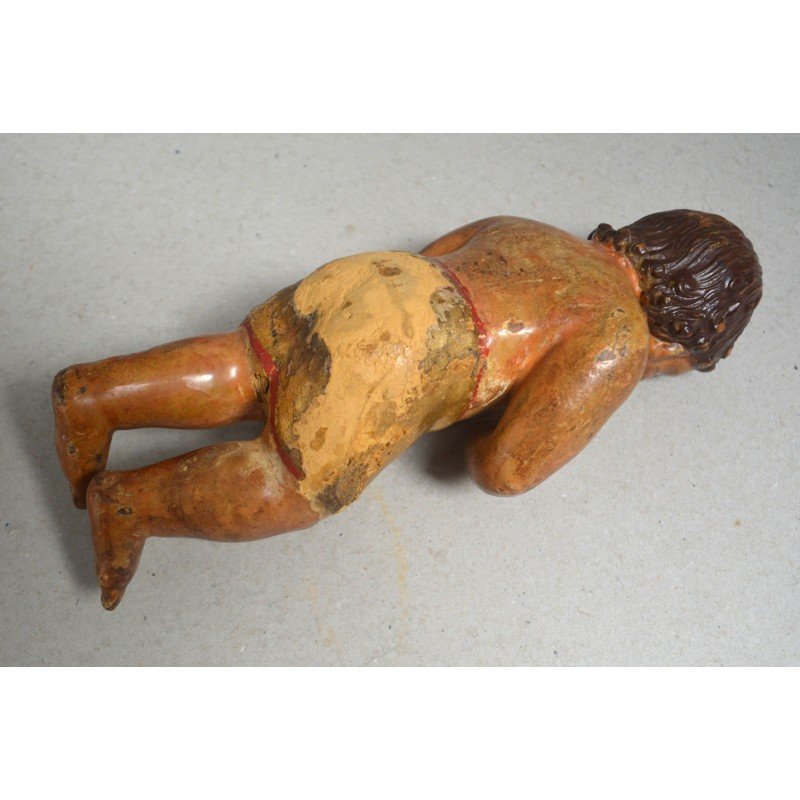


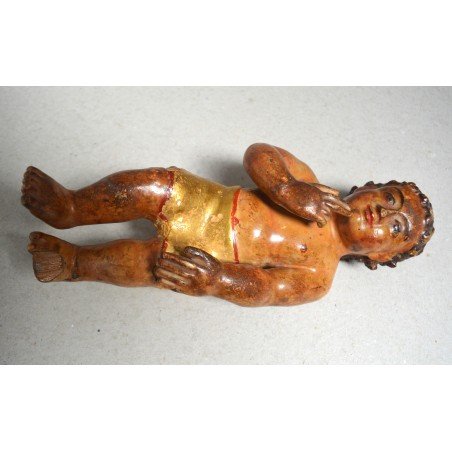


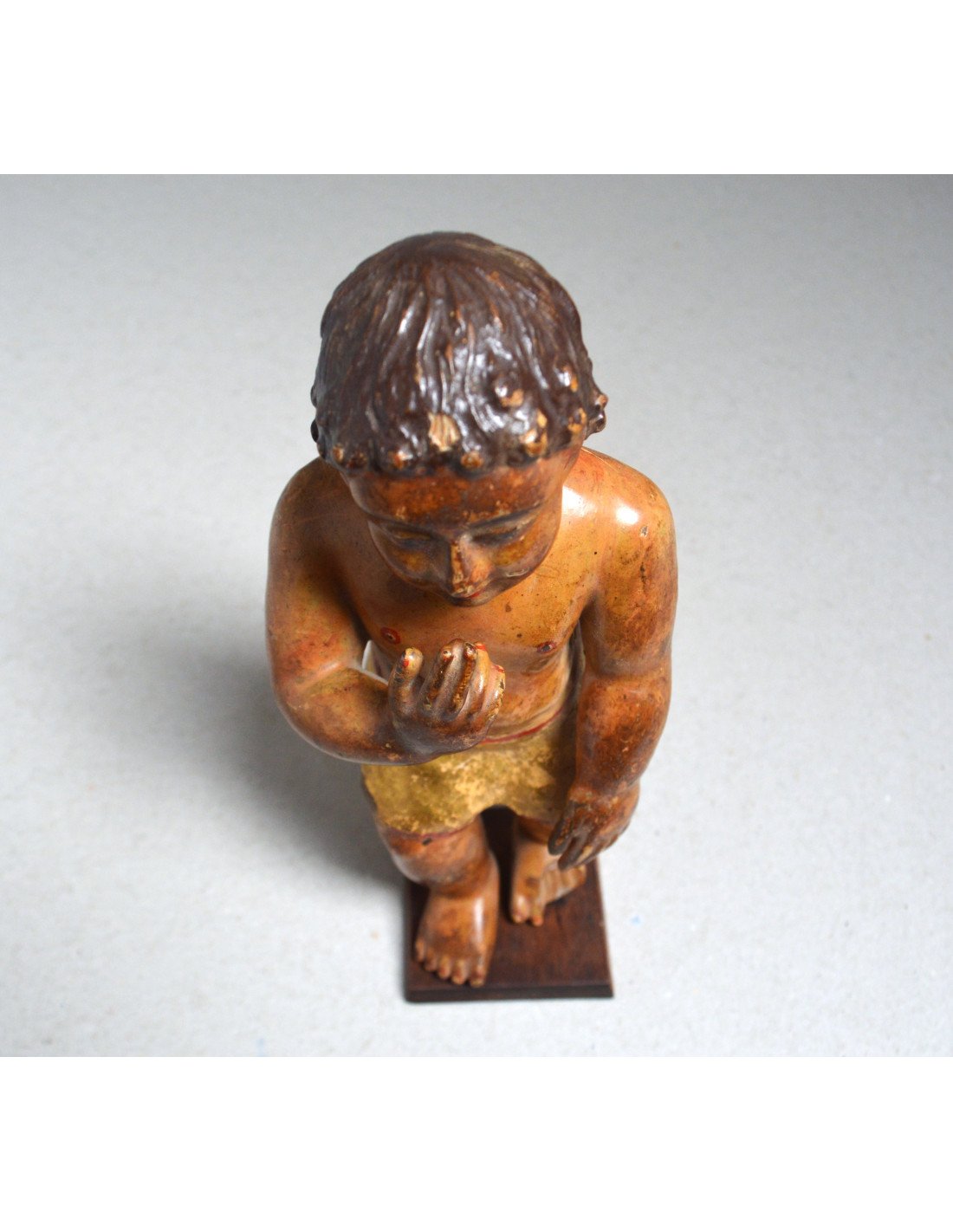
The Christ Child (Santo Niño), Portuguese Goa, 18th century
Material: carved wood, polychrome and partly gilded
Dimensions: overall height (including the plinth) approx. 25 cm; width approx. 10 cm
Technique: fully carved in wood, with a ground layer and polychromy, gold leaf on the textile area (the loincloth).
State of preservation as shown in the photographs: general wear, small losses of polychromy and gilding, fine shrinkage cracks in the wood; the base is a later addition.
This representation of the Christ Child (in Portuguese Menino Jesus, and in the Indo-Portuguese context Santo Nino) belongs to an iconographic type specific to the Portuguese Christian missions in Goa and in the eastern territories of the Lusitanian Empire. The sculpture belongs to the tradition of Luso-Oriental art of the 17th and 18th centuries, when local workshops, under Jesuit influence, combined the canons of the European Baroque with regional sensibilities and techniques.
The figure is shown frontally in a slightly static attitude, the right hand raised in a gesture of double blessing (benedictio latina) and the left hanging loosely at the side - a formula very common in colonial Portuguese iconography. The proportions are slightly robust, the facial features gentle, and the smiling expression evokes the naturalistic yet idealised model of the Baroque school. The detail of the gilded loincloth with red edges indicates the use of gold leaf and cinnabar pigment - materials typical of the Goan workshops.
The execution is of good craft quality, without reaching the refinement of pieces made to noble commission, but expressive and well preserved for its age. The wood appears to be a tropical species (possibly teak or sandalwood), frequently used in Goa for its durability and the fineness of its working.
Sculptures of this type were intended both for private devotion and for the Catholic missions. In the eighteenth century, pieces from Goa circulated widely within the Portuguese trading network, reaching Europe, Brazil and the Philippines. They represent a distinct chapter in colonial artistic syncretism, in which Western influences are combined with Eastern execution and sensibility.