Shopping Cart
There are no more items in your cart


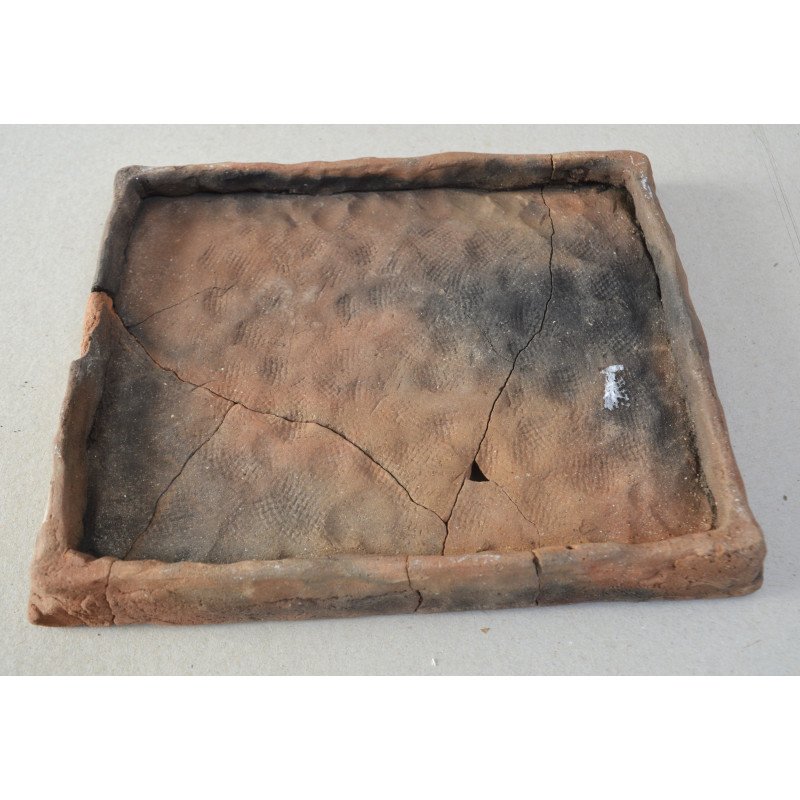
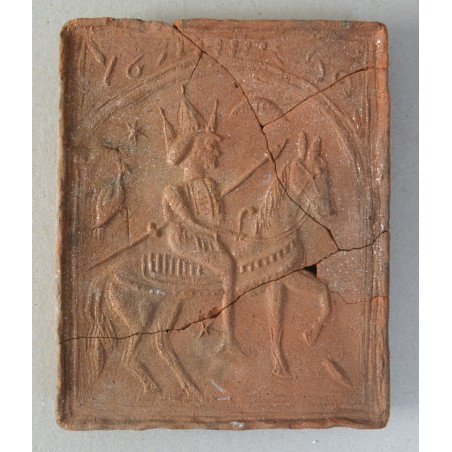
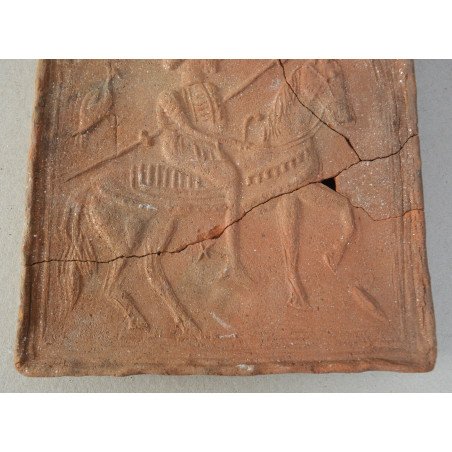


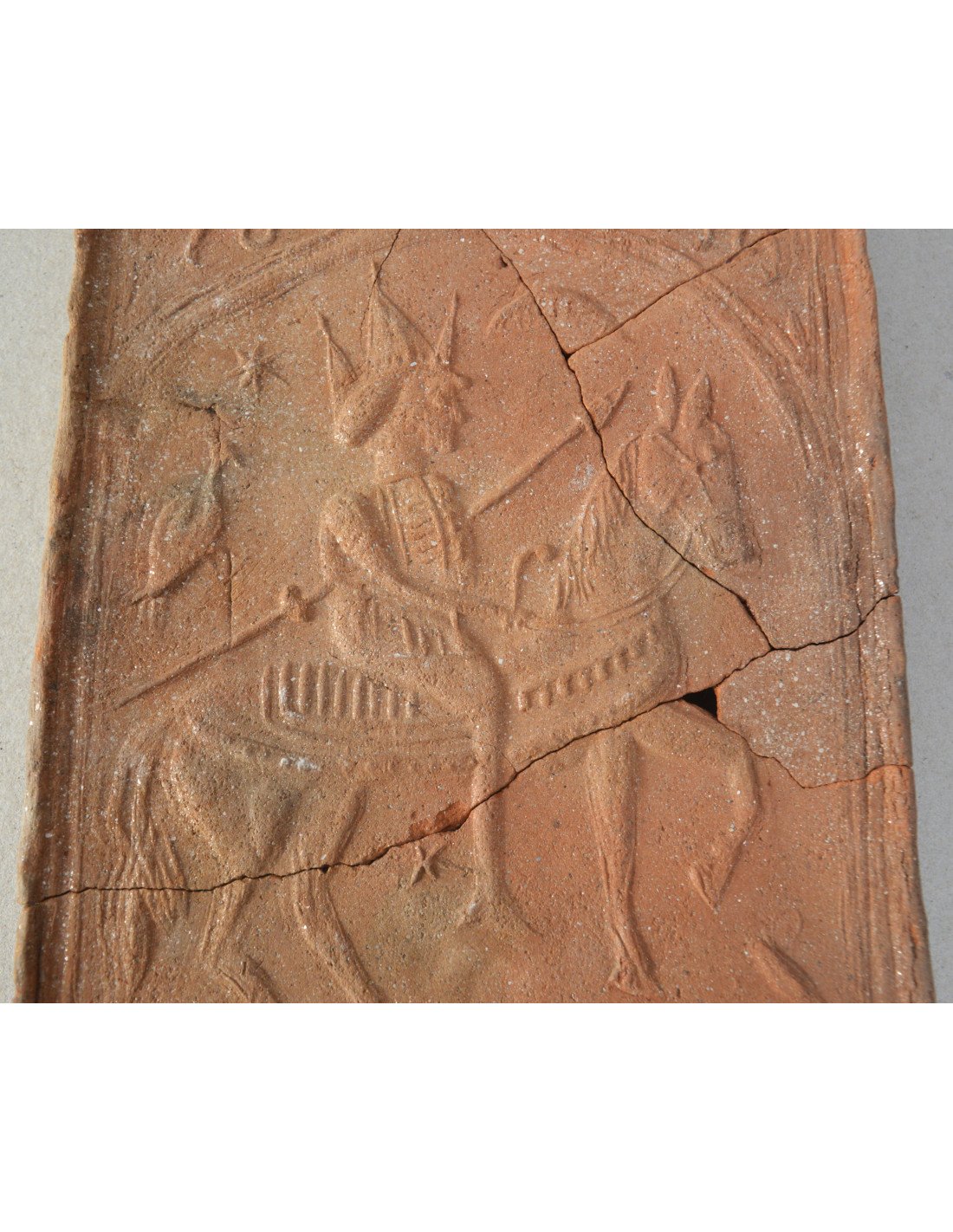
Transylvanian stove tile, probably Saxon (Sibiu, Medias, Brasov), 1699
Dating: 1699 (inscription made before firing)
Material: fired clay, mould-formed, partly slipped
Dimensions: 23.5 × 19 × 3 cm
State of preservation: fragmentary, glued together from several pieces; there are cracks and minor losses at the edges.
The rectangular stove tile bears in relief a figurative composition with a knight in armour, wearing a conical helmet and holding a lance, riding a horse moving to the right. In the upper part the inscription of the year "1699" can be made out, set within a decorative arch with stylised foliate motifs. In the background a six-pointed star and a plant or heraldic element reinforce the symbolic character of the scene. The reliefs are flat and mould-made, characteristic of stove tiles produced in Transylvanian workshops at the end of the 17th century, in a Central European cultural context dominated by military and ecclesiastical iconography.
Typologically the piece belongs to the category of figurative stove tiles of the late Renaissance tradition with early baroque influences, widespread in the Sibiu and Brașov area between 1670 and 1710. The motifs of the knight and of the arched architectural setting are characteristic of the iconographic repertoire of tiles „with warriors” or „with mounted saints” (e.g. St George, St Martin, biblical heroes), used both in noble residences and in urban households.
The end of the seventeenth century, in the midst of post-Ottoman reconstruction, marks a moment of assertion for Transylvanian visual culture. Stove tiles dated between 1680 and 1700 are among the last examples of hand production before the introduction of industrial moulds (circa 1720-1730).