Shopping Cart
There are no more items in your cart

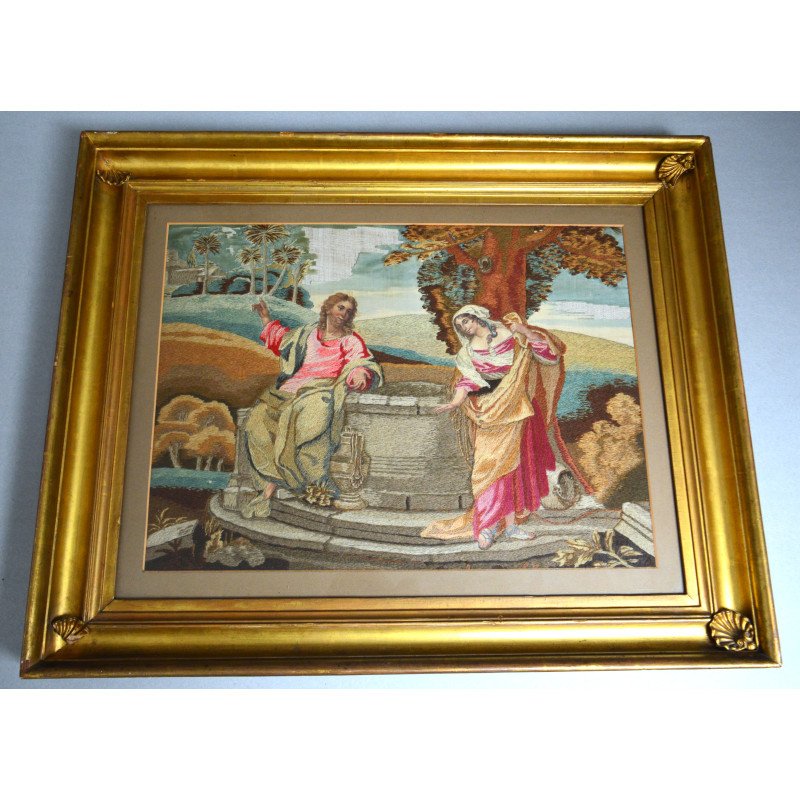





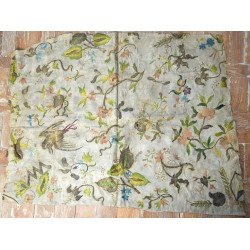

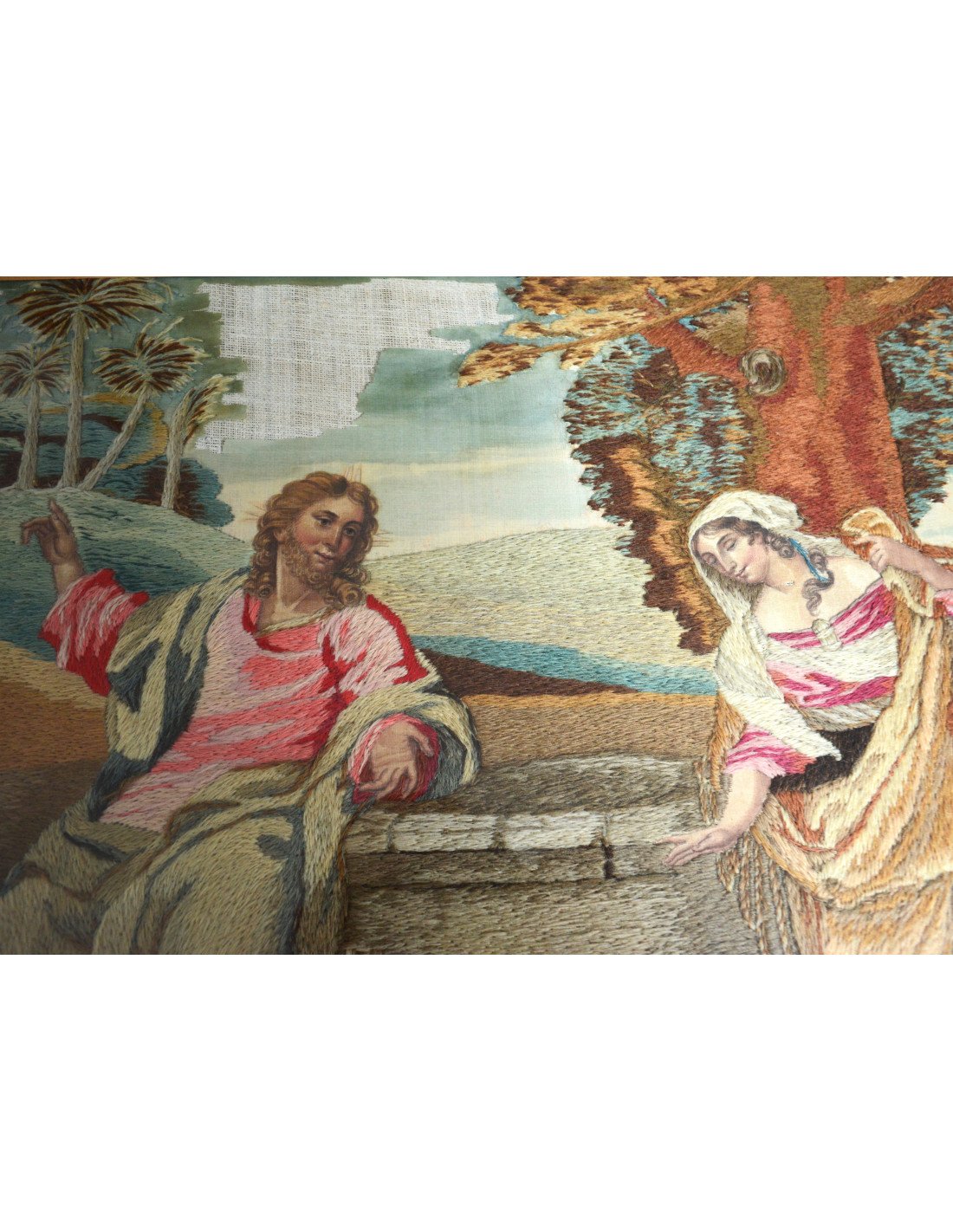
„The Woman of Samaria at the Well” – embroidery in silk and wool thread, England, circa 1800
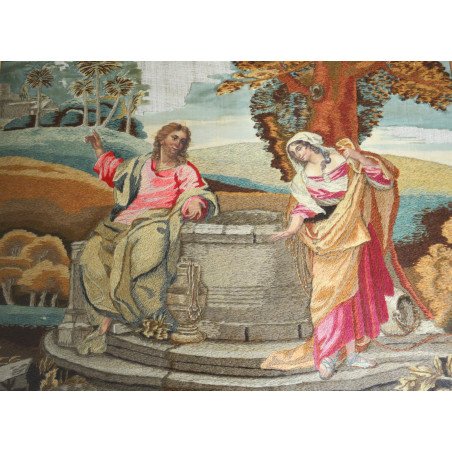
The work presents a textile interpretation of the biblical episode of the meeting between Christ and the Samaritan woman at Jacob's well (Gospel of John 4:4–26), a subject frequently represented in Western art from the Renaissance onwards. Worked in embroidery on a textile support, the composition combines silk and wool threads, suggesting both the refinement of British workshops of the early nineteenth century and the decorative purpose of the piece.
The stylisation of the figures and the intense colour are characteristic of the domestic and semi-professional embroideries of the period, in which established religious scenes were often reproduced from prints or printed patterns. The figures are treated in a theatrical, narrative manner: the male figure, seated on the edge of the well, adopts a calm and authoritative attitude, while the woman, caught in a gesture of surprise or receptiveness, brings dynamism to the sacred dialogue. The modelling of the volumes through dense layers of thread creates a raised texture that imitates painterly effects and gives the scene a monumentality unusual for an interior object.
The broad background, with an idealised landscape and stylised trees, indicates the influence of late Neoclassical aesthetics, when embroidery was regarded as a respectable cultural practice standing between craft and the decorative arts. The piece is notable for its generally good state of preservation, though with a few parts of the textile support missing at the top. It is notable too for its iconographic fidelity to the biblical sources, which makes it a representative example of religious and visual sensibility in England around 1800.
Figurative embroideries with biblical themes (such as the scene "The Samaritan Woman at the Well") were popular in England in the 18th and 19th centuries. Mary Linwood (1755-1845), for example, was celebrated for her needlework on religious and mythological themes.
The technique used may be „crewel embroidery” or embroidery in silk/wool thread on a linen ground. According to A. F. Kendrick, these scenes were often worked with linen and silk threads, sometimes with gilt threads or silks of various colours.
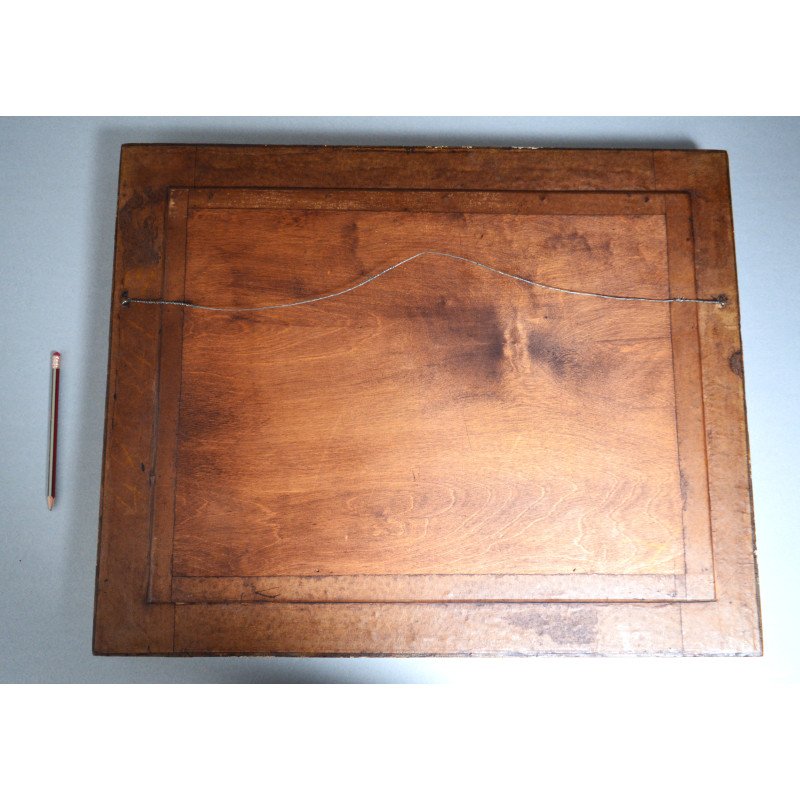
Dimensions with frame 53 × 65 cm. Condition as shown in the photographs.