Shopping Cart
There are no more items in your cart
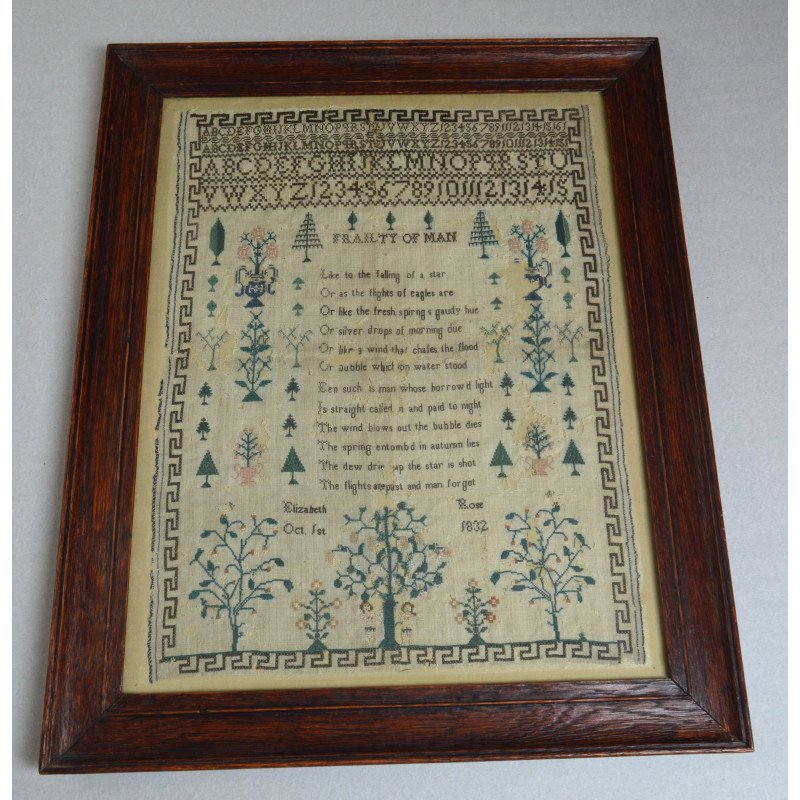


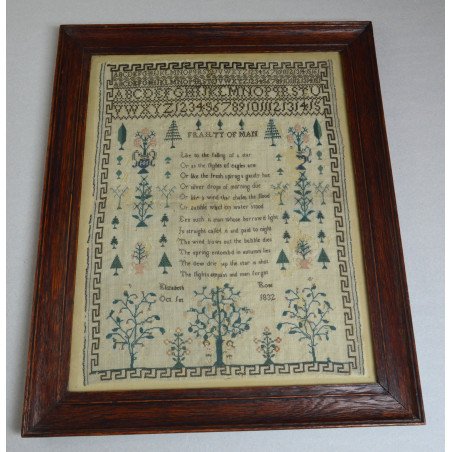




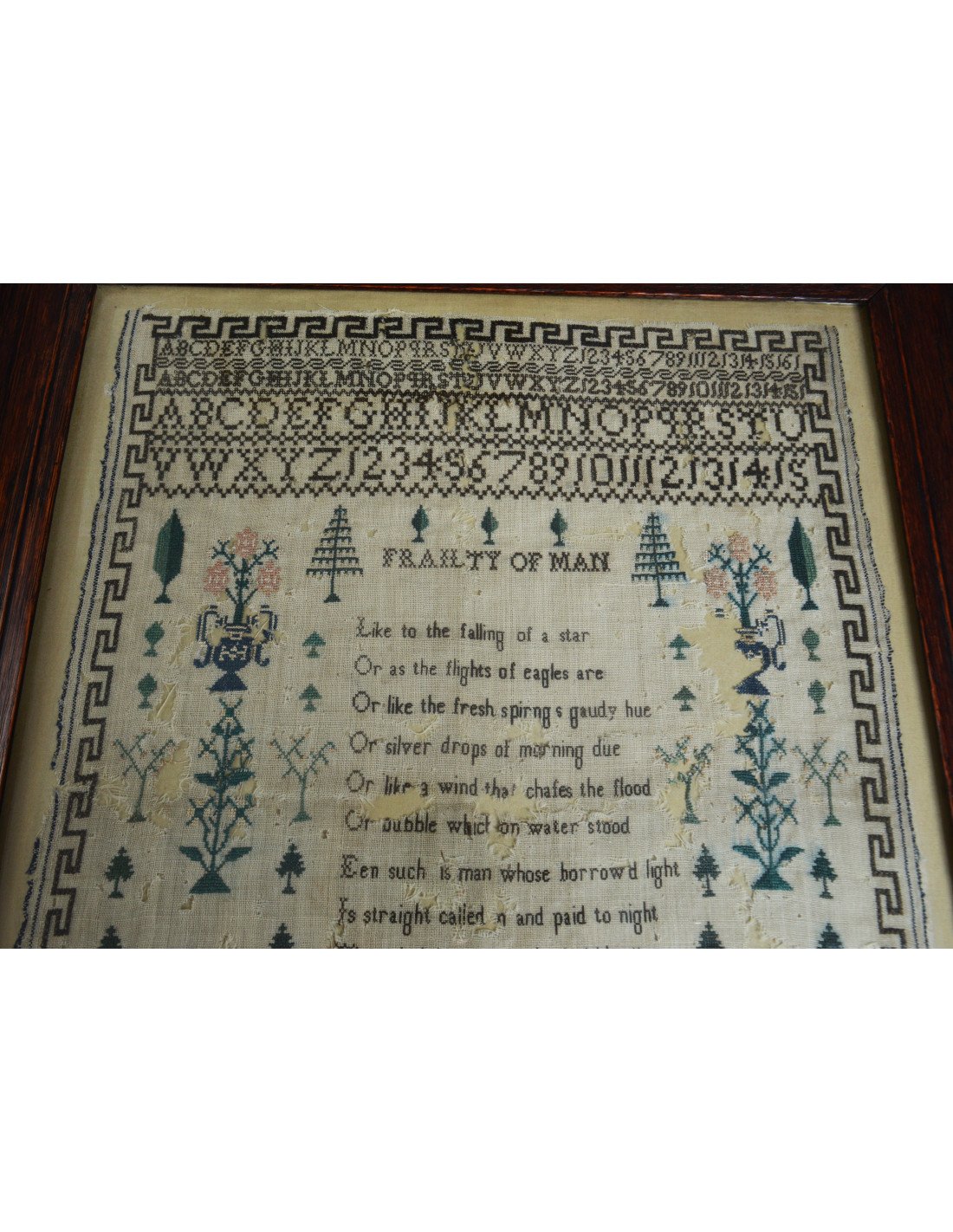
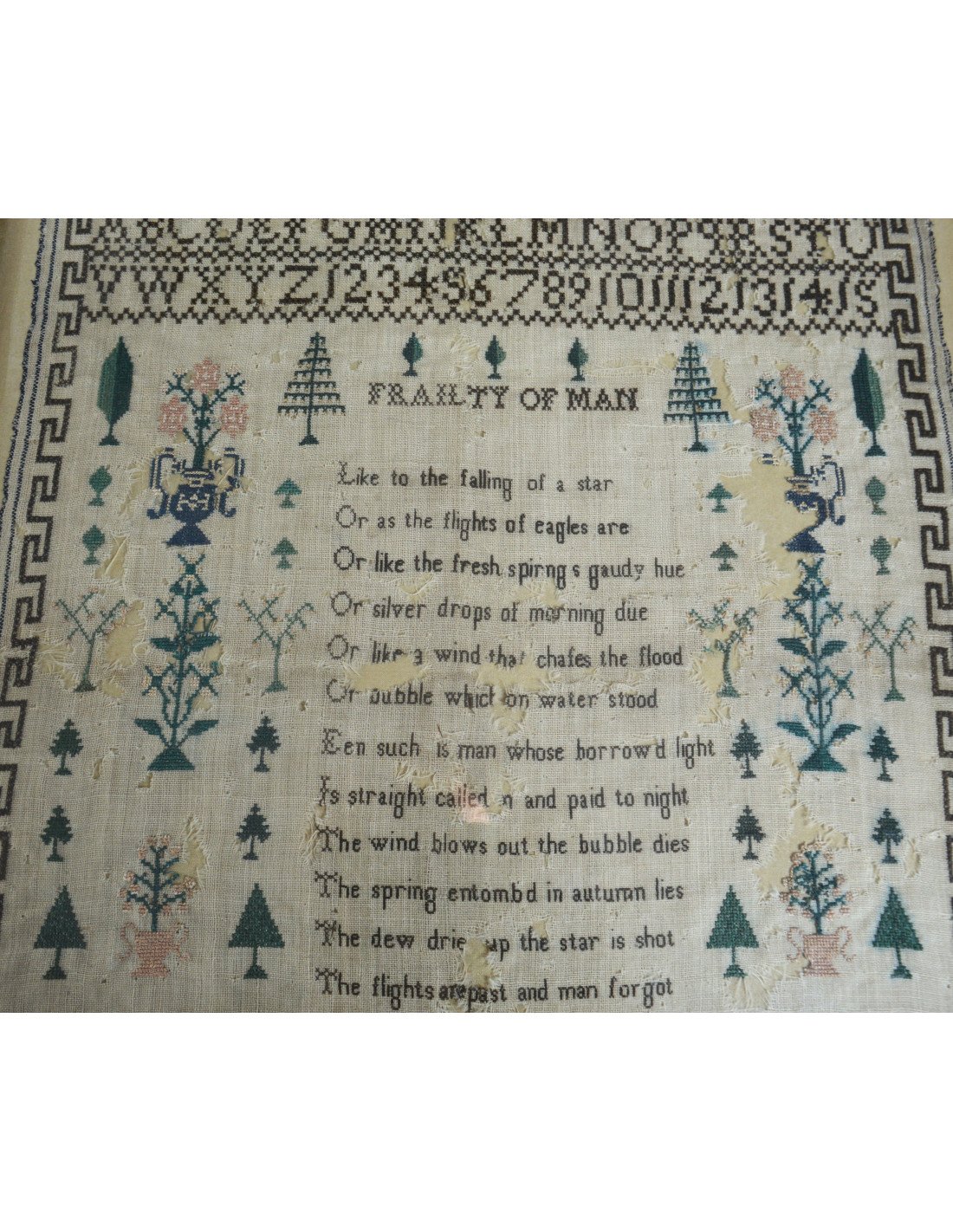
English sampler „Frailty of Man”, 1832
Author: Elizabeth Rose
Date: 1 October 1832
Origin: England (probably the Midlands or Yorkshire, judging by the embroidery pattern)
Technique: embroidery in coloured silk on linen (linen sampler)
Overall dimensions: 54 × 43.5 cm (with frame)
Support: natural linen, very fine, with multiple structural losses;
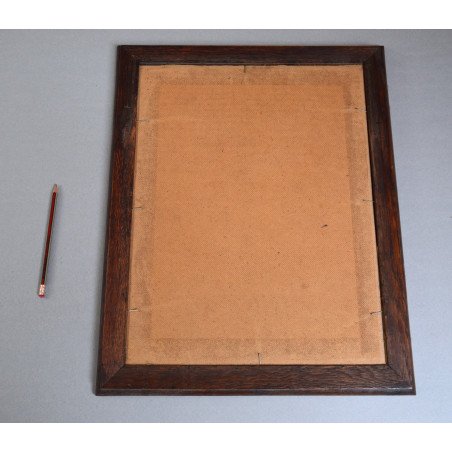
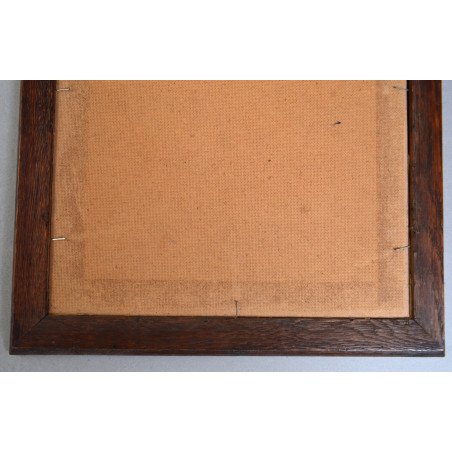
Frame: solid oak, plain profile, with an old patina.
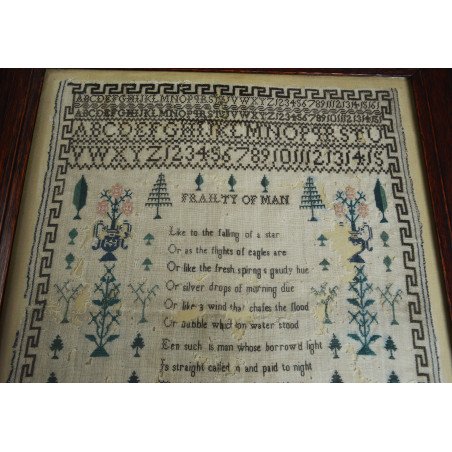
The sampler has a composition typical of the first half of the nineteenth century, centred on the moralising poem “Frailty of Man” — a frequent theme in the late Georgian and early Victorian periods. The text is set out in symmetrical registers, framed by a Greek key pattern border and flanked by foliate motifs (stylised trees, flowers and birds).
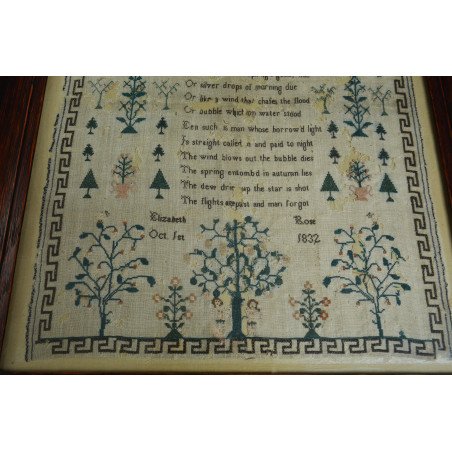
The alphabetic and numeric inscriptions at the top, followed by the signature „Elizabeth Rose / Oct. 1st / 1832”, indicate a school sampler, probably worked in an educational setting by a young woman from a well-to-do family.
Condition as shown in the photographs:
the textile support is fragile and frayed in places, with losses of material and of thread, particularly in the central area;
the colours are muted through oxidation and long exposure to light;
the oak frame is sound, with wear consistent with its age.
This type of sampler belongs to the educational tradition of British moral and didactic embroidery, active in the period 1780-1850. The theme of transience ("Frailty of Man") derives from English religious poetry (George Herbert, Isaac Watts) and was frequently found in girls' schools, where the exercise of embroidery was combined with moral instruction.
The execution, though naive, is coherent and indicates an advanced level of instruction. The ornamental structure and the use of verses place it close to samplers produced in the Leeds or Norwich area.