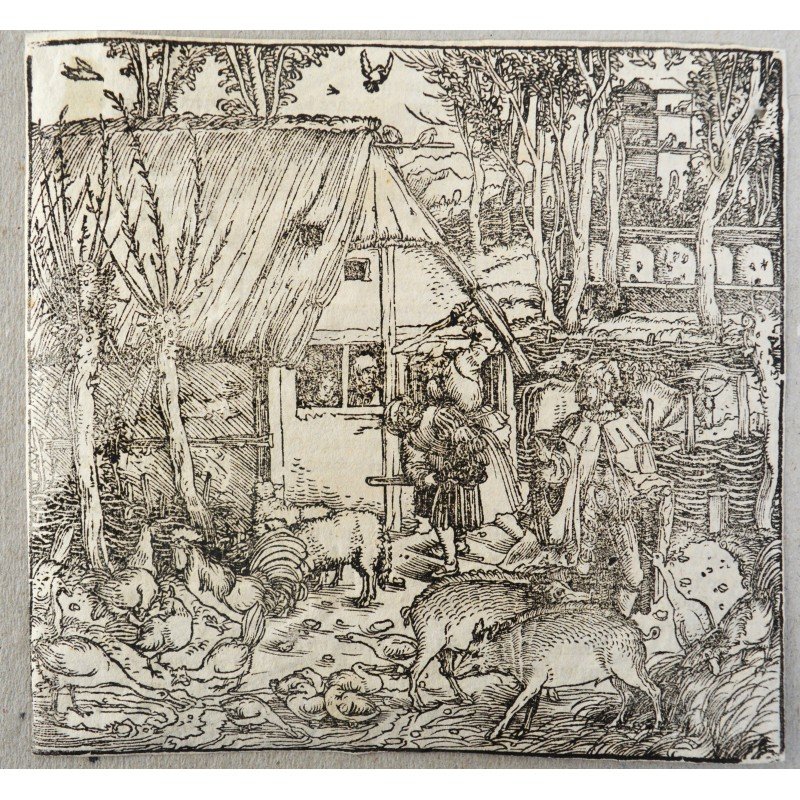
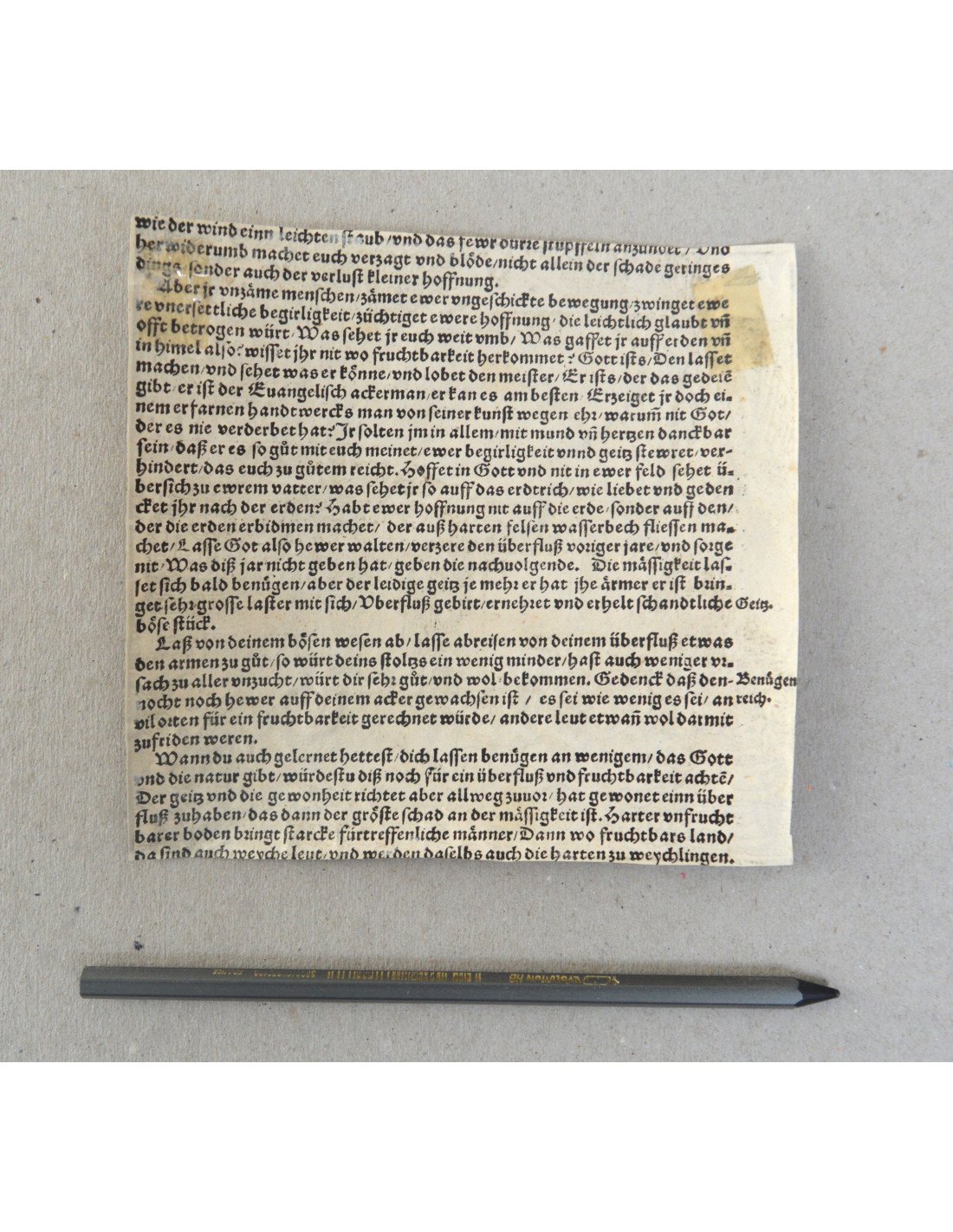
The Petrarch Master "A Wicked and Haughty Steward" woodcut, 16th century
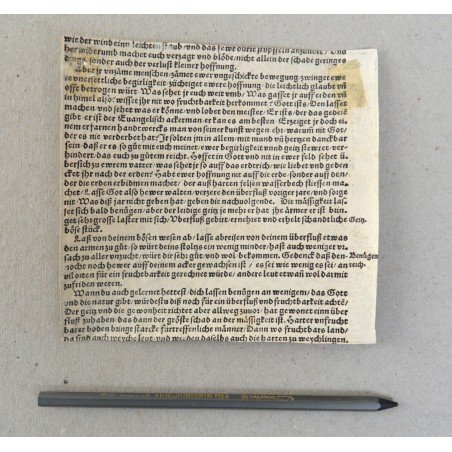
Text in German on the reverse.
Condition as shown in the photographs.
Dimensions 14.5x16 cm.
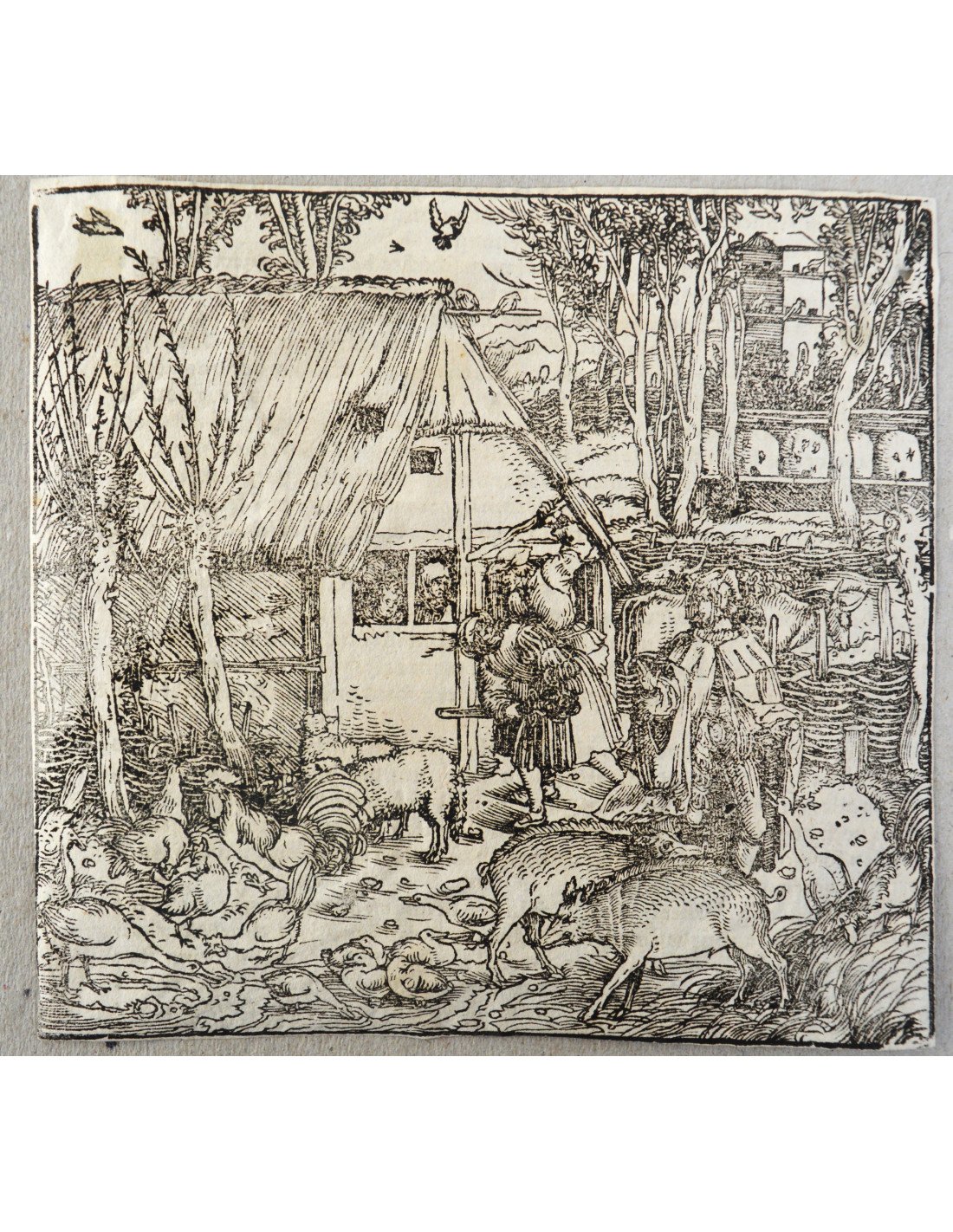
The Petrarch Master "A Wicked and Haughty Steward". A woodcut, one of the many illustrations made by the artist for Petrarch's book "Von der Artzney bayder Glück, des Guten und widerwärtigen", volume II, chapter LIX: „Von einem Hoffärtigen Mayer oder Hoffmann der auff eines Herrn Gut sitzet”. The first edition was printed in 1532 at Augsburg. The Petrarch Master (c. 1500-1523), one of the most remarkable draughtsmen of Augsburg, was probably a pupil of Hans Burgkmair. He is commonly known by reference to his principal work, the illustrations for the German translation of Francesco Petrarch's "De remediis utriusque fortunae". In 1619 Vinzenz Steinmeyer, a publisher in Frankfurt am Main and owner of the woodblocks from which the illustrations were printed, wrote of their author that he might be compared with Dürer himself. Unfortunately Steinmeyer did not give the author's name. All the attempts of scholars to identify the Petrarch Master have proved unsuccessful. The illustration for the chapter entitled "Von einem bösen hoffärtigen Mayer (The Wicked and Haughty Steward)" is one of the two hundred and seventy-seven woodcuts for the German version of Petrarch's book, called Von der Artzney bayder, Glück, des guten und widerwärtigen (Of a Remedy for both Good Fortune and Ill); it was so popular that it went through nine reprints in the course of the sixteenth century and in the early years of the seventeenth. In illustrating the fourteenth-century Italian book, he set the action of his woodcuts in the Germany of the Reformation and the Peasants' War. The present print departs from the original text: in Petrarch's story the master deplores the coarseness of his servant, whereas in the woodcut the bailiff, dressed in fashionable clothes and accompanied by a guard, enters a peasant's yard uninvited and is driven off by the master with a club; the peasant's wife and child are seen at a window, looking on. The artist's sympathies are plainly with the farmer.