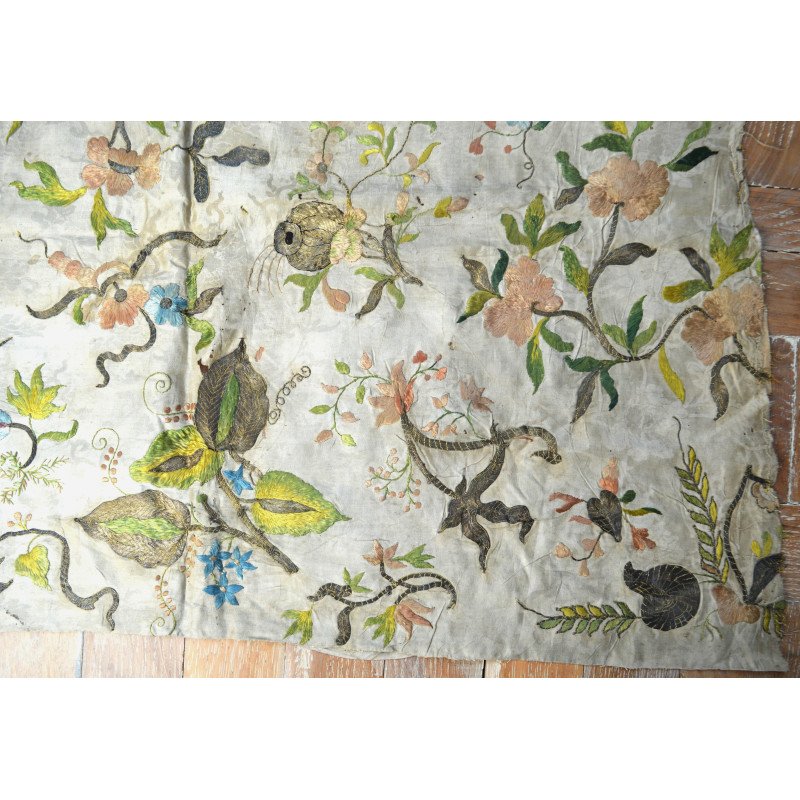
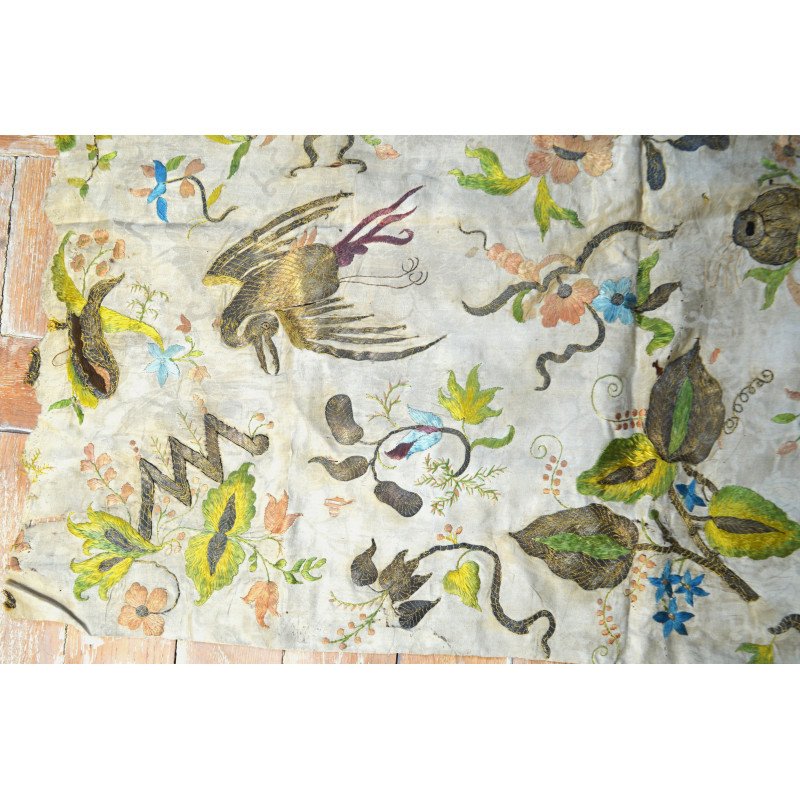
Textile embroidery fragment with metal thread and polychrome silk, possibly France or Portugal, circa 1700-1750
General description:
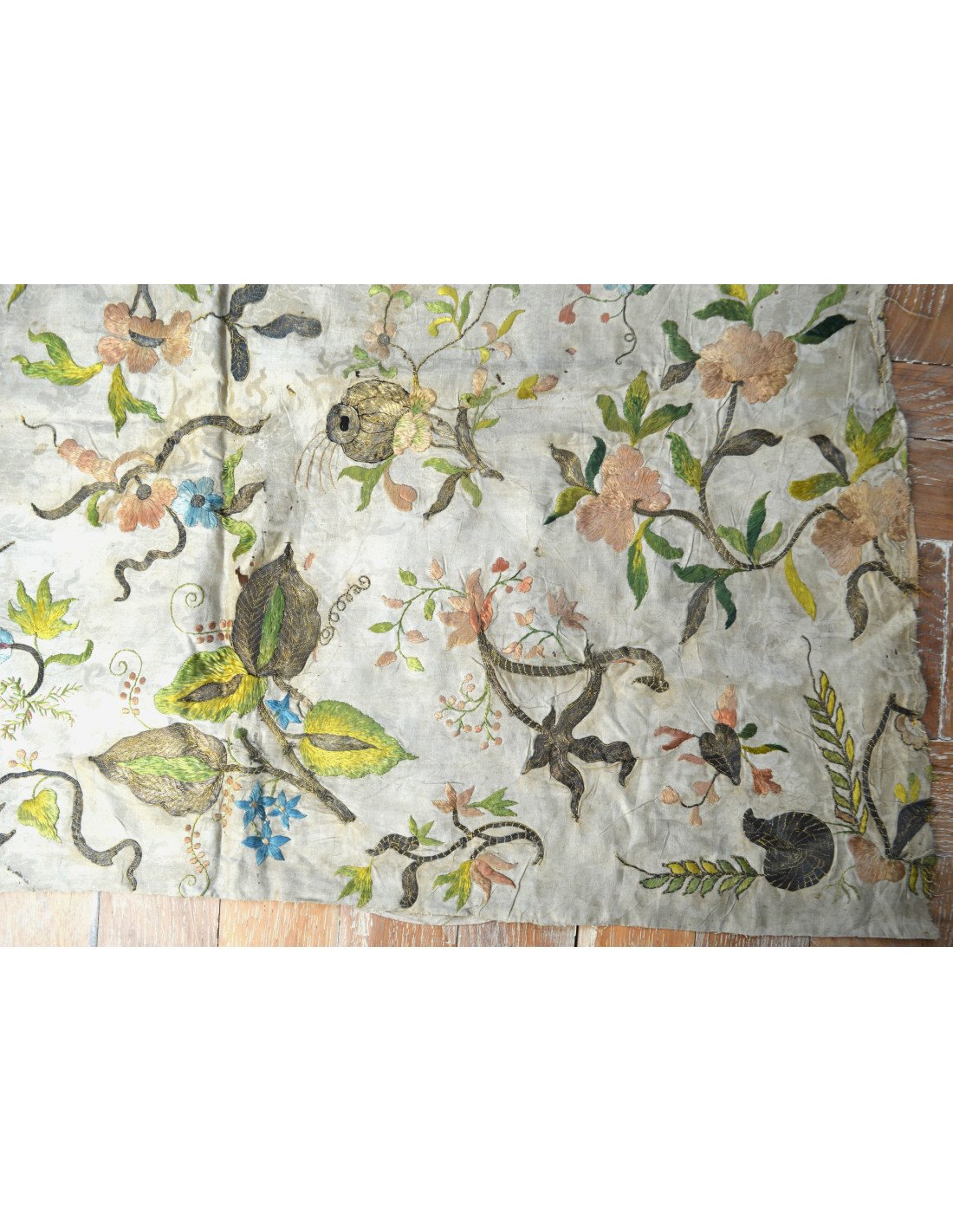
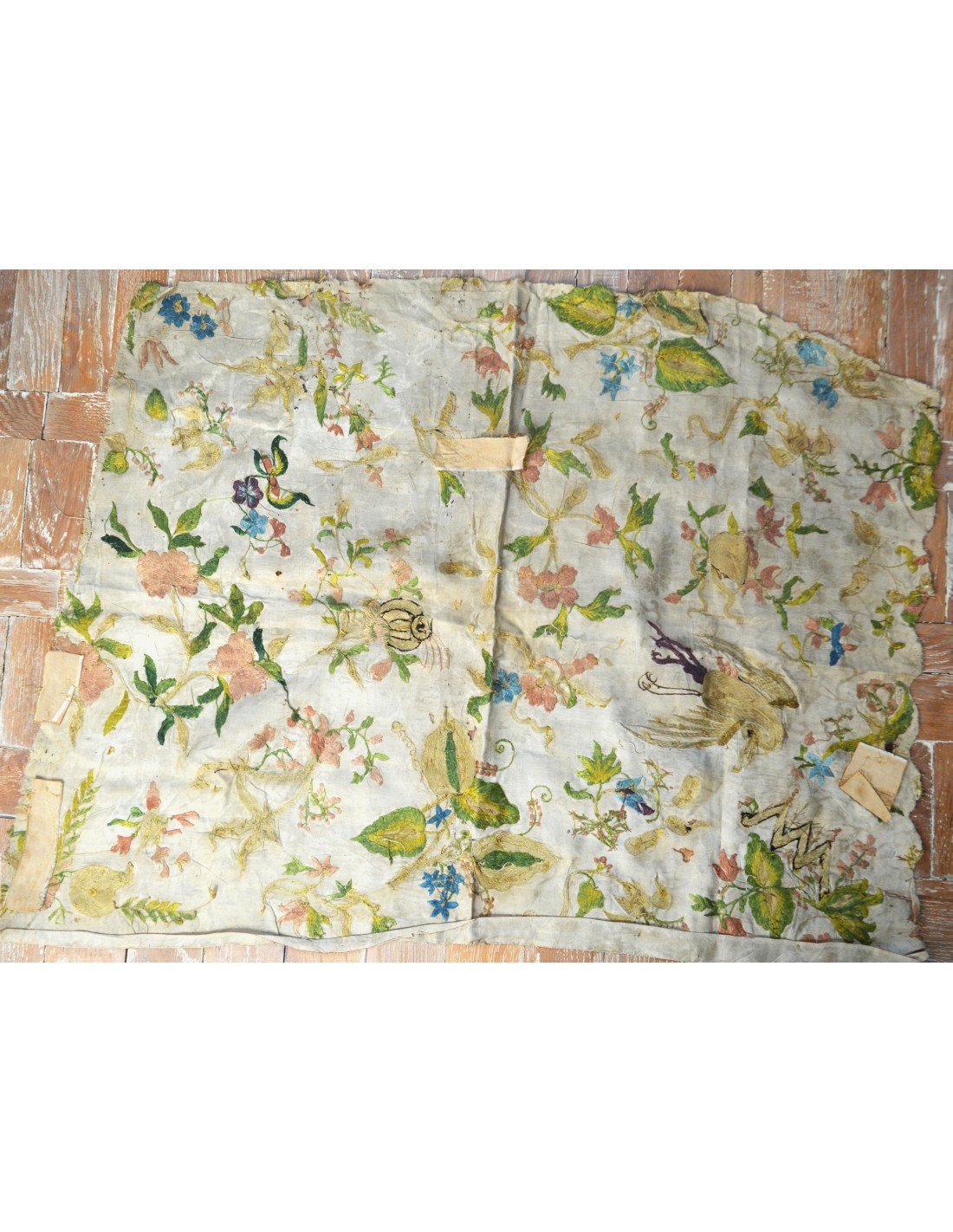
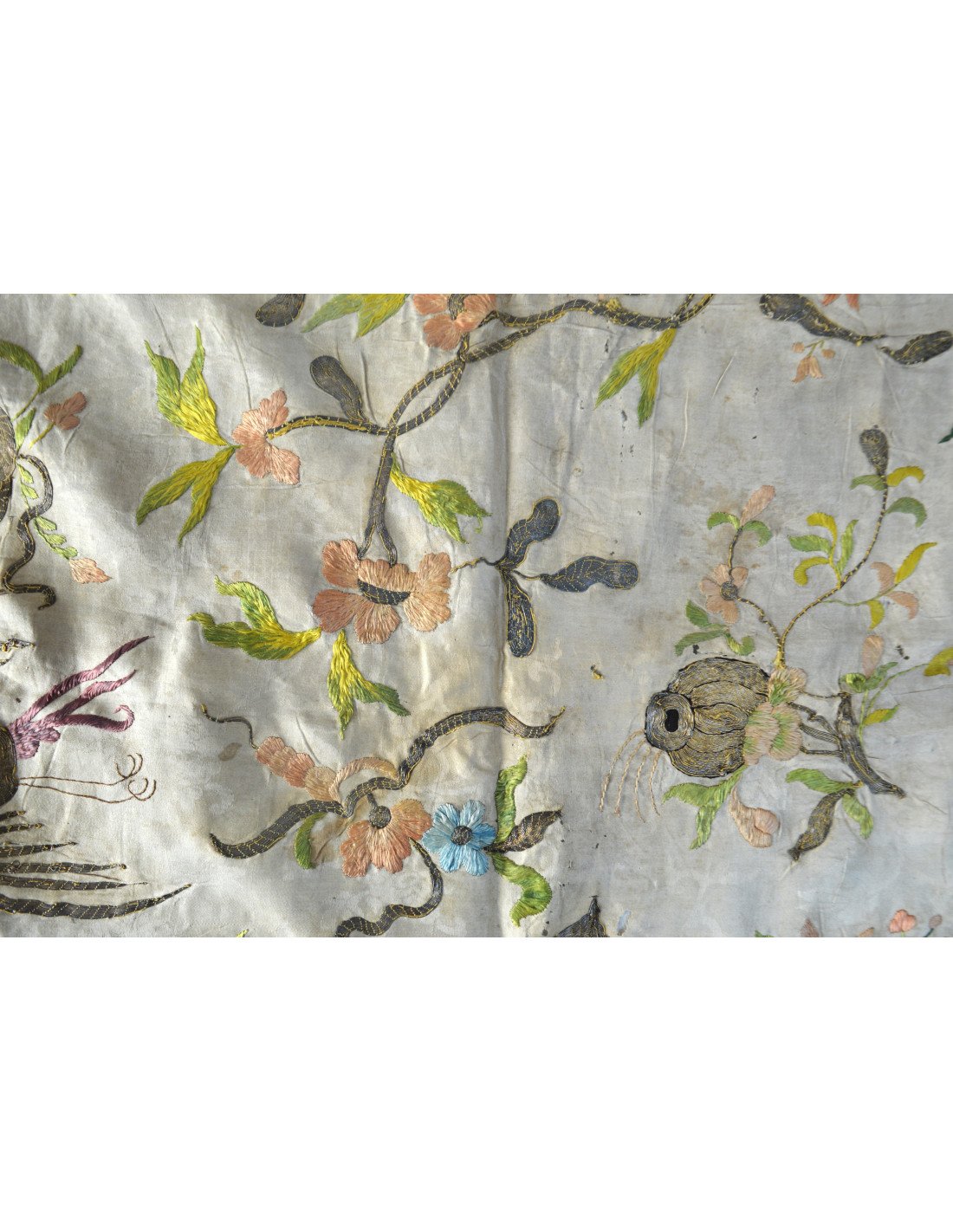
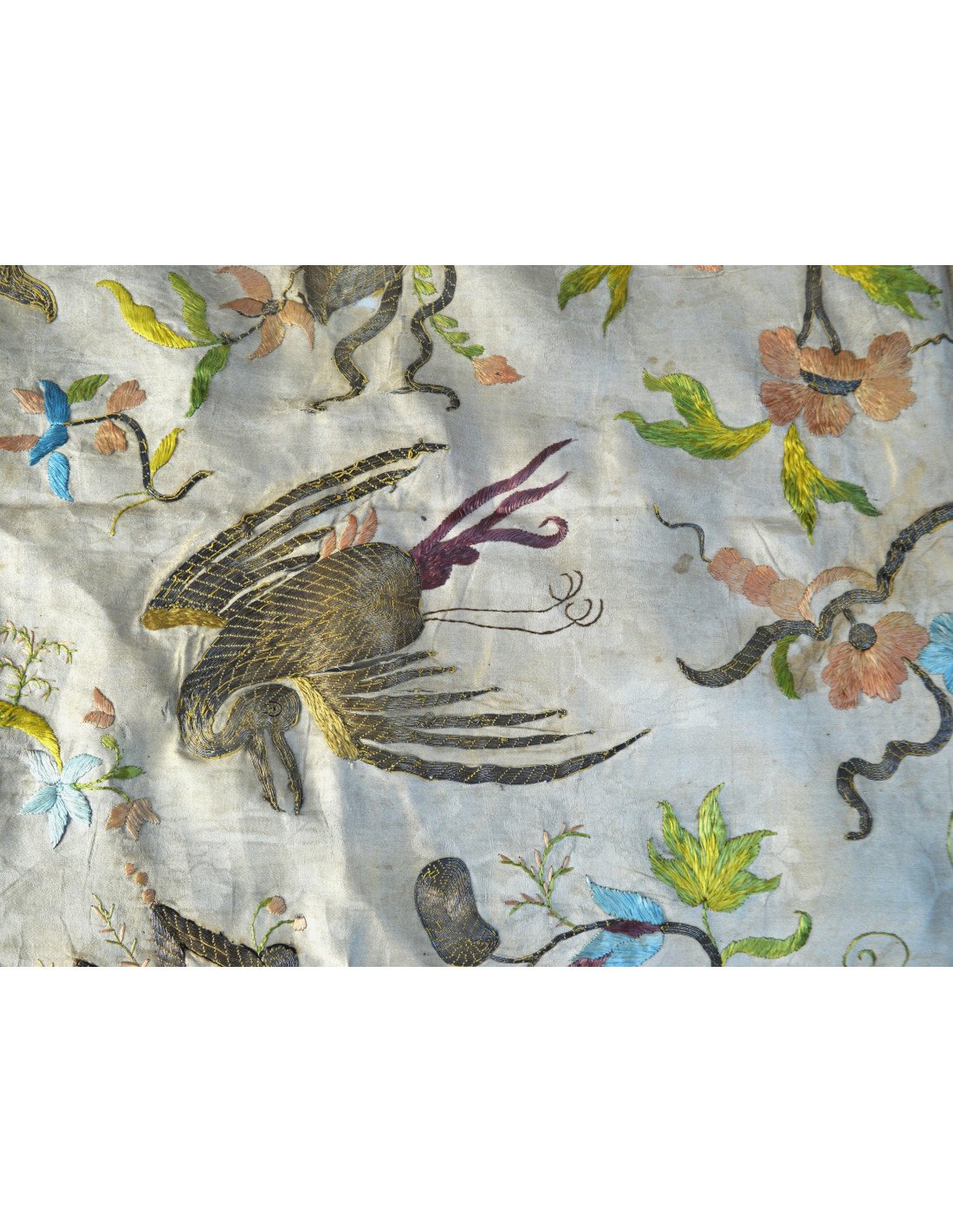
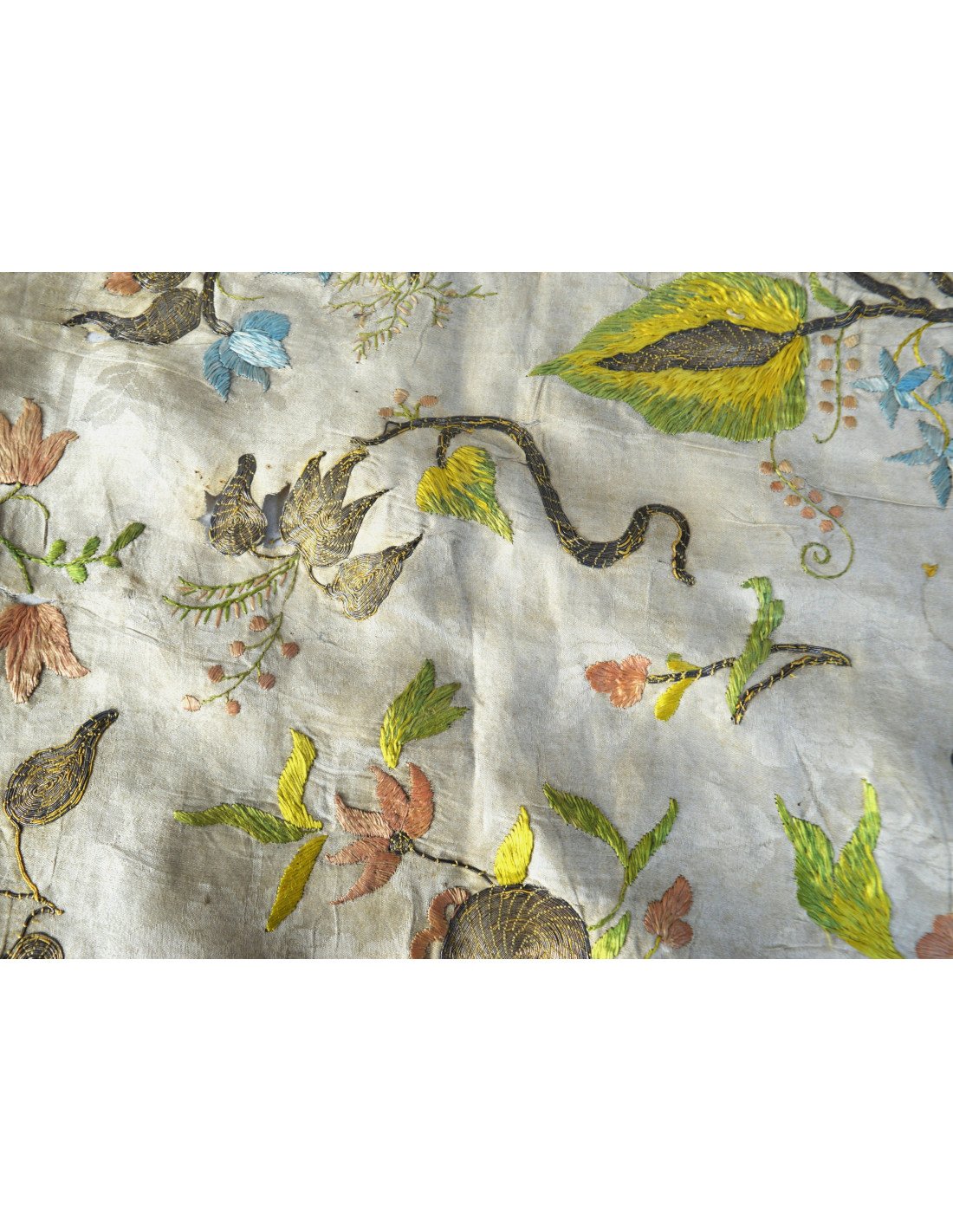
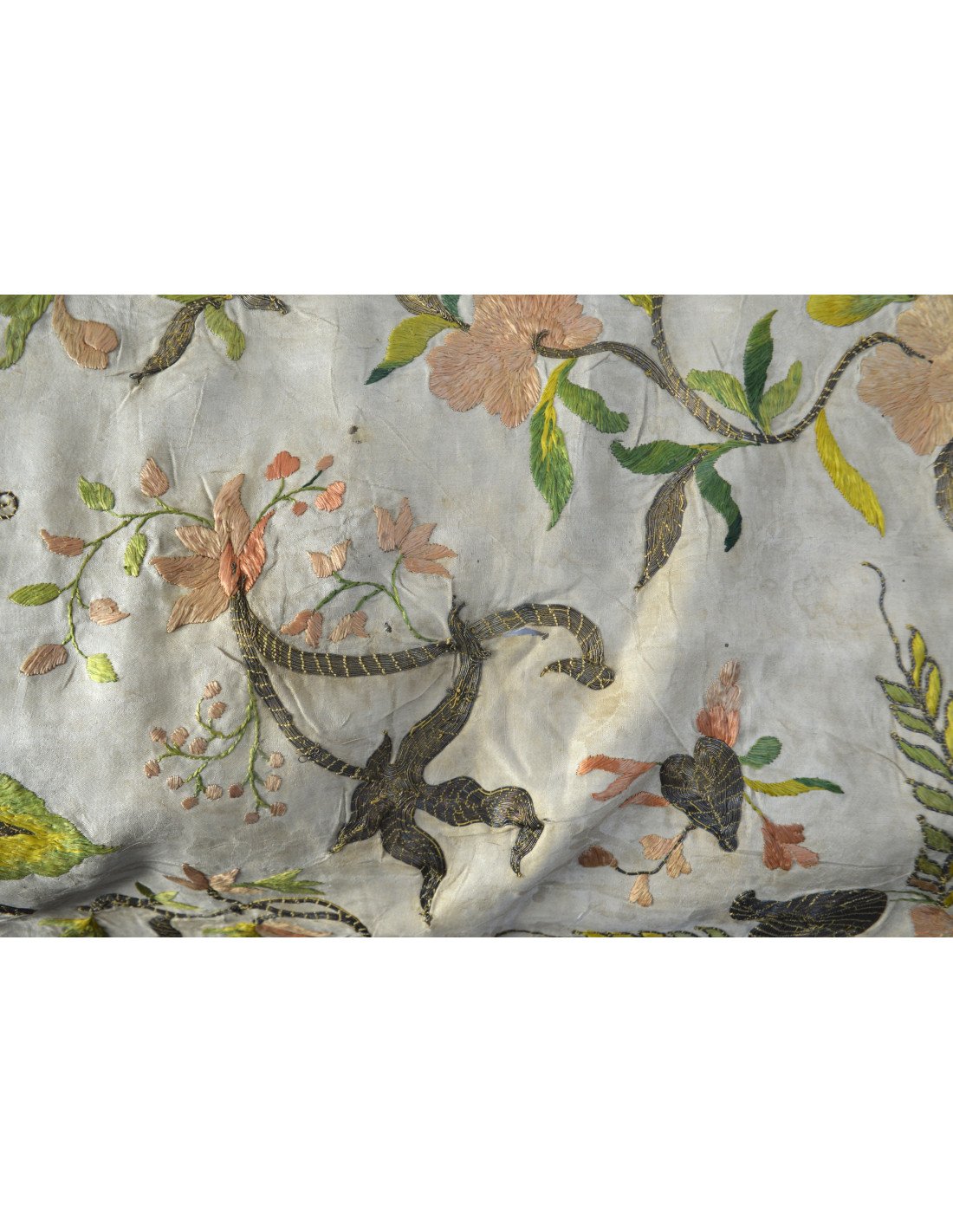
The object is a fragment of embroidered textile, datable on stylistic grounds to the first half of the eighteenth century and most probably from France or Portugal. The work carries elaborate embroidery in metal thread (partly gilded silver) and polychrome silk on a support of linen or fine cotton. The embroidered surface, measuring approximately 80 x 60 cm, preserves a decorative repertoire of foliate and zoomorphic motifs, executed with precision and remarkable variety of colour despite the wear.
Decorative and technical characteristics:
-
Technique: embroidery in twisted metal thread (probably gilt silver) and coloured silk threads
-
Palette: olive green, pale pink, citron yellow, turquoise blue, brick red
-
Motifs: stylised flowers, broad leaves, foliate scrolls, exotic birds and hybrid fantastic forms, all freely arranged, almost meandering in character and naturalistic in rhythm.
This compositional approach indicates an embroidery intended for a decorative panel or a piece of textile furnishing (for example a curtain, a light tapestry, an altar backdrop or a liturgical table frontal) rather than for a garment. By analogy with similar pieces in the collection of Cooper Hewitt (cat. no. 18392617) and other Portuguese and French examples of the eighteenth century, a decorative continuity of the late baroque type can be seen, in transition towards the rococo: lavish floral ornament, but more open, with freedom in the arrangement.
Origin and attribution:
The decoration with fantastical figures, free volutes and the combination of metal thread and coloured silk is found in the embroideries of French (Lyon, Paris) and Portuguese (Lisbon, Porto) of the period 1700–1750, particularly in ecclesiastical or ceremonial objects.
-
France: probably secular workshops producing textiles for aristocratic furnishing (embroidered hangings, furniture runners, covers).
-
Portugal: strongly influenced by the Spanish and Flemish baroque model, but with an emphasis on brightly coloured floral figures and exotic imagery (birds, hybrid creatures) owing to colonial influences.
The provenance cannot be established with certainty without laboratory analysis of the fibre composition and of the metal thread, but the decoration and the palette point more strongly to the production of Franco-Portuguese than with Italy, Spain or Central Europe.
State of preservation:
-
Advanced wear: the supporting fabric is fragile, with numerous holes, browning, discoloration and structural losses.
-
Oxidation and discoloration: the metal thread and the silk threads are partly oxidised and discoloured, particularly in the central areas.
-
Overall stability: fragile; professional conservation is needed (mounting on an acid-free support, consolidation with silk crepeline or stabilisation with fine restoration stitching)