Shopping Cart
There are no more items in your cart


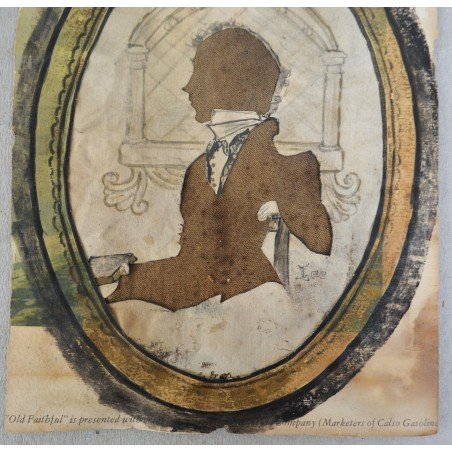


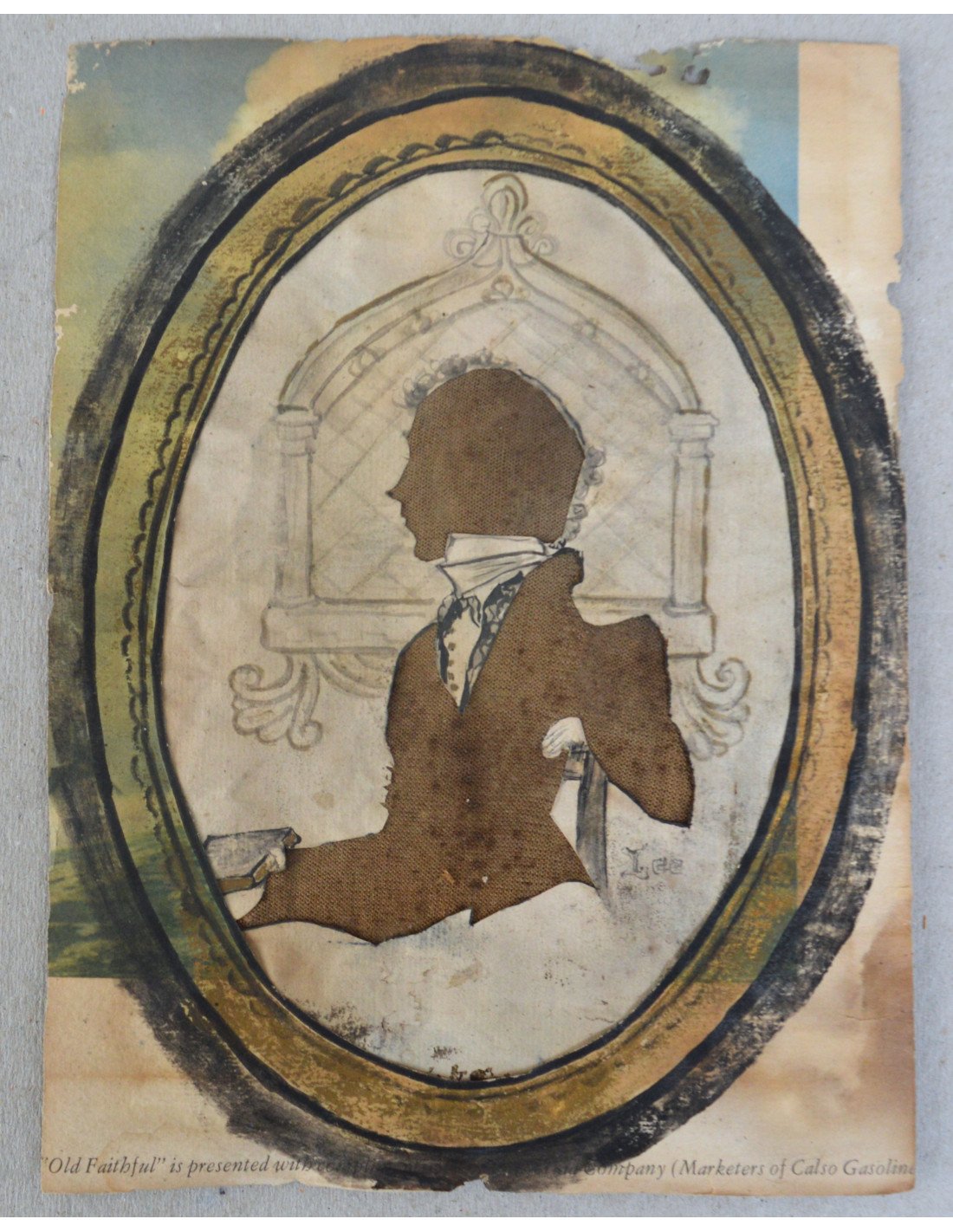
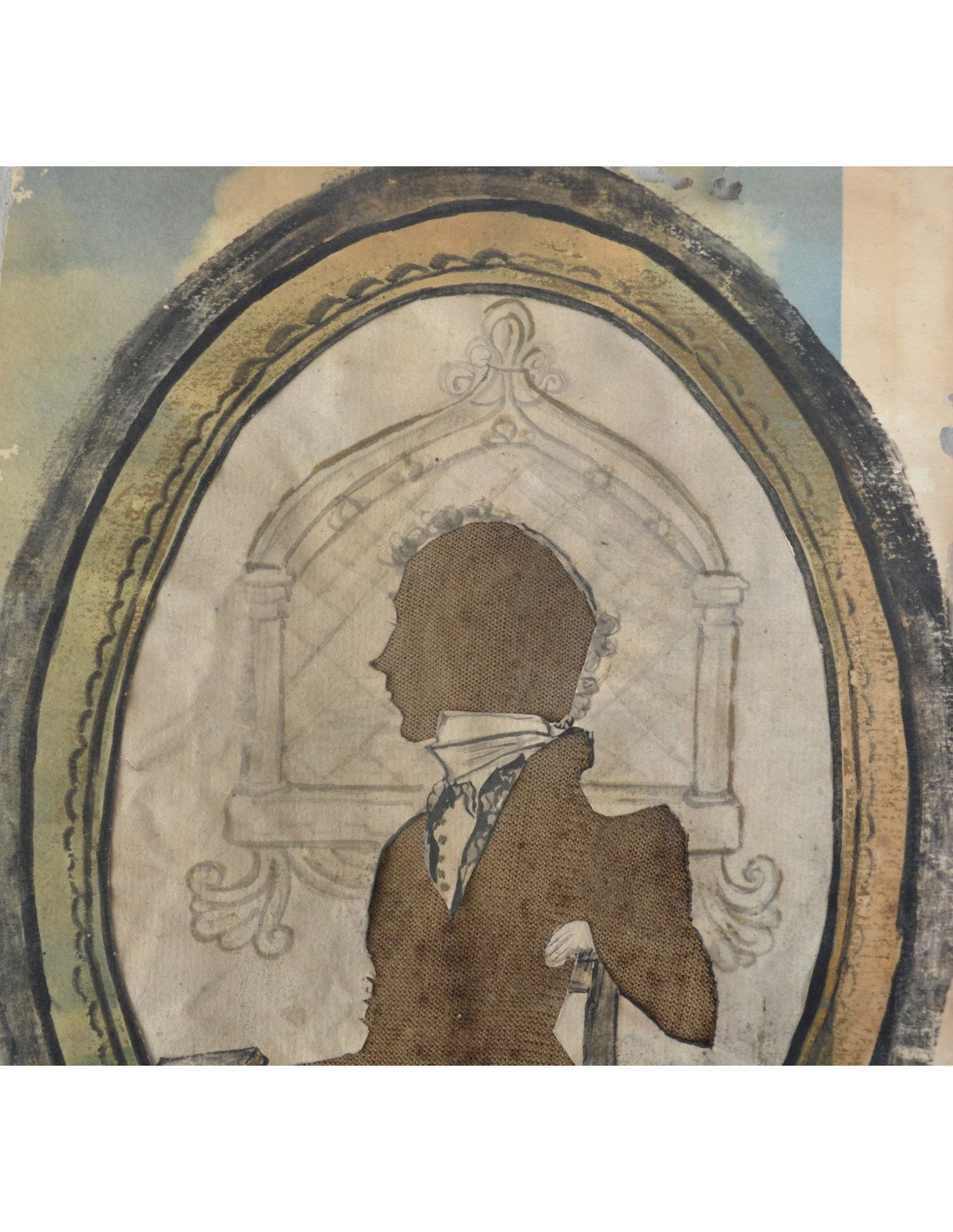
The work is a male portrait in profile, executed in mixed media, belonging to the British silhouette-portrait tradition of the first half of the nineteenth century. This type of representation, extremely popular in England before the appearance and spread of photography, was an elegant and affordable alternative to the portrait miniature, valued for its ability to render the sitter's features with great fidelity through an extreme simplification of form.
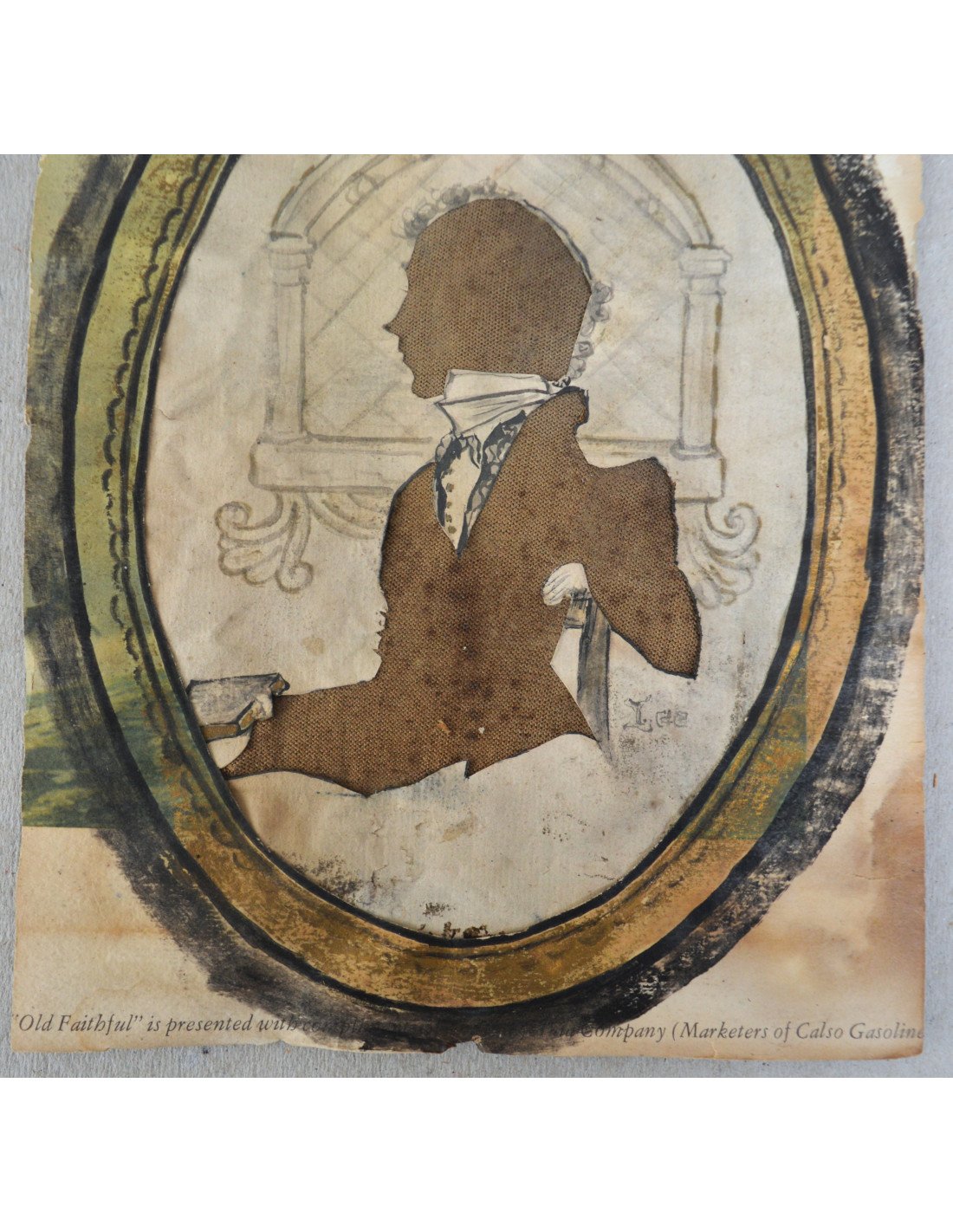
The silhouette is executed as a cut-out and applied to a textile support, over which hand-drawn additions have been made in pencil and probably ink or watercolour. The profile is rendered with remarkable precision, bringing out the line of the face, the hairstyle and the costume characteristic of the early nineteenth century, with its high collar and white jabot. The artist has completed the cut-out with painted detail, giving the portrait a more elaborate character than that of most commercial silhouettes of the period.
The background is drawn by hand and represents a Gothic architectural surround with colonnettes and a pointed arch, a decorative motif characteristic of the Romantic and neo-Gothic taste that took hold in England in the first decades of the 19th century. The painted oval frame is part of the artistic conception of the composition and brings it close to the aesthetic of contemporary portrait miniatures.
The work is neither signed nor dated, a situation frequently met with in silhouette portraits intended for private use. The technical and stylistic characteristics nevertheless allow a plausible dating to the period circa 1800-1835, when such works were widely produced in British workshops.
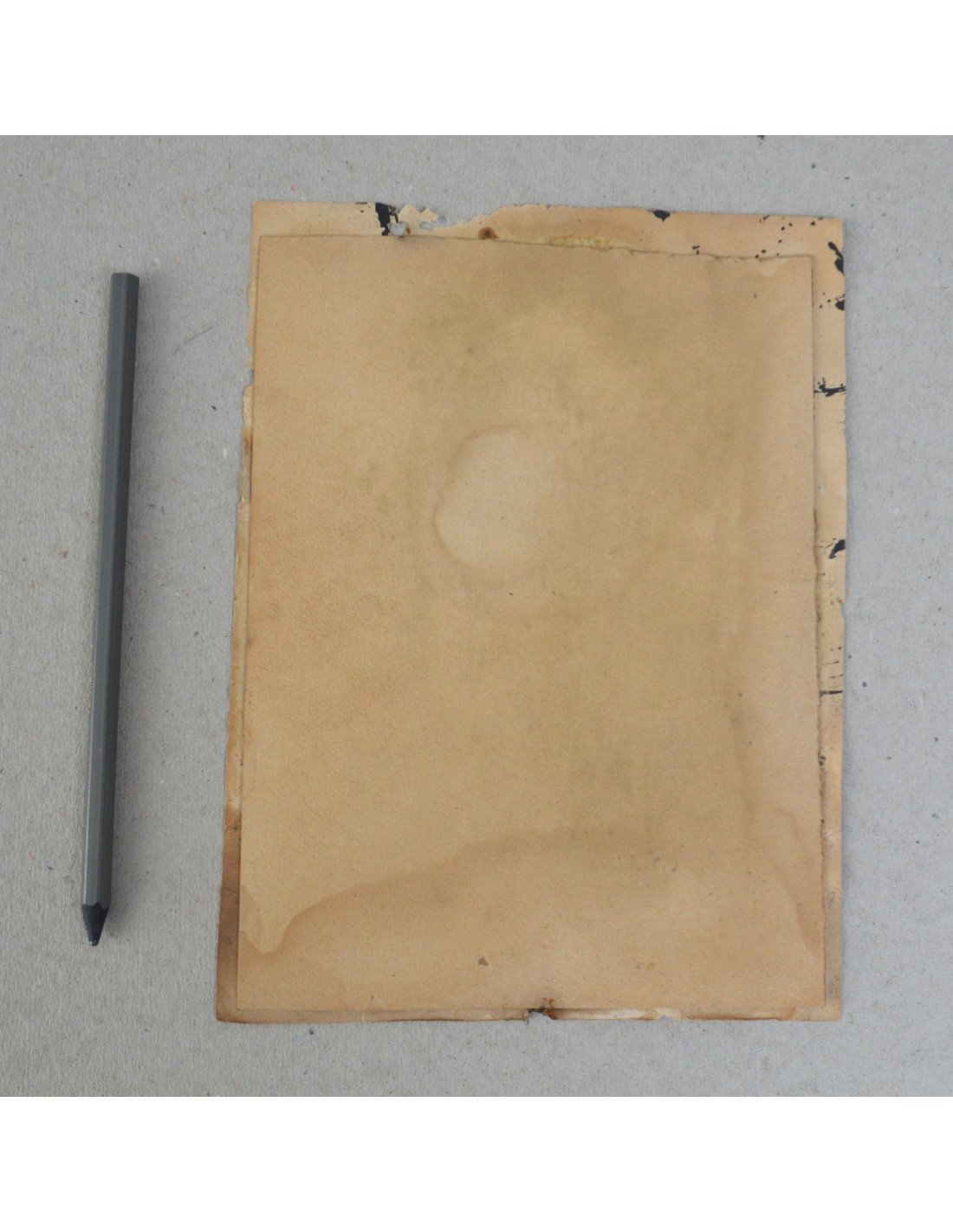
In terms of conservation, the piece has a particularly interesting material history. The original work was later mounted in an improvised oval passe-partout made from a sheet printed with commercial advertising datable to the 20th century, fragments of the text of which are still visible at the edges. This intervention does not belong to the original conception and is undoubtedly later than the portrait itself. It may be read either as an attempt to consolidate the support or as a remounting intended for display or storage at a time when available materials were reused without museum-standard concerns. Such adaptations are relatively frequent in objects of private use that have survived several generations, and they are themselves testimony to the material biography of the piece.
The state of preservation is consistent with the age and use of the piece: the support shows wear, losses at the edges, staining and discoloration, and later interventions are visible. The portrait nevertheless retains its artistic integrity and documentary value, remaining a representative example of English silhouette portraiture of the pre-photographic period.
Technique: cut paper, applied to a textile support, pencil drawing and ink/watercolour, mixed media.
Origin: England.
Dating: circa 1800-1835.
Dimensions: 21,5 × 16 cm.
State of preservation: as shown in the photographs.